



Magazine
Beyond Doctor-Patient Interaction: Reimagining Healthcare Access with AI
Beyond Doctor-Patient Interaction: Reimagining Healthcare Access with AI
![]() By Dr. Asawari Savant, eHealth Network - 14 August 2025
By Dr. Asawari Savant, eHealth Network - 14 August 2025


In over three decades of clinical practice and system-level exposure across continents, one truth has stood out with unwavering clarity: the core unit of healthcare is the Doctor-Patient Interaction (DPI). Strip away the complexity of hospital infrastructure, administrative protocols, and policy frameworks, and at the centre lies a very human connection—what a doctor does for a patient.
Yet, when we speak of digital health innovation, that fundamental equation is often lost in translation.
Technology That Hurts, Not Helps
I’ve worked with one of the world’s best Hospital Information Systems (HIS), Cerner. But, ironically, it was universally despised by clinicians. Why? Because it wasn’t built with DPI in mind. Instead of empowering clinicians and enhancing the patient experience, it burdened us.

Too often, technology in healthcare is management-centric rather than being clinician- or patient-centric. When this happens, the systems we deploy become digital shackles instead of force multipliers.

The Tragedy of Healthcare Access
Let me take you back to Pune, to a 19-year-old boy who died in our emergency ward from septic shock. He could have been saved—if only he had arrived a week earlier. His father’s reason for the delay still haunts me: He didn’t have ₹30 for the bus ticket to the city. That’s the price of a life in rural India.
Despite the perception that India’s healthcare system is thriving, 80% of specialists serve just 30% of the population. The rural and underserved continue to pay the ultimate price due to systemic inaccessibility.
What Healthcare Needs Is Not More Tech, But The Right Tech
True innovation begins when we ask:
“Does this technology enhance the DPI?”
“Does it make life easier for the doctor and safer for the patient?”
At Axonic Health, we decided to reimagine the healthcare value chain through this lens. Our goal is to bring clinical-grade intelligence, mobility, and personalisation to the last mile of care.
From Smart Hospitals to Health ATMs
Healthcare today suffers from data silos. Ask any individual in a hospital auditorium if they have access to their complete health history. The answer will almost always be “no.” Without a unified, mobile, and secure data infrastructure, true care coordination is impossible.
We solved this with our health passbook platform, enabling interoperable records across hospitals, specialities, and geographical locations. Over 10 million transactions later, we launched a clinical AI system that performs intelligent triage, diagnoses, and care recommendations.
But we didn’t stop at the hospital door.
- We built Health ATMs: Deployed in rural and urban underserved areas, where patients can walk in, get vital checks, consult AI-powered bots, and speak to a live doctor if needed.
- We built a Home Portal: For elderly and immobile patients, enabling 70% of hospital-grade diagnostics and consultations right from their homes.
- We added AI Voice Assistants: That understand and respond in regional Indian languages, making digital care inclusive and empathetic.
This isn’t a vision—it’s real, deployed, and scaling.
Reimagining the Hospital: AI as Virtual Staff
We’ve created AI bots across 36 medical specialities and developed “virtual staff” that can automate roles like registration, triage, billing, and coding, traditionally dependent on physical presence and manual data entry.
Hospital systems don’t have to be cost centres. With the right technology, they can become profit centres and engines of value creation.
But here’s the caveat: AI without human supervision is dangerous. AI with human supervision is powerful.
Rebuilding Trust: The Final Frontier
Much of the public distrust in healthcare today stems not from cost, but from communication gaps. What if every patient’s family received an AI-generated 15-minute update on their loved one daily? What if every medical bill came with clear, data-backed justification in layman’s language?
We can reduce hospital violence, improve adherence, and rebuild the sacred doctor-patient trust through transparency and tech-enabled empathy.
India’s Moment: Becoming a Global Health Superpower
India became an IT superpower because we thought beyond our borders. Why can’t we do the same with healthcare?
With AI-powered health delivery, we can:
- Deliver expert care from Indian specialists to rural Africa.
- Enable multilingual consultations with real-time translations.
- Put Health ATMs in every taluka, Home Portals in every home, and AI copilots in every clinician’s hand.
The opportunity is immense, but only if we put clinicians and patients at the centre of the transformation.
Also read: Leading India’s Healthcare IT Innovations: Technology, AI, and Ecosystem Synergy Fueling Growth
The Road Ahead
Hospitals must involve clinicians in decision-making. HIS investments must prioritise data mobility, workflow analysis, and clinical impact. Boards must have clinical representation, not just business voices.
Let us not be the generation that invested billions in “digital” but forgot the “human.”
You speak in English, I hear in Marathi. You speak in Tulu, I respond in Telugu—If we design technology with purpose, we won’t just fix healthcare, we’ll redefine it for the world.
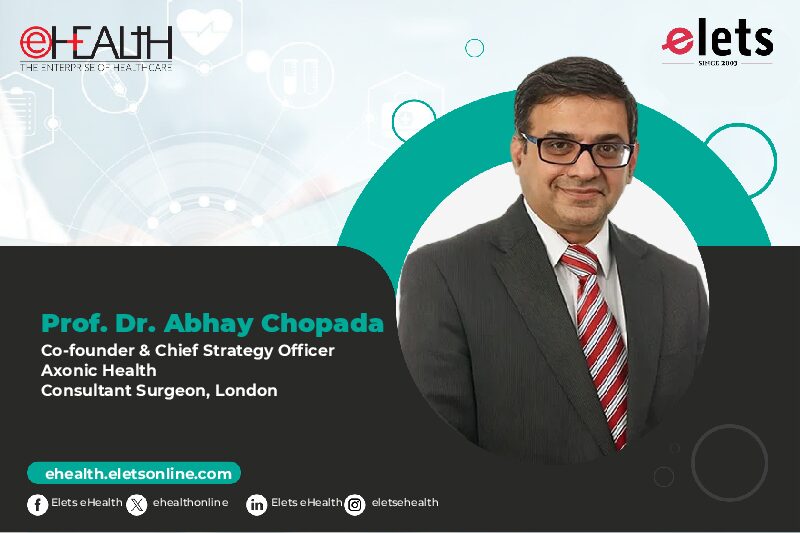
Views expressed by Prof. Dr. Abhay Chopada, Co-founder & Chief Strategy Officer, Axonic Health & Consultant Surgeon, London, at the 15th Elets Healthcare Innovation Summit & Awards 2025.

 Like
Like
 Dislike
Be a part of Elets Collaborative Initiatives. Join Us for Upcoming Events and explore business opportunities. Like us on Facebook , connect with us on LinkedIn and follow us on Twitter , Instagram.
"Exciting news! Elets technomedia is now on WhatsApp Channels Subscribe today by clicking the link and stay updated with the latest insights!" Click here!