





For most patients, healthcare is decided in a single moment; not by a report or a prescription, but by whether a clinician truly listens. Whether someone pauses long enough to understand why they’ve come in, connect the symptoms, and explain what comes next. That moment determines whether patients leave reassured or unsettled, informed or confused. It is the difference between care that feels personal and care that feels transactional.
That moment used to be the foundation of healthcare. Many of us still remember it: a physician who knew your history, who had time to answer questions, who talked to you, not at you. Time spent with a clinician was the care. It was where confusion turned into understanding, and fear into trust.
Today, that experience has become the exception, not the rule. Appointments are shorter. Screens compete for attention. Conversations are rushed, fragmented, and often unfinished. Patients leave with instructions but not understanding. With data but not direction. And with a lingering question they didn’t get the chance to ask.

This is the reality of modern healthcare and it is costing patients the very thing they value most- ‘Feeling heard’

Most doctors are on the verge of burning out, dealing with excessive documentation, staffing shortages and handling fragmented systems. While patient care remains at the core of what they do, additional administrative tasks often prevent them from investing time in the clinician-patient relationship. More importantly, important details could be overlooked when working against the clock.
The result is high levels of frustration on both sides, with dissatisfied patients, disengaged clinicians, and care pathways that feel more procedural than personal. Clinical burnout is not only an abstract concern, but something that has a tangible impact on care quality. When clinicians are stretched thin, it can result in higher turnover, greater error risk and declining care quality.
Is AI the solution?
Against this backdrop, artificial intelligence-based tools can seem like the ideal solution that can address this imbalance. Faster documentation, freedom from administrative tasks and improved patient focus are all very attractive benefits. But this requires closer scrutiny.
Is AI returning meaningful time to clinicians or simply changing the workload? Do newer tools truly enable better healthcare or are physicians now required to master another system of documentation? How is the success of such an initiative determined?
All too often, success is linked to a new system reaching a certain scale of adoption. The real return on investment (ROI), the time freed up for clinicians to focus on patients and other non-administrative tasks, is often ignored.
Changing how ROI is measured
In healthcare, ROI cannot be measured by tracking metrics on a dashboard. The real ROI is the impact it has on doctor-patient interactions and when a clinician sees tangible changes to their daily routine.
Once clinicians start using a new system, there could be changes like improved workflows and an improvement in certain metrics. However, that is measure of the effectiveness of the software. If the clinicians are still as busy and their mental load is unchanged, then it’s still missing a crucial point. For instance, a new system might speed up the documentation process but there’s still no extra time available that can be spent with patients.
Traditional ROI frameworks often calculate value through metrics like deployment timelines, utilization rates and cost offsets. For clinicians, the reality is a little different. For them, the metrics that add value are minutes not spent hunting through screens, minutes reclaimed from after-hours charting and minutes available to listen to patients without rushing.
As digital maturity increases and AI adoption becomes more widespread, this distinction becomes harder to ignore. The question needs to shift from “How fast did we deploy the system?” to “How soon did clinicians feel the difference?”. This shift in perspective is where the real opportunity for change lies.
Mature organizations are starting to evaluate the success of their AI implementation against these standards. Rather than simply celebrating the deployment of a new system, they monitor whether clinicians are completing notes earlier, whether handoffs feel smoother and whether interruptions have decreased. These are not abstract ideas, but clear, observable changes in how any new system is experienced by its users.
Define outcomes for success
The most effective implementations start with clarity about outcomes and not about the tools. Success is defined in terms that clinicians recognize, like fewer clicks, clearer workflows and less rework. Solutions are embedded into existing clinical environments rather than creating new interfaces that might work well in test scenarios, but in reality, add another layer for clinicians to adapt to.
What sets these efforts apart is that they invest early in data readiness so that new tools reduce friction instead of introducing it. Scale is part of the equation from day one, not as a future concern, but as a design principle. The initiatives that succeed are often those where the success of the effort is not measured by the sophistication of the technology, but the importance given to time saved. The value of time is not merely a marketing claim, but a critical, measurable metric.
The impact, when it happens, is often subtle but hard to overlook.
Documentation starts to feel like less of a task and is a natural part of the workflow. Clinicians may notice that they are leaving work on time. Conversations with patients run deeper and are more meaningful.
Patients too notice the changes. Visits stop feeling rushed and they leave satisfied with their interactions. Over time, trust in the relationship with the clinician gets stronger.
When these systems function effectively, the focus for the clinicians returns to where it ought to be, on the patients. Preventive care improves because there is space for counseling and education. Care becomes less transactional and more human.
This is where AI can have the most impact. Not by replacing clinical judgment but supporting the clinician in the background. Once freed from routine, repetitive tasks, clinicians have the time to focus on nuance, ethics and empathy. The system works quietly in the background to organize and analyze clinical data and filter out the noise. The healthcare industry of the future will be a partnership, not a contest, between clinicians and machines, built on human judgement and compassion, supported by speed and scale.
Also read: $100 Million Life Sciences Campus to Come Up in Hyderabad, Boosting Genome Valley’s Global Standing
Challenges ahead
This is not to say that addressing this issue will solve all the challenges. Governance, explainability, training, equity, and bias remain real concerns and require ongoing attention. Dismissing progress because it is imperfect misses the point.
There are already instances of ambient and generative AI having an impact in certain settings. Making a meaningful difference goes beyond an operational win.
Clinician time is scarce and increasingly fragile. Any credible digital strategy in healthcare must begin there. Success cannot be measured by systems implemented or features deployed, but by what clinicians and patients actually gain from them. Because making a meaningful difference quickly is not just an operational win; it is a clinical imperative.
In healthcare, the truest return on investment is not what a system promises but what it gives back to the clinician: time, focus, and the ability to be present where it matters most.
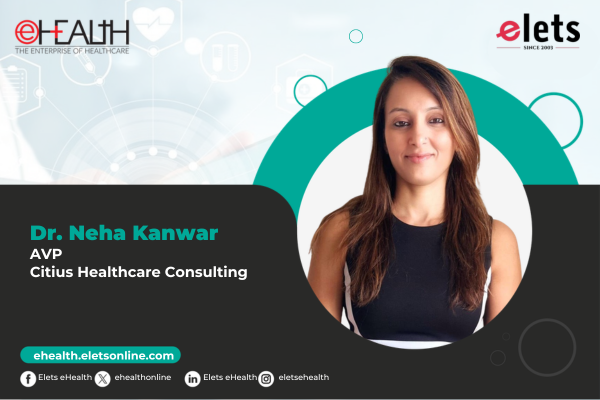
Views expressed by: Dr. Neha Kanwar, AVP, Citius Healthcare Consulting

 Like
Like
 Dislike
Be a part of Elets Collaborative Initiatives. Join Us for Upcoming Events and explore business opportunities. Like us on Facebook , connect with us on LinkedIn and follow us on Twitter , Instagram.
Disclaimer: The views and opinions expressed in this article are solely those of the author and do not necessarily reflect the official policy or views of any organisation. The content is intended for informational and educational purposes only and should not be construed as medical advice.
"Exciting news! Elets technomedia is now on WhatsApp Channels Subscribe today by clicking the link and stay updated with the latest insights!" Click here!