


Article
Seizing the Opportunity: Why WHO’s New Gestational Diabetes Guidelines Matter for India—Right Now
Seizing the Opportunity: Why WHO’s New Gestational Diabetes Guidelines Matter for India—Right Now
![]() By Dr. Asawari Savant, eHealth Network - 29 November 2025
By Dr. Asawari Savant, eHealth Network - 29 November 2025


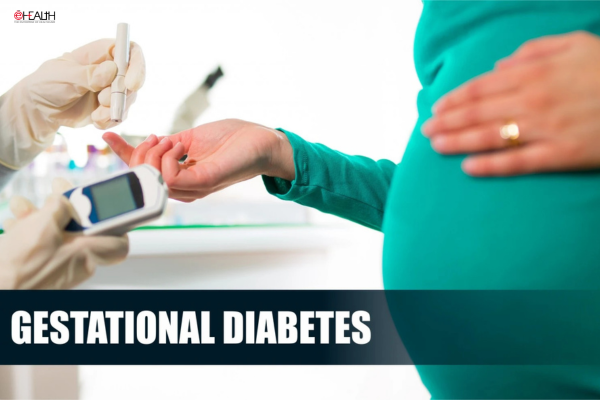
Diabetes affects 830 million adults globally (as of nov 2025), with one in six pregnancies complicated by hyperglycaemia. The burden is disproportionately higher in low- and middle-income regions such as India, ‘The Diabetes Capital of the World,’ which is a home to 90 million diabetic individuals with a rapidly increasing incidence of young-onset type 2 diabetes.

Marking a pivotal moment for maternal health, endocrinology, and health-system strengthening worldwide, the World Health Organisation (WHO) issued its first global guideline for diabetes in pregnancy on World Diabetes Day 2025.
For the first time, WHO has presented an end-to-end framework that integrates clinical management, pharmacological pathways, monitoring protocols, health-system readiness, and multidisciplinary workforce alignment across all types of diabetes in pregnancy—type 1, type 2, and gestational diabetes mellitus (GDM).
Why India Must Act on the New WHO Diabetes-in-Pregnancy Guidance
India continues to face an alarming rise in both type 2 diabetes and pregnancy-related hyperglycaemia:

- 13% GDM prevalence among Indian pregnant women
- 29.9% conversion rate from GDM to type 2 diabetes postpartum
- Higher early-onset cardiovascular complications in Indian individuals with diabetes
- Over 21 million pregnancies globally are affected by diabetes every year
The new WHO guideline offers India an opportunity to standardise care across public and private health systems—ensuring early detection, consistent monitoring, safe prescribing pathways, and multidisciplinary management.
For healthcare leaders, this is not merely a clinical update—it’s a strategic roadmap to reduce maternal and neonatal morbidity, integrate NCD management into reproductive health, and strengthen capacity across the continuum of care.
Key 27 Recommendations & their Implications for Healthcare Leaders & Organisations
1. Individualised Lifestyle, Nutrition, and Weight-Gain Counselling
WHO’s guideline places strong emphasis on personalised dietary counselling, physical activity guidance, and gestational weight-gain monitoring for all women with diabetes in pregnancy. For healthcare organisations, this requires systematic training of obstetric teams, nutritionists, and community health workers, as well as integrating these services into routine antenatal care. Hospitals and maternal health networks should standardise counselling protocols and build capacity to deliver consistent lifestyle interventions both in-clinic and through digital antenatal platforms.
2. Structured Antenatal Education
The guideline mandates comprehensive patient education covering maternal–fetal risks, glycaemic management, physical activity, and the need for additional fetal monitoring. For health systems, this calls for embedding structured education modules into digital antenatal programs, high-risk pregnancy clinics, and telehealth models. Diagnostic networks and care teams should also align patient communication tools to ensure uniformity of messaging.
3. Mandatory Multidisciplinary Care for Type 1 & Type 2 Diabetes
Pregnancies complicated by T1D or T2D must be managed through coordinated, multidisciplinary teams comprising obstetricians, endocrinologists, diabetologists, midwives, and diabetes educators. This has major implications for hospitals, which must establish specialised diabetes-in-pregnancy clinics, strengthen care pathways involving ophthalmology and nephrology, and create seamless referral mechanisms across departments to ensure continuity of care.
4. Glucose Monitoring: SMBG for All, CGM for Type 1 Diabetes Only
WHO recommends self-monitoring of blood glucose (SMBG) for all diabetic pregnancies and continuous glucose monitoring (CGM) exclusively for women with Type 1 diabetes. For healthcare providers, this necessitates updated training, device procurement strategies, and expanded home-monitoring programs. For digital health players, the guideline accelerates demand for SMBG integration, glycaemic dashboards, insurance-linked monitoring services, and CGM support programs targeted specifically at T1D pregnancy care.
5. Glycated Haemoglobin (HbA1c): Targeted Use
The guideline calls for early HbA1c measurement for T1D and T2D pregnancies but not routinely for GDM. Laboratories and diagnostic chains must revise their screening protocols accordingly, ensuring accurate early-pregnancy testing and integrating HbA1c results into broader GDM-to-T2D follow-up systems. This also supports scaling structured early-pregnancy diabetes screening programs across India.
6. Pharmacological Treatment: Metformin Takes a Central Role
WHO formally positions metformin—and metformin–insulin combinations—as first-line therapy for both T2D and GDM when lifestyle modification is insufficient. This shifts longstanding prescribing patterns in India, where insulin use in pregnancy has traditionally been conservative. Hospitals must adopt updated pharmacotherapy pathways, while pharma and med-tech companies should prepare for increased metformin and insulin demand. Additionally, digital platforms can enable medication adherence tracking, dose adjustment alerts, and teleconsultation-based titration support.
7. Rigorous Fetal Monitoring Protocols
The guideline mandates ultrasound before 24 weeks, early scans for T1D/T2D, growth assessments beyond 24 weeks, and enhanced monitoring for women on glucose-lowering medications. This will significantly increase imaging demand within high-risk pregnancy units. Healthcare organisations must upgrade ultrasonography capacity, train sonographers on specialised protocols, and develop digital tracking systems to ensure the timely completion of all required scans.
8. Retinopathy & Renal Screening for T1D/T2D
Mandatory retinopathy and renal assessments at the first antenatal visit require tighter integration between obstetrics, ophthalmology, and nephrology. For health systems, this means setting up dedicated referral pathways, ensuring specialist availability, and adopting digital registers to follow high-risk patients. Diagnostic centres can play a key role by offering bundled diabetes-in-pregnancy screening packages.
9. Maintaining Blood Pressure <130/80 mmHg for High-Risk Cases
WHO’s emphasis on blood pressure control reflects a broader shift toward cardiovascular risk reduction during pregnancy. Hospitals must strengthen hypertension management protocols, adopt pregnancy-safe antihypertensives, and counsel women on modifiable risk factors such as diet, physical activity, and smoking cessation. Public health systems should train ASHA and ANM workers to support home-based BP monitoring and risk-stratified follow-up.
Also read: Top Insights on India from the WHO Global TB Report 2025
Strategic Takeaway
The WHO’s first global guideline on diabetes in pregnancy marks more than a clinical advancement—it signals a transformative shift in maternal health governance, especially for high-burden countries like India.
For healthcare organisations, the guideline underscores the need to standardise care pathways, align multidisciplinary teams, expand monitoring infrastructure, reinforce antenatal education, adopt evidence-backed pharmacological regimens, and integrate NCD and maternal care across the continuum.
By operationalising these recommendations, India can significantly improve maternal and neonatal outcomes while strengthening its overall response to the escalating diabetes epidemic.

 Like
Like
 Dislike
Be a part of Elets Collaborative Initiatives. Join Us for Upcoming Events and explore business opportunities. Like us on Facebook , connect with us on LinkedIn and follow us on Twitter , Instagram.
Disclaimer: The views and opinions expressed in this article are solely those of the author and do not necessarily reflect the official policy or views of any organisation. The content is intended for informational and educational purposes only and should not be construed as medical advice.
"Exciting news! Elets technomedia is now on WhatsApp Channels Subscribe today by clicking the link and stay updated with the latest insights!" Click here!