



Article
The Missing Piece in Preventive Healthcare: Making Cognitive Screening Mainstream
The Missing Piece in Preventive Healthcare: Making Cognitive Screening Mainstream
![]() By eHealth Network - 23 May 2026
By eHealth Network - 23 May 2026



Over the last few years, the way we think about health has changed quite dramatically. Preventive care is no longer a niche idea, it’s become part of everyday life. People are tracking their steps, monitoring sleep, keeping an eye on blood sugar, cholesterol, and heart health.
But there’s one area that still doesn’t show up in this daily health checklist: cognitive health.
Which is surprising, because our brain governs everything – how we think, remember, focus, and function day to day. And yet, for most people, brain health only becomes relevant when something starts to go wrong. Here’s a fun fact: The brain expends the maximum number of calories on a daily basis, more than than any other organ and yet checking in the functional health of a brain is something we’re leaving out in our routine checkups.

That’s the core problem.

Why we’re still reacting, not preventing
Today, cognitive testing is largely seen as something you do when there’s already a concern, memory loss, behavioural changes, or visible decline. By that point, we’re often trying to manage rather than prevent.
What makes this more concerning is that cognitive decline doesn’t happen overnight. It builds slowly over years, influenced by things we already know matter, sleep, stress, metabolic health, lifestyle, even social habits.
And yet, we don’t measure it.
Globally, a large percentage of cognitive impairments go undiagnosed. In India, that number is even higher. Not because the problem doesn’t exist, but because we haven’t made it easy, accessible, or routine to check for it early.
The case for making cognitive screening routine
If there’s one clear pattern in preventive healthcare, it’s this: the moment something becomes measurable, it becomes manageable.
We track glucose. We track heart health. We even track recovery and sleep cycles now. These weren’t always mainstream, but they became so once testing became simple and accessible.
Cognitive health needs a similar shift.
The idea is not to medicalise everyday life, but to give people a way to understand their baseline, notice changes over time, and act early if something feels off.
Making brain health easier to access
At Ivory, this is exactly what we’re trying to solve for – how do you make cognitive screening simple enough that it becomes a habit, not a hospital visit?
We often describe it as building a “treadmill test for the brain.” Something that gives you a clear sense of where you stand, without being intimidating or complex.
Our platform is built around clinically validated, FDA-registered cognitive assessments that evaluate 23 different cognitive skills across areas like memory, attention, reasoning, and coordination. These are designed to work seamlessly across devices, so people can access them easily and, more importantly, repeat them over time.
We have also introduced globally validated tools like CANTAB Pathway™, developed by Cambridge Cognition, into the ecosystem by bringing clinical-grade cognitive assessment, typically used in research and specialist settings, into a more scalable and accessible format for India. What’s more, by working closely with the Cambridge Cognition team, we’re also shortly launching this assessment in several Indian languages.
But testing alone isn’t enough. The real value lies in what happens after. That’s why we’ve built layers around it – from brain training to consultations and personalised recommendations so people can actually act on what they learn.
Why this matters right now
We’re at an interesting moment in brain health globally.
New diagnostic tools, like Alzheimer’s blood tests, are starting to become available. Disease-modifying therapies are also on the horizon. For the first time, early detection isn’t just informative – it can actually change outcomes.
But none of this matters if people continue to enter the system too late. For these advances to have real impact, we need a much wider front door into cognitive care – something simple, affordable, and scalable.
As more advanced diagnostic tools and globally benchmarked assessments start becoming accessible, the opportunity is no longer just awareness but to enable early, meaningful intervention at scale.
The scale of the gap
When we put together Ivory’s Brain Health Primer, an informational docket to raise awareness for brain health in India, the numbers were quite telling.
A majority of cognitive impairments are still going undiagnosed. More than 70% of respondents had at least one major risk factor linked to long-term brain health. And in many cases, people are already showing signs of accelerated cognitive ageing without realising it.
What stood out even more was the importance of midlife.
Between the ages of 40 and 60 is where a lot of these risks begin to show up – and also where intervention can make the biggest difference. In a country like India, with hundreds of millions in this age group, the opportunity for prevention is enormous.
Changing behaviour, not just building tools
One thing we’ve realised is that this isn’t just a technology problem. It’s a behaviour problem.
People don’t ignore their brain health because they don’t care – they ignore it because there hasn’t been an easy way to engage with it.
That’s slowly starting to change.
We’re seeing a new kind of health consumer emerge, someone who wants to understand their body better, track progress, and make informed decisions. From glucose monitors to sleep trackers, this shift is already visible.
Cognitive health is the next logical step.
What comes next
If preventive healthcare is about staying ahead of problems, then brain health has to become part of that conversation. Not as something specialised or intimidating, but as something routine and trackable.
The goal is simple: make cognitive screening as normal as checking your cholesterol or booking an annual health check-up.
Because at the end of the day, this isn’t just about adding another metric. It’s about preserving how we think, how we function, and how we live – over the long term.
And that starts with something as basic as measuring it.
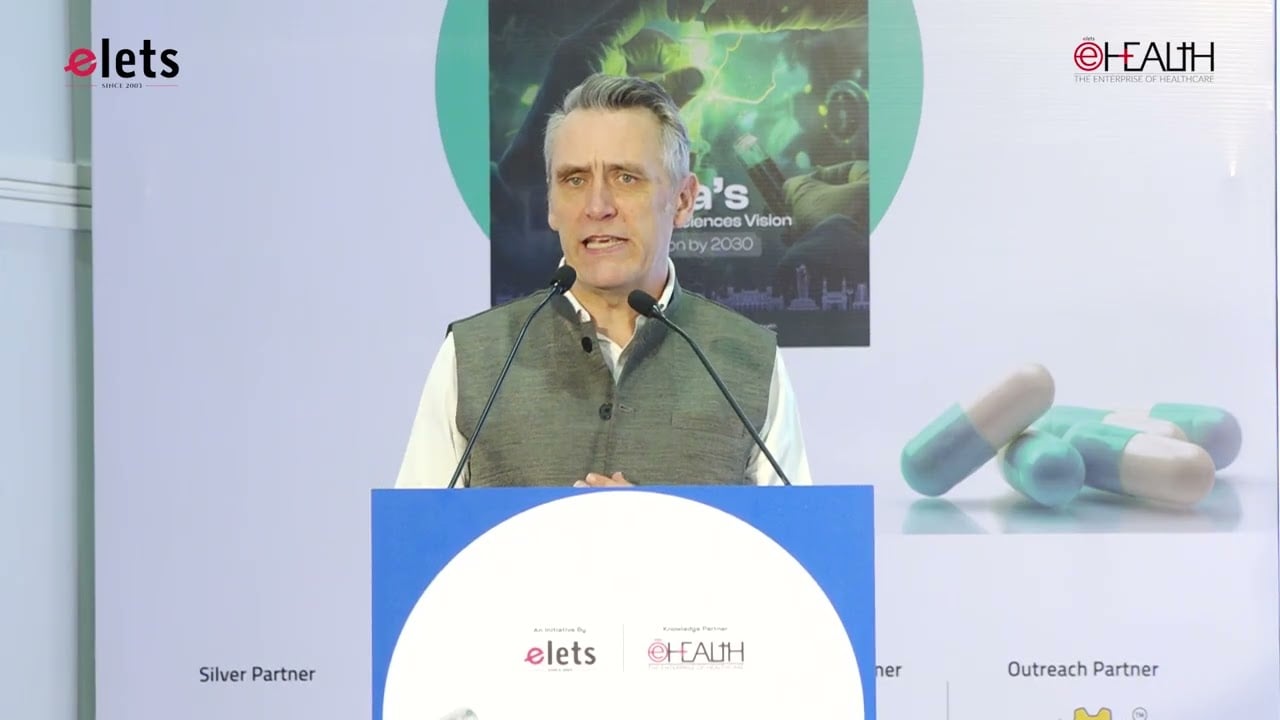
Views expressed by: Issac John, Co-founder & CEO, Ivory

 Like
Like
 Dislike
Be a part of Elets Collaborative Initiatives. Join Us for Upcoming Events and explore business opportunities. Like us on Facebook , connect with us on LinkedIn and follow us on Twitter , Instagram.
Disclaimer: The views and opinions expressed in this article are solely those of the author and do not necessarily reflect the official policy or views of any organisation. The content is intended for informational and educational purposes only and should not be construed as medical advice.
"Exciting news! Elets technomedia is now on WhatsApp Channels Subscribe today by clicking the link and stay updated with the latest insights!" Click here!