



Article
Democratising HIPEC: Making Advanced Cancer Treatment Accessible in India
Democratising HIPEC: Making Advanced Cancer Treatment Accessible in India
![]() By eHealth Network - 23 May 2026
By eHealth Network - 23 May 2026


Over the past two decades, cancer treatment has seen multiple advances in technology, surgery and targeted therapies. One such breakthrough is Hyperthermic Intraperitoneal Chemotherapy (HIPEC), a specialised treatment used for cancers that have spread within the abdominal cavity.

HIPEC is performed immediately after the surgical removal of visible tumours from the abdomen. During the procedure, heated chemotherapy drugs are circulated within the abdominal cavity, allowing them to directly target microscopic cancer cells that may remain after surgery. Heat enhances the effectiveness of chemotherapy while limiting its systemic exposure. As a result, HIPEC has emerged as a powerful treatment option for selected patients with cancers such as Peritoneal Carcinomatosis, ovarian cancer, colorectal cancer, and certain stomach cancers.
However, when this technology was first introduced in India by me, it remained largely inaccessible to most patients and hospitals.
The Early Challenge: Cost and Practical Limitations

Back in 2011, when I got the technology in India, a single HIPEC machine cost nearly ₹80 lakhs, while the consumables required for each procedure cost around ₹2 lakhs. For many hospitals, especially those outside large metropolitan centres, this investment was extremely difficult to justify.
There were also logistical limitations. The machines available at the time were bulky and not designed for mobility. They were difficult to move not only between hospitals but even between operating theatres within the same hospital. As a result, the technology remained confined to a limited number of specialised centres.
This raised an important question: Could a life-saving technology remain restricted simply because it was not designed for the realities of healthcare systems like India?
Reimagining HIPEC for India
The Indian healthcare ecosystem needed a high-quality, affordable technology.
Recognising this need and the gap, my goal became clear — to make HIPEC technology more accessible, affordable, and practical for Indian hospitals.
Working closely with a team of engineers, we began developing a HIPEC system that is designed specifically for the Indian healthcare ecosystem. The focus was not just on replicating existing technology, but on reimagining it, keeping quality and affordability in mind.The result was a portable, easy-to-operate HIPEC machine that could be transported between hospitals and even between operation theatres within the same facility. This mobility was a crucial step in ensuring that the technology could reach multiple centres rather than remain restricted to a few specialised institutions.
This innovation allowed surgeons to perform HIPEC procedures in different hospitals that were at one-fourth the cost of what is available internationally. This meant that all hospitals, predominantly, could have access to cutting-edge technology.
Adoption Across Leading Institutions
As the system was introduced, it quickly began gaining acceptance across multiple surgical oncology centres in India. The technology was even adopted in prestigious institutions such as Tata Memorial Hospital, one of the country’s leading cancer treatment and research centres.
However, while the portability of the machine addressed one challenge, another significant challenge remained in terms of the cost of consumables.
Each HIPEC procedure requires a specialised set of tubing and accessories that are one-time use. These consumables continued to add to the cost of the treatment, limiting the usage of the HIPEC machine. The entire team worked towards introducing consumables that were at one-third the cost, thus making tehm affordable.
A New Model to Reduce Costs
Despite the made in India machines that were available at one-fourth teh cost, smaller hospitals, especially in smaller cities, faced space and financial challenges. To address these issues, we introduced an innovative rental-based model for the HIPEC system.
Instead of hospitals purchasing expensive equipment, the rental model allowed them to access the latest technology as needed, significantly reducing upfront investment. This model also helped streamline logistics and labour costs related to sterilisation, maintenance, and operational efficiency.
By integrating the technology with a structured service model, the overall cost of the procedure was substantially reduced while maintaining the highest standards of safety and performance.
Recognition and Global Acceptance
Within less than three years of development, the system achieved important regulatory milestones, including the CE Certification, along with other relevant approvals required for medical device deployment.
Today, the technology has been widely adopted across multiple surgical oncology centres. In fact, the highest number of HIPEC procedures in India and the second highest number globally are being performed using this system.
The Larger Vision
The journey of HIPEC in India reflects an important lesson: healthcare innovation must not only focus on state-of-the-art technology, but also on affordability and accessibility.
Advanced medical treatments can only create a meaningful impact when they are designed keeping in mind the realities of the healthcare systems, including affordability, qaulity, mobility, and scalability.The vision has always been simple: to ensure that patients across India, regardless of where they live or where they seek treatment, have access to the best possible cancer care.
When innovation is guided by this purpose, technology does not remain confined to a few institutions; it becomes a tool that can transform care for thousands of patients.
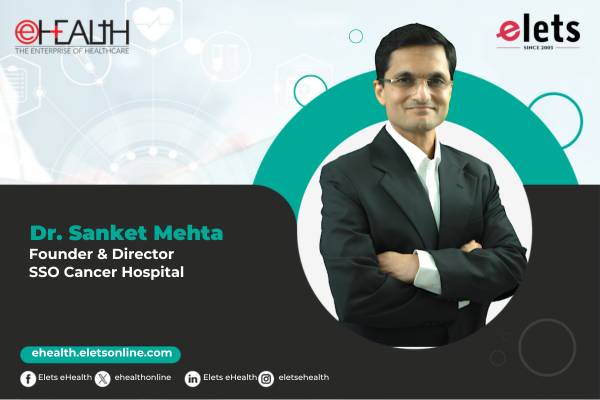
Views expressed by: Dr. Sanket Mehta, Founder & Director, SSO Cancer Hospital

 Like
Like
 Dislike
Be a part of Elets Collaborative Initiatives. Join Us for Upcoming Events and explore business opportunities. Like us on Facebook , connect with us on LinkedIn and follow us on Twitter , Instagram.
Disclaimer: The views and opinions expressed in this article are solely those of the author and do not necessarily reflect the official policy or views of any organisation. The content is intended for informational and educational purposes only and should not be construed as medical advice.
"Exciting news! Elets technomedia is now on WhatsApp Channels Subscribe today by clicking the link and stay updated with the latest insights!" Click here!