



Magazine
Rewiring Neurocare in India: Breakthrough Technologies Transforming Diagnosis, Treatment & Access
Rewiring Neurocare in India: Breakthrough Technologies Transforming Diagnosis, Treatment & Access
![]() By Dr. Asawari Savant, eHealth Network - 14 August 2025
By Dr. Asawari Savant, eHealth Network - 14 August 2025


India’s neurology landscape is undergoing a rapid transformation, driven by an urgent need to address the rising burden of neurological disorders and enabled by cutting-edge technological innovations. From early detection to rehabilitation, the integration of digital tools, AI, robotics, and smart diagnostics is ushering in a new era of precision neurocare. As someone deeply involved in clinical innovation and health-tech mentorship, this shift is unfolding across multiple touchpoints of the patient journey, from early detection to rehabilitation and chronic disease management.

From Specialised to Mainstream: DBS and Brain Pacemakers Leading the Way
Technologies like Deep Brain Stimulation (DBS) and brain pacemakers, once considered specialised procedures, have become increasingly accessible across India. With improved surgical infrastructure and increased public awareness, these interventions are now being enhanced through real-time neuroimaging, AI-based diagnostics, and precision targeting systems. These advancements enable personalised DBS treatments with fewer side effects and improved patient outcomes.
The future holds promise for AI-enabled closed-loop stimulation systems and remote DBS programming, which are poised to transform treatment protocols for complex conditions like epilepsy, Parkinson’s disease, dystonia, and treatment-resistant depression.
Marengo Asia’s Tech-Driven Neurology Model
Marengo Asia is at the forefront of transforming neurocare through the strategic application of AI, robotics, and data intelligence. In stroke management, AI-based imaging analytics have significantly reduced the door-to-needle time, a crucial factor in improving survival and recovery rates. Robotics is now a central component in neuro-rehabilitation, offering customisable, repetitive therapy modules that accelerate motor recovery.

Centralised data platforms and real-time dashboards facilitate cross-centre collaboration among multidisciplinary teams, ensuring that patients receive standardised and timely interventions across all Marengo Asia locations.
Advanced Diagnostics and Remote Monitoring for Early Detection
The integration of high-resolution neuroimaging, portable EEGs, and biomarker-based diagnostics is helping clinicians detect neurological conditions even before clinical symptoms emerge. Wearable neuro-monitors and smart sleep trackers provide longitudinal data that are instrumental in diagnosing conditions such as epilepsy, dementia, and mood disorders.
These innovations are especially impactful in Tier-2 and Tier-3 cities, where access to neurologists is limited. Remote monitoring and teleconsultation capabilities are enabling timely interventions and helping to reduce the long-term disease burden in underserved regions.
Health-Tech Startups: Disruptive Innovations on the Horizon
As a mentor to health-tech startups, Dr. Gupta identifies several disruptive innovations with the potential to reshape diagnostics and rehabilitation. AI-powered speech and voice analysis tools are showing promise in detecting early-stage neurological conditions like ALS and Parkinson’s. Portable, app-integrated gait and balance assessment devices are helping assess fall risk in geriatric populations.
Rehabilitation is also seeing a shift with gamified neurofeedback platforms using augmented and virtual reality. Another exciting development is the use of digital twins—virtual simulations of brain activity—to aid in treatment planning and clinical decision-making.
MAIINS: Smart Technologies Embedded Across the Patient Journey
The Marengo Asia International Institute of Neuro & Spine (MAIINS) is leading efforts to integrate smart technologies into routine clinical workflows. Wearable neuro-monitors are being piloted to track tremors, seizures, and sleep patterns, with data being fed into EMRs for real-time alerts and monitoring.
Handheld EEGs and point-of-care cognitive tests are being deployed in outreach camps and mobile clinics, empowering neurologists to make fast, informed decisions in time-critical scenarios. These tools are proving particularly valuable in managing strokes and epileptic conditions in remote or resource-constrained environments.
Bridging the Urban-Rural Divide with Digital Health Ecosystems
Digital innovation is a game-changer in bridging India’s urban-rural neurology care gap. Tele-neurology platforms are connecting patients in remote areas with specialists, enabling consultations without the need for travel. Mobile stroke units equipped with CT scanners and teleradiology capabilities are facilitating timely diagnosis and life-saving interventions.
Equally important are digital health literacy initiatives—such as IVR-based educational programs, multilingual chatbots, and regional-language health apps—that are empowering rural populations to manage chronic neurological conditions effectively.
The Road Ahead: Where Innovators Should Focus
For healthcare startups and innovators aiming to address India’s complex neurocare challenges, the key lies in creating solutions that are affordable, adaptable, and accessible. Emphasis must be placed on culturally appropriate interfaces, low-resource adaptability, and long-term clinical outcomes.
Priority innovation areas include:
- Early detection of neurodevelopmental and cognitive disorders
- Affordable home-based rehabilitation solutions for stroke patients
- AI-powered neurology triage systems for emergency use
- Language-independent neuro assessment tools
- Integration of mental health monitoring for comorbid psychiatric symptoms
Also read: Leading India’s Healthcare IT Innovations: Technology, AI, and Ecosystem Synergy Fueling Growth
Collaborating with clinicians early in the development process, aligning with regulatory requirements, and building for long-term impact will be essential for achieving meaningful and scalable success. The convergence of breakthrough technologies with patient-centric strategies is reshaping the future of neurocare in India. As digital tools continue to evolve, their integration into India’s healthcare ecosystem offers a transformative opportunity to make advanced neurology accessible, efficient, and equitable for all.
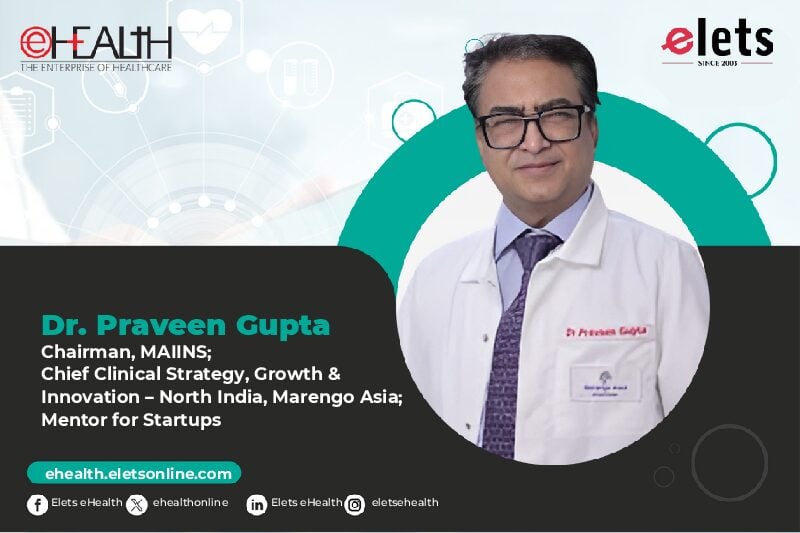
Views expressed by: Dr. Praveen Gupta, Chairman, Marengo Asia International Institute of Neuro & Spine (MAIINS); Chief Clinical Strategy, Growth & Innovation – North India, Marengo Asia; Mentor for Startups

 Like
Like
 Dislike
Be a part of Elets Collaborative Initiatives. Join Us for Upcoming Events and explore business opportunities. Like us on Facebook , connect with us on LinkedIn and follow us on Twitter , Instagram.
"Exciting news! Elets technomedia is now on WhatsApp Channels Subscribe today by clicking the link and stay updated with the latest insights!" Click here!