



Article
Reaching Vulnerable Populations Through Mobile Medical Units: UDS Foundation’s ‘Care on Wheels’
Reaching Vulnerable Populations Through Mobile Medical Units: UDS Foundation’s ‘Care on Wheels’
![]() By eHealth Network - 25 August 2026
By eHealth Network - 25 August 2026


For millions of Indians, the biggest barrier to healthcare is not the lack of doctors or hospitals. It is the inability to reach them. Through its Care on Wheels Mobile Medical Units, UDS Foundation is working to bridge this gap by taking essential healthcare services directly to vulnerable and underserved communities. Long distances, poor transport, disability, loss of daily wages and difficult terrain often turn manageable health conditions into medical emergencies. The initiative demonstrates a simple but powerful idea: instead of waiting for patients to come to healthcare, healthcare must reach the patient.

India has made significant investments in strengthening its healthcare infrastructure, yet access remains uneven. Health experts increasingly recognise that vulnerability is not defined by income alone. Geography, age, disability, social exclusion and limited mobility can prevent people from seeking timely medical care. A health centre may exist within a district, but if reaching it requires an elderly person to travel several hours or a daily wage worker to forgo a day’s income, healthcare remains out of reach. In such situations, distance itself becomes a health risk.
This is why Mobile Medical Units are becoming an important extension of India’s primary healthcare system. Their role goes far beyond conducting medical camps. Regular visits help build trust within communities, encourage preventive care, detect illnesses early and ensure patients receive continued follow-up. For chronic diseases, maternal health and child healthcare, this continuity often makes the difference between timely treatment and avoidable complications.
UDS Foundation’s Care on Wheels follows this approach. Rather than functioning as a one-time outreach programme, it aims to create a continuous healthcare connection for underserved communities. The medical teams provide consultations, basic diagnostics, health education, screening programmes and referrals to higher centres whenever specialised treatment is required. More importantly, they return to the same communities, allowing doctors to monitor patients over time instead of seeing them only once.

One such patient was Lakshmi (name changed), a 23-year-old expectant mother who had missed two antenatal check-ups because travelling to the nearest health facility involved multiple bus journeys and several hours away from home. During a routine Care on Wheels visit, the medical team noticed that her pregnancy was not progressing as expected and referred her for an ultrasound at a higher centre. The scan confirmed early intrauterine growth restriction (IUGR), a condition in which the baby grows more slowly than expected. Because the warning signs were recognised early, Lakshmi received specialist obstetric care, nutritional support and regular monitoring until delivery. Both mother and baby remained healthy. The intervention was not the ultrasound itself—it was the consistent outreach that ensured the problem was detected before it became an emergency.
Another beneficiary, Ramesh (name changed), a 61-year-old daily wage worker, had been living with hypertension for several years. Although medication had been prescribed earlier, he rarely attended follow-up appointments because every hospital visit meant losing a day’s earnings. During repeated visits by the Care on Wheels team, doctors found that his blood pressure remained dangerously uncontrolled. He was counselled, referred to a physician and started on a revised treatment plan. Subsequent visits allowed the team to monitor his progress, reinforce medication adherence and ensure that his blood pressure stabilised, significantly lowering his long-term risk of stroke and kidney disease. Once again, the real success was not a single consultation but continuity of care.
These stories highlight an important lesson. Primary healthcare rarely succeeds through dramatic interventions alone. It succeeds through repeated contact, patient education, regular monitoring and timely referrals. Mobile Medical Units provide exactly that. They help identify health risks before they become medical crises while ensuring that patients remain connected to the formal healthcare system.
Technology is making this model even stronger. Digital health records, telemedicine support and structured referral pathways allow patients screened in remote communities to receive specialist care without losing continuity. Instead of isolated medical camps, Mobile Medical Units can become part of an integrated healthcare network that links community-based services with hospitals and specialists.
Vulnerability is often misunderstood as only an economic condition. In reality, it is also created by distance, limited mobility, disability and the inability to access healthcare consistently. When people cannot reach healthcare, healthcare must reach them. Mobile Medical Units are not simply vehicles delivering treatment. They are a way of restoring equity by removing one of the barriers that made these communities vulnerable in the first place.
As India works towards universal healthcare, Mobile Medical Units deserve to be viewed as more than outreach vehicles. They are an important part of the country’s healthcare delivery system, bringing preventive care, early diagnosis and continued medical support closer to people who need it most.
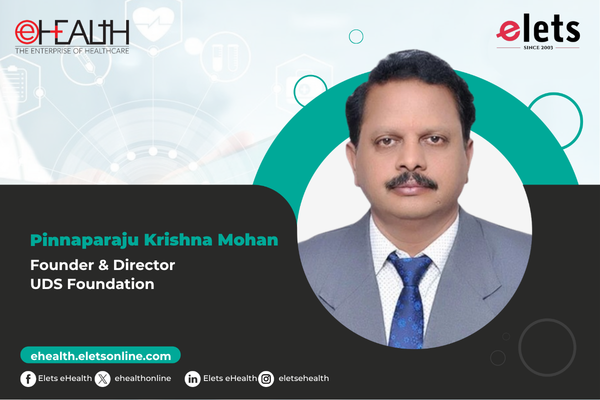
Views expressed by: Pinnaparaju Krishna Mohan, Founder & Director, UDS Foundation

 Like
Like
 Dislike
Be a part of Elets Collaborative Initiatives. Join Us for Upcoming Events and explore business opportunities. Like us on Facebook , connect with us on LinkedIn and follow us on Twitter , Instagram.
Disclaimer: The views and opinions expressed in this article are solely those of the author and do not necessarily reflect the official policy or views of any organisation. The content is intended for informational and educational purposes only and should not be construed as medical advice.
"Exciting news! Elets technomedia is now on WhatsApp Channels Subscribe today by clicking the link and stay updated with the latest insights!" Click here!