



Article
One Platform, Not Five Apps: Why Workplace Healthcare Needs to Stop Fragmenting
One Platform, Not Five Apps: Why Workplace Healthcare Needs to Stop Fragmenting
![]() By Dr. Asawari Savant, eHealth Network - 29 October 2026


Ask any HR head what their wellness stack looks like and you’ll hear a list. One app for mental health. Another for diabetes. A gym tie-up. A health check-up vendor. A pharmacy partner. And the insurer’s own wellness programme running quietly on the side.

Each of these may be perfectly good. The trouble is that none of them talk to each other.
I call it point solution fatigue, and I see it in almost every corporate conversation I have. HR teams spend their time chasing vendors for utilisation reports. Employees get a steady drip of notifications from platforms they barely remember signing up for. Brokers and insurers ask about outcomes, and the honest answer is usually a spreadsheet stitched together by hand.
The Numbers Behind The Problem
India’s chronic disease burden is not a future risk. It is already here. The ICMR-INDIAB study, published in *The Lancet Diabetes & Endocrinology* in 2023, estimated about 101 million people living with diabetes and another 136 million with prediabetes. The same body of work pointed to hypertension affecting roughly 315 million Indians. WHO’s country estimates have long put non-communicable diseases at well over half of all deaths in India.

Now put that next to what employers are paying. Medical cost inflation in India has been running in double digits for several years, and group health claims have followed. Much of that cost comes from conditions that were quietly building for years: uncontrolled blood sugar becoming a cardiac event, untreated hypertension becoming kidney trouble. By the time these show up as a claim, the cheap window for intervention has closed.
So the real question for corporates is simple. Are we finding these risks early enough to do something about them?
Why More Apps Won’t Fix This
Most workplace wellness spending today is counted as a benefit or an expense. It rarely gets treated as something that can bend the cost curve. Part of the reason is that fragmentation hides the signal. A step count sits in one system, a lab result in another, a prescription in a third. Nobody sees the whole person, so nobody can act on the whole person.
You cannot fix a connected health problem with disconnected tools.
What The Shift Looks Like
When I talk to corporates and insurers now, the questions have changed. Two or three years ago it was, “What wellness services can you offer?” Today it is, “What difference will this make to claims and to employee health?” That is a harder question, and a better one.
Answering it means rethinking a few things.
Engagement needs a better definition
An app download or a login is not engagement. Booking a consultation is. So is completing a health check-up, keeping up with blood pressure or glucose readings, or reordering medicines on time. Those are the actions that change outcomes.
Adherence is the quiet gap
Diagnosis is rarely the weak link. Medication adherence is. Studies across chronic conditions consistently show that a large share of patients stop or skip treatment within the first year. A programme that identifies risk but has no answer for refills and follow-through is only doing half the job.
Early identification has to be continuous
The annual health check-up is a snapshot. Connected devices and periodic digital assessments give a moving picture, which is what you need to catch drift before it becomes disease.
Different people need different views of the same data
HR cares about utilisation and population health. The insurer cares about risk and claims. The doctor needs clinical detail. The employee wants something simple. The underlying health record, though, should not change depending on who is looking at it.
What The Evidence Says
International research on structured chronic disease management is encouraging. Disease-management programmes for diabetes, for example, have been linked to fewer hospitalisation-related events and lower per-member costs in several studies. Results vary with the population, how the programme is designed and how well it is run, and Indian data is still thin. But the direction is consistent: finding risk early and following it with sustained clinical support tends to change the economics.
Also read: Healthcare AI Has Trust Issues, But India Could Change That
Who Owns The Outcome?
Here is the uncomfortable arithmetic. If five vendors each handle 20% of an employee’s health journey, nobody is accountable for the whole of it. Adding a sixth vendor does not fix that.
For insurers, TPAs and employers, the goal for the next few years should be fewer, better-connected pieces: data that moves with the patient, clinicians who can see what happened before they walked in, and a delivery chain that makes it easy for the employee to actually follow the plan.
Not another app. Not another campaign. Not another dashboard.
Workplace healthcare will be judged by whether it keeps people healthier and costs more predictable. Integration is how it gets there.
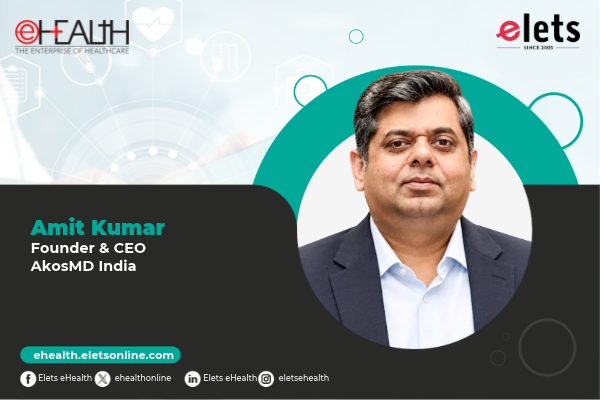
Views expressed by: Amit Kumar, Founder & CEO, AkosMD India

 Like
 Dislike
Be a part of Elets Collaborative Initiatives. Join Us for Upcoming Events and explore business opportunities. Like us on Facebook , connect with us on LinkedIn and follow us on Twitter , Instagram.
Disclaimer: The views and opinions expressed in this article are solely those of the author and do not necessarily reflect the official policy or views of any organisation. The content is intended for informational and educational purposes only and should not be construed as medical advice.
"Exciting news! Elets technomedia is now on WhatsApp Channels Subscribe today by clicking the link and stay updated with the latest insights!" Click here!