



Article
Endometriosis Is a Workplace Health Issue, Not Just a Women’s Health Issue
Endometriosis Is a Workplace Health Issue, Not Just a Women’s Health Issue
![]() By Dr. Asawari Savant, eHealth Network - 29 October 2026


When organisations talk about women’s health, the discussion often begins and ends with maternity. But a woman’s health needs do not begin with pregnancy or end with maternity leave. Millions of women spend their most economically productive years managing health conditions that can directly affect their ability to work, progress and participate fully in the workforce. Endometriosis is one of them.

Endometriosis affects approximately 10% of women and girls of reproductive age globally, according to the World Health Organization. It can cause severe menstrual pain, chronic pelvic pain, fatigue, heavy bleeding and fertility-related challenges. Yet its impact is not confined to the consultation room. For working women, the condition can influence attendance, concentration, energy levels, career choices and, in some cases, their decision to remain in or leave the workforce.
This makes endometriosis more than a women’s health issue. It is a workforce participation issue.
One of the biggest workplace challenges is that endometriosis is often invisible. A woman may be physically present at work while dealing with significant pain, fatigue or medication-related effects. Traditional workplace metrics may record her as present, but they do not capture the productivity she may be losing while trying to work through symptoms. This is where organisations need to move beyond measuring absenteeism alone and recognise the impact of presenteeism.

Research has demonstrated the scale of this issue. Studies have found substantial productivity losses among women with endometriosis, with reduced effectiveness while working accounting for a significant proportion of the overall impact. More recent research has also reported reduced productivity and missed work among women living with the condition.
The business implication is important. When an experienced employee repeatedly works through severe symptoms, the organisation does not necessarily see a problem on its attendance dashboard. It may instead see slower output, reduced concentration, disengagement or declining performance. If the condition remains unrecognised and untreated, the eventual cost can be much larger, through prolonged absence, attrition or loss of experienced talent.
India has made important progress in creating a policy environment that recognises women’s participation and welfare at work. The labour framework provides for maternity benefits, nursing breaks and crèche facilities in eligible establishments, while also establishing provisions around non-discrimination and women’s participation across workplaces. The Sexual Harassment of Women at Workplace Act also provides an institutional framework for safety and dignity at work.
These are important protections. But the next phase of workplace inclusion needs to address something more fundamental: whether women can remain productive and progress in their careers while managing health conditions that disproportionately affect them.
This does not mean creating a separate workplace model for every medical condition. It means creating enough flexibility within existing systems to accommodate genuine health needs. Flexible working arrangements during periods of severe symptoms, easier access to healthcare, appropriate medical insurance, manager awareness and a workplace culture where seeking medical support is not viewed as a lack of commitment can make a meaningful difference.
The strongest organisations will understand that flexibility is not a concession. It is a productivity tool.
If an employee can work effectively from home for a day when symptoms are severe rather than taking several days off, both the individual and organisation benefit. If early diagnosis prevents years of unmanaged symptoms, the benefit extends beyond fewer sick days. It can mean greater continuity, stronger engagement and the retention of experienced women at precisely the stage when organisations have invested significantly in their skills and leadership capabilities.
There is also a larger economic argument. India’s ability to increase women’s participation in the workforce is closely linked to how effectively workplaces respond to the realities of women’s lives. A health condition that causes women to reduce working hours, turn down opportunities or leave employment can therefore have implications beyond the individual employee. It can affect household income, organisational talent pipelines and the wider economy.
For this reason, women’s health should move from being an HR initiative to becoming part of organisational productivity strategy.
Companies can begin with simple interventions. Regular women’s health awareness programmes, access to specialist healthcare, confidential avenues for seeking support, manager sensitisation and flexible work policies can create a workplace where health challenges are addressed early rather than after they become career-limiting.
Endometriosis also teaches us an important lesson about workplace measurement. Presence is not the same as productivity, and productivity is not sustainable when health is ignored.
Also read: The Rise of Intelligent, Digitally Enabled & Net Zero-Ready Healthcare Infrastructure
A workplace that supports women’s health is not lowering its expectations. It is removing avoidable barriers to performance. When women are able to access timely diagnosis, appropriate treatment and reasonable workplace support, organisations are better positioned to retain talent, reduce productivity loss and enable women to contribute at their full potential.
The conversation around endometriosis therefore needs to move beyond awareness. It needs to reach boardrooms, HR policies and workplace culture. Women’s health is not separate from business performance. It is part of the human infrastructure that makes sustainable performance possible.
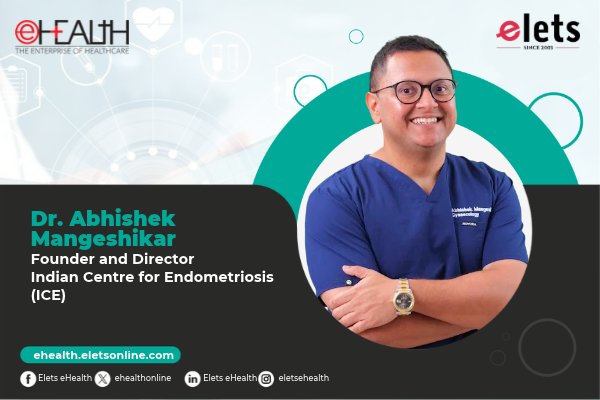
Views expressed by: Dr. Abhishek Mangeshikar, Founder and Director, Indian Centre for Endometriosis (ICE)

 Like
 Dislike
Be a part of Elets Collaborative Initiatives. Join Us for Upcoming Events and explore business opportunities. Like us on Facebook , connect with us on LinkedIn and follow us on Twitter , Instagram.
Disclaimer: The views and opinions expressed in this article are solely those of the author and do not necessarily reflect the official policy or views of any organisation. The content is intended for informational and educational purposes only and should not be construed as medical advice.
"Exciting news! Elets technomedia is now on WhatsApp Channels Subscribe today by clicking the link and stay updated with the latest insights!" Click here!