


Article
Cracking the IVF Affordability Barrier: Can AI in Health Financing Change the Game?
Cracking the IVF Affordability Barrier: Can AI in Health Financing Change the Game?
![]() By Dr. Asawari Savant, eHealth Network - 18 August 2025
By Dr. Asawari Savant, eHealth Network - 18 August 2025


In India, the dream of parenthood remains financially out of reach for many couples, who turn to in-vitro fertilisation (IVF). Despite rising infertility rates, improved IVF success outcomes, and wider adoption of advanced reproductive technologies, affordability continues to be the greatest barrier. With treatment costs averaging ₹1.5 lakh to ₹2.5 lakh per cycle—and often requiring multiple cycles, the financial burden can easily spiral to ₹5 lakh or more.

Although some insurers have begun offering IVF coverage, these policies are restrictive, providing only minimal support under narrow clauses. This leaves families to shoulder high upfront expenses, often resorting to personal loans or high-interest credit cards, adding financial stress to an already emotional journey.
Against this backdrop, fintech innovation and AI-driven healthcare financing models are emerging as potential game-changers. With solutions such as zero-interest EMIs, flexible repayment structures, and predictive financial planning, IVF is gradually becoming more accessible to underserved couples.
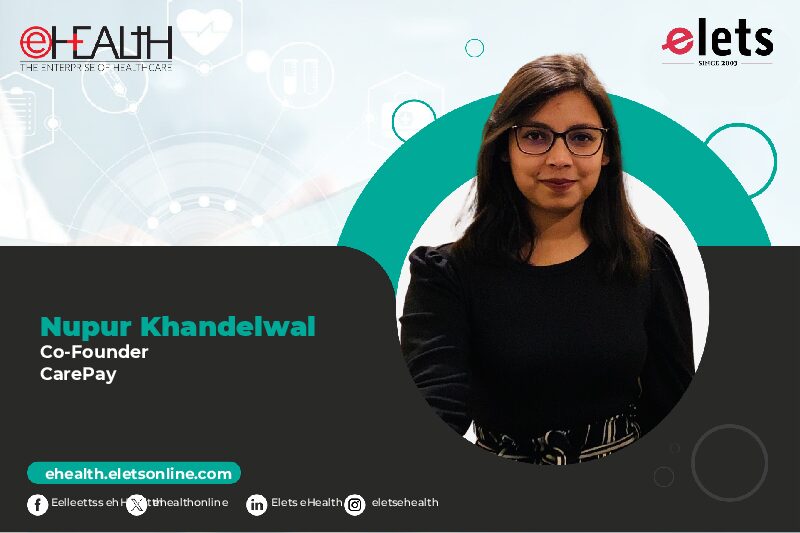
“The real breakthrough in technology lies in reimagining how healthcare is financed. By using AI to assess a patient’s unique circumstances, we can approve tailored financial plans in minutes, removing financial uncertainty and allowing couples to focus on their treatment journey. In IVF, where timing is critical, this speed and certainty can change everything,” expressed by Nupur Khandelwal, Co-Founder, CarePay

The IVF Affordability Challenge
India’s total fertility rate has dropped to 1.9, below the replacement level of 2.1, according to the United Nations Population Fund (UNFPA). Yet, IVF treatments remain out of reach for most households. The dual challenge of high costs and inadequate insurance support forces many couples to either delay treatment or abandon it altogether.
This affordability gap also impacts fertility clinics, limiting their patient base largely to upper-middle-class demographics. Expanding access through innovative financing solutions could unlock a much wider segment of the population—benefiting both patients and providers.
AI-Driven Health Financing: Redefining Access
Healthcare financing platforms are increasingly embedding artificial intelligence to enable real-time, personalised affordability assessments. By analysing medical history, financial standing, and repayment capacity, AI enables risk-based digital lending for fertility treatments—once considered too risky for traditional lenders.
Key innovations include:
- Zero-interest EMIs co-created with fertility clinics, aligned to a patient’s financial situation.
- Predictive payment models that assess repayment behaviour beyond traditional credit scores—factoring in employment stability, spending patterns, and even treatment success probability.
- Instant approvals that reduce delays, critical in IVF treatments, where timing affects success rates.
This model not only lowers default risk for lenders but also builds financial confidence among patients—allowing them to proceed with treatment without hesitation.
AI in Practice: Beyond Credit Scores
Traditionally, couples faced lump-sum bills for IVF, creating major financial roadblocks. AI-driven financing changes this by offering customizable repayment options, such as zero-interest plans over 12–24 months, adjustable based on treatment needs.
Some fintech platforms are also integrating Electronic Medical Records (EMRs) into financing assessments. This enables pre-approved financing, providing couples with clarity on eligibility before beginning treatment—reducing uncertainty and improving clinic conversion rates.
As Nupur Khandelwal notes, financial well-being has a direct impact on clinical outcomes: “Financial stress has a direct impact on treatment outcome. When patients are not weighed down by money worries, they are more consistent with medical advice and more engaged in the process. Flexible financing not only eases the financial burden but also creates conditions that improve chances of success.”
Breaking Psychological, Social, and Financial Barriers
Addressing IVF affordability requires a three-pronged strategy:
- Affordability – offering cost-spreading mechanisms that reduce upfront financial pressure.
- Accessibility – expanding availability of financing solutions to underserved regions and demographics.
- Supportive Care – integrating financing with counselling, preventive care, and patient engagement.
AI-powered health financing sits at the convergence of technology, healthcare, and financial innovation, creating a more inclusive fertility ecosystem. By aligning the interests of patients, providers, and lenders, it has the potential to transform IVF from a luxury for a few into an accessible healthcare solution for many.
Also read: How the Insurance Amendment Act Can Power India’s Healthspan & Lifespan Revolution
For India’s healthcare industry, IVF affordability is not just a patient challenge—it is a policy, insurance, and financing imperative. As healthcare costs rise and fertility rates decline, the industry must innovate beyond clinical excellence to address financial barriers.
AI-driven financing models present an opportunity to bridge the gap, scale adoption, and empower more couples to realise their dream of parenthood. For insurers, healthcare providers, and fintech leaders, this is not just about enabling treatments—it is about reshaping the future of fertility care in India.
Views expressed by Nupur Khandelwal, Co-Founder, CarePay

 Like
Like
 Dislike
Be a part of Elets Collaborative Initiatives. Join Us for Upcoming Events and explore business opportunities. Like us on Facebook , connect with us on LinkedIn and follow us on Twitter , Instagram.
Disclaimer: The views and opinions expressed in this article are solely those of the author and do not necessarily reflect the official policy or views of any organisation. The content is intended for informational and educational purposes only and should not be construed as medical advice.
"Exciting news! Elets technomedia is now on WhatsApp Channels Subscribe today by clicking the link and stay updated with the latest insights!" Click here!