


Article
How the Insurance Amendment Act Can Power India’s Healthspan & Lifespan Revolution
How the Insurance Amendment Act Can Power India’s Healthspan & Lifespan Revolution
![]() By Dr. Asawari Savant, eHealth Network - 18 August 2025
By Dr. Asawari Savant, eHealth Network - 18 August 2025


India’s insurance market is facing a decisive change with the introduction of the Insurance Laws (Amendment) Bill 2023 to revise the Insurance Act 1938 and the IRDAI Act, 1999. The bill brings in reforms that extend beyond structural change. It provides for the insurance sector to shift from processing claims to taking a proactive role in ensuring the long-term health and financial protection of policyholders.

Reduced Capital Requirements
One of the key provisions of the Bill is the lowering of the capital requirement for establishing insurance companies. The existing level of ₹100 crore has traditionally restricted entrance to the market by bigger players. Lowering this requirement opens up the industry to smaller players who can potentially introduce targeted solutions to specific groups, e.g., regional health care or elder care models. This would motivate new players to create products that serve underpenetrated segments of the population.
Composite Licensing for Seamless Coverage
Another reform suggested is the issuance of composite licences, where insurers can supply both life and non-life products within a single framework. This is a pragmatic reaction to how individuals perceive health and financial occurrences. Sickness, hospital stays, long-term care requirements, and death are frequently entangled. A composite licence could make it possible to create more holistic and integrated products that reflect actual life situations instead of being limited by regulatory definitions.
Captive Insurance to Contain Industry-Specific Risks
The Bill also seeks to introduce enabling legislation to allow large corporations to establish captive insurance companies. These would allow organisations to control risk in-house by developing cover that is specific to their operating requirements. This is especially pertinent for industries like manufacturing, logistics, or infrastructure, where the type of risk is unique and needs bespoke responses.

From Reimbursement to Preventive Care
The most visionary shift in the Bill is perhaps the section that allows insurers to directly provide health services. This is a break from the conventional model, where insurance was restricted to coverage of costs of medical care in financial terms. In the new model, insurers can offer services such as preventive care, wellness screening, and chronic disease management. This can result in improved health outcomes and reduced claims, bringing insurers’ and policyholders’ interests into alignment.
Capturing Real-Life Requirements
Traditionally, Indian insurance products have centred on specific events like death or hospitalisation. Yet individuals perceive health and financial needs as a continuum. Increasingly, there is awareness that insurance design has to change to cater to this reality. Products must not only cover the threat of illness or death but also the determinants of long-term well-being, including early diagnosis, lifestyle factors, and continuous care.
Practically, this would involve creating products that facilitate two interrelated objectives: healthspan and lifespan. Healthspan can be understood as years lived in good health, whereas lifespan indicates the number of total years lived. Insurance can facilitate healthspan by providing tools and services that aid preventive care, control chronic diseases, and foster healthier behaviours. Parallel to that, it can sustain a lifespan by offering financial instruments that guard against loss of income, excessive medical expenses, or long-term care requirements later in life.
Market Conditions: Willingness to Change
India’s healthcare landscape makes a strong case for rethinking insurance design. Around 520 million Indians, just 36% of the population, are covered by some form of health insurance, with nearly 60% of this coverage provided through government schemes. The remainder, comprising individual retail and group plans, is expected to grow steadily. With healthcare costs rising at approximately 14% annually, people are increasingly seeking insurance products that go beyond reimbursement to offer greater support in managing medical expenses and ongoing care.
The flexibility created by the Bill would also enable more localised models of insurance. Regional or micro-insurance licences would permit companies to construct solutions that are custom-designed for groups of people. These would integrate rudimentary financial coverage with care, such as virtual consultations or regular health screens, delivering meaningful access to care in areas that otherwise lack it.
Also read: Beyond Products: Building Belonging for the Future of India’s Skincare Industry
Redefining the Insurer’s Role
This agenda for reform portends a change in insurers’ role. It challenges them not just to protect against risk but also to engage over the long term with their customers. This involves building more robust service infrastructure, enhancing interaction with policyholders, and integrating technology in order to maintain care and monitor risk continuously. The potential payoff could be improved health outcomes, greater customer retention, and more resilient business models.
The Insurance Amendment Act is more than just a regulatory refresh. It is indicative of a larger movement in terms of how financial protection and healthcare can be blended to better meet people’s needs. By addressing both healthspan and lifespan, insurers are able to recast their contribution to society, not only as monetary intermediaries but also as drivers of national health outcomes and long-term financial stability.
Over the next few years, the capacity to provide relevant, accessible, and ongoing support will be at the core of how insurance is understood and used in India. The changes proposed here are a step in that direction, stimulating innovation and more responsive services. While the industry transitions, it will be crucial to keep the customers’ needs at the forefront of this change.
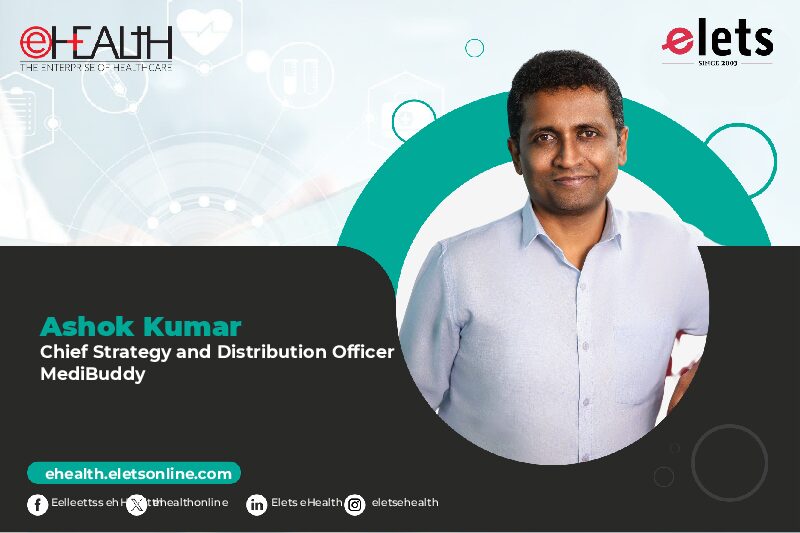
Views expressed by: Ashok Kumar, Chief Strategy and Distribution Officer, MediBuddy

 Like
Like
 Dislike
Be a part of Elets Collaborative Initiatives. Join Us for Upcoming Events and explore business opportunities. Like us on Facebook , connect with us on LinkedIn and follow us on Twitter , Instagram.
Disclaimer: The views and opinions expressed in this article are solely those of the author and do not necessarily reflect the official policy or views of any organisation. The content is intended for informational and educational purposes only and should not be construed as medical advice.
"Exciting news! Elets technomedia is now on WhatsApp Channels Subscribe today by clicking the link and stay updated with the latest insights!" Click here!