


Article
Maharashtra Sets 5-Km Primary Healthcare Goal, Plans Unified Digital Health Ecosystem
Maharashtra Sets 5-Km Primary Healthcare Goal, Plans Unified Digital Health Ecosystem
![]() By Dr. Asawari Savant, eHealth Network - 26 September 2026
By Dr. Asawari Savant, eHealth Network - 26 September 2026


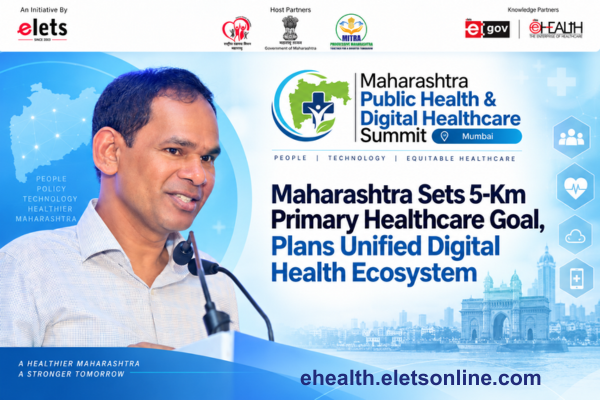
Maharashtra is looking to strengthen primary healthcare access and address fragmentation across its digital health infrastructure, with the state government outlining a vision to ensure essential primary healthcare services are available within a 5-kilometre radius or a 15–20-minute travel time for communities across the state.
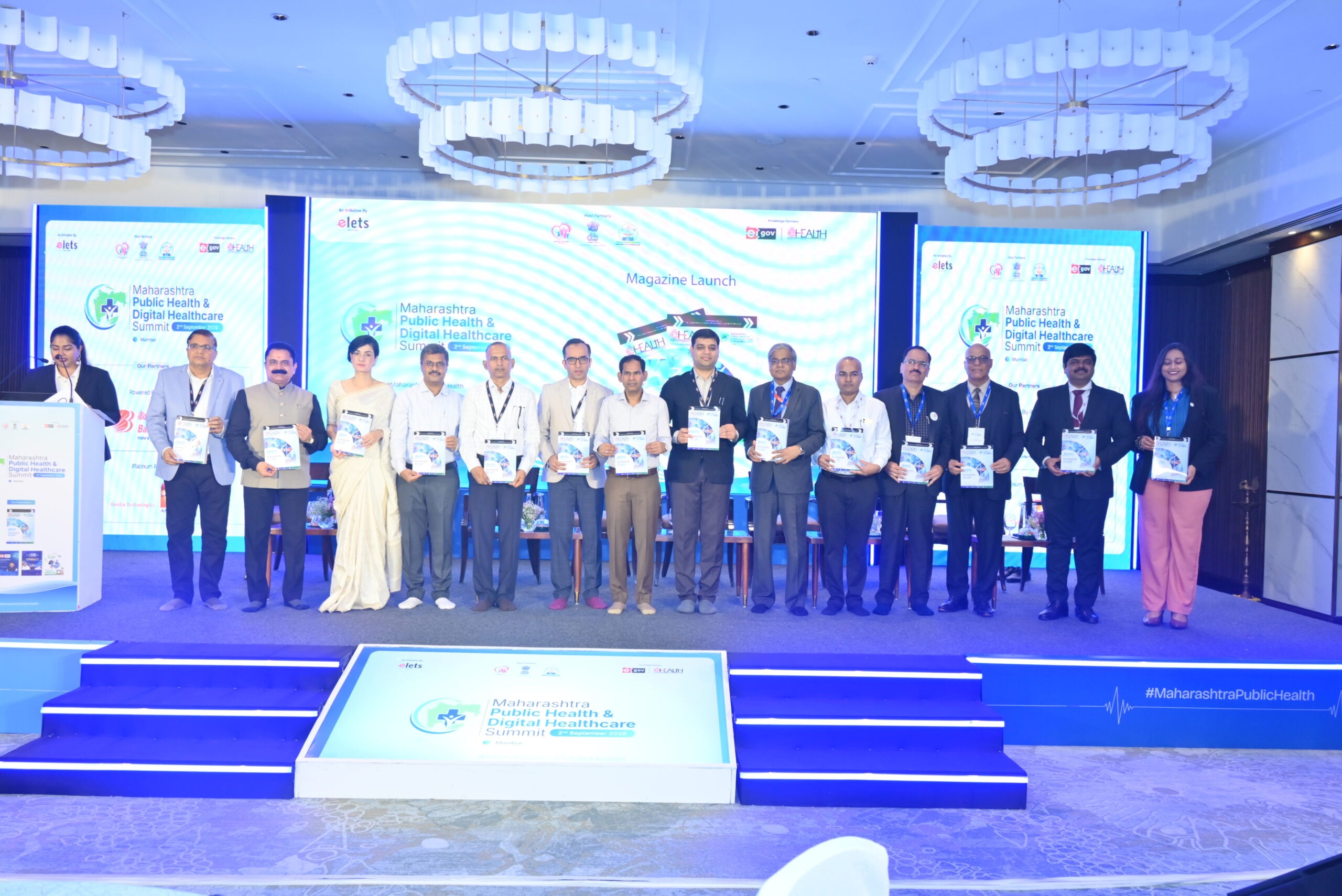
The priorities were outlined by E. Ravendiran, Secretary-2, Public Health Department, Government of Maharashtra, during the Maharashtra Public Health & Digital Healthcare Summit 2026 in Mumbai.
Hosted by the Public Health Department, Government of Maharashtra, co-hosted by the Maharashtra Institution for Transformation (MITRA), Planning Department, Government of Maharashtra, and organised by Elets Technomedia, with eGov and eHealth Magazine as Knowledge Partners, the summit brought together government and industry stakeholders to discuss the future of public health and digital healthcare in Maharashtra.

Primary Healthcare Within Reach
A key focus emerging from the state’s public health vision is to bring primary healthcare closer to citizens. Following a review at the level of the Chief Minister, the department has identified a target of ensuring that people can access primary healthcare within 5 km or within 15–20 minutes of reachable time.
The approach places greater emphasis on strengthening healthcare closer to communities, with accessibility, prevention and early intervention forming an important part of the state’s broader public health priorities.
The department also highlighted an existing imbalance in public health spending. According to the observations shared at the summit, approximately 60–65 per cent of Maharashtra’s public health expenditure is currently directed towards secondary healthcare. The department noted that this allocation needs to be examined in the context of national recommendations that emphasise a stronger focus on primary and preventive healthcare.
Maharashtra Eyes Integrated Digital Health Architecture
Digital transformation emerged as another major priority, particularly the need to move from fragmented digital systems towards a more integrated health technology ecosystem.
The department highlighted that more than 130 digital portals are currently being used across different health-related government schemes and programmes. Since these systems operate largely in silos, frontline and administrative personnel may have to enter similar information across multiple platforms.
This fragmentation also affects the way citizen-level health data can be used. A single citizen may be associated with multiple government health schemes or services, including employee state insurance, health assurance programmes and urban health services. However, when these platforms do not communicate with each other, the potential of the data generated through them remains limited.
The department noted that substantial volumes of data are being collected through these systems, but the larger opportunity lies in analysing and using that data to improve healthcare planning, service delivery and decision-making.
Industry Invited to Think Beyond Siloed Portals
Against this backdrop, the department called on technology and healthcare industry stakeholders to look beyond developing individual, single-purpose portals.
With an upcoming Request for Proposal (RFP) expected to shape the next phase of digital health development, industry has been encouraged to propose integrated and holistic digital health solutions capable of connecting multiple programmes, platforms and datasets.
The approach could create opportunities for technologies such as interoperable digital health platforms, analytics, artificial intelligence-enabled systems and other data-driven tools to support public health delivery, subject to the state’s requirements and implementation framework.
Medicity Concept Under Consideration
The summit also saw discussions around the proposed development of ‘Medicity’ projects in Maharashtra. The concept is currently at an early and conceptual stage, with the state indicating that there could be scope for industry participation and inputs as the idea evolves.
If developed, such an initiative could bring together multiple healthcare capabilities within an integrated ecosystem. However, the details, scope and implementation model are yet to be finalised.
From Digital Adoption to Digital Integration
The discussions at the summit point towards a broader shift in Maharashtra’s healthcare transformation agenda, from simply digitising individual services to building a connected, data-driven and citizen-centric health ecosystem.
For the state, the challenge now lies in translating these priorities into interoperable systems, stronger primary healthcare networks and actionable use of health data. For the technology industry, the proposed RFP and the state’s push for integrated solutions could provide an opportunity to contribute to a larger digital public health architecture rather than creating another layer of standalone platforms.
The vision outlined at the summit places two objectives at the centre of Maharashtra’s next phase of health transformation: bringing primary healthcare closer to citizens and making digital health systems work together.

 Like
Like
 Dislike
Be a part of Elets Collaborative Initiatives. Join Us for Upcoming Events and explore business opportunities. Like us on Facebook , connect with us on LinkedIn and follow us on Twitter , Instagram.
Disclaimer: The views and opinions expressed in this article are solely those of the author and do not necessarily reflect the official policy or views of any organisation. The content is intended for informational and educational purposes only and should not be construed as medical advice.
"Exciting news! Elets technomedia is now on WhatsApp Channels Subscribe today by clicking the link and stay updated with the latest insights!" Click here!