



Article
Sickle Cell Anemia: A Growing Public Health Concern from Global Burden to India’s Urgent Need for Early Diagnosis
Sickle Cell Anemia: A Growing Public Health Concern from Global Burden to India’s Urgent Need for Early Diagnosis
![]() By eHealth Network - 24 August 2026
By eHealth Network - 24 August 2026


Sickle cell anemia, the most severe form of sickle cell disease, is one of the most common inherited blood disorders in the world. Caused by a genetic mutation affecting hemoglobin, the protein that carries oxygen in red blood cells, the disease leads to misshapen, rigid “sickle-shaped” cells that can block blood flow, causing pain, organ damage, and life-threatening complications.
Globally, sickle cell disease is a major public health challenge, particularly in regions such as sub-Saharan Africa, the Middle East, the Mediterranean, and parts of Asia, including India. It is estimated that 75% of global cases occur in sub-Saharan Africa, but India carries one of the largest burdens outside Africa, making it a critical focus for intervention .
India: A high-burden country with unique challenges
India is now recognized as having the second-highest burden of sickle cell disease globally. The disease is particularly prevalent in central, western, and tribal regions, where certain communities have higher carrier rates due to genetic and socio-cultural factors.

Recent evidence from a 2026 study highlights the scale of the challenge as it found that India accounts for approximately 16% of global annual births with sickle cell disease, translating to tens of thousands of affected newborns each year. In endemic regions, the pooled birth prevalence is estimated at ~1,100 cases per 100,000 newborns, while nearly 10% of the population may carry the sickle cell trait. The disease also has a profound impact on child health. Sickle cell disorders contribute significantly to under-five mortality in India, emphasizing the need for early detection and timely intervention.

While sickle cell anemia is primarily a blood disorder, its impact extends far beyond. Patients often experience repeated episodes of severe pain (called vaso-occlusive crises), fatigue, and complications affecting organs such as the eyes, lungs, kidneys, and brain. These complications can begin early in life and significantly affect quality of life, education, and productivity, underscoring the need for a more holistic approach to care that goes beyond managing blood-related symptoms.
Why early diagnosis matters
Sickle cell anemia is present from birth and symptoms often appear in early childhood. Without early diagnosis, children are at risk of severe infections, anemia, pain crises, and long-term organ damage.
The good news is that early screening can dramatically improve outcomes. Newborn screening programs allow doctors to identify affected infants before symptoms begin, enabling early interventions such as preventive antibiotics, vaccinations, and regular monitoring. These measures can significantly reduce complications and improve survival.
However, despite its benefits, widespread screening is not yet universal across India. Data gaps, limited awareness, and uneven access to healthcare services continue to delay diagnosis in many regions .
Also Read: Building a New Model for Paediatric Care in India
The role of genetic testing and awareness
Sickle cell anemia is an inherited condition caused by a small mutation in the HBB gene, which is found on chromosome 11 and carries instructions for making hemoglobin. This tiny genetic change alters hemoglobin and the red blood cells become stiff and sickle-shaped under low oxygen, leading to blocked blood flow and disease symptoms. It is passed on in an “autosomal recessive” manner meaning the disease manifestation occurs when both the parents pass the mutant gene to the child whereas inheriting a single abnormal gene copy makes them a carrier without symptoms.
Therefore, genetic testing plays a crucial role not only in diagnosis but also in prevention. Identifying carriers can help families make informed decisions and reduce the risk of passing the condition to future generations through genetic counselling and prenatal testing.
In India, where certain communities have higher carrier frequencies, targeted screening and genetic counseling programs can have a transformative impact. Public health initiatives are increasingly focusing on large-scale screening, particularly among high-risk populations, to identify both affected individuals and carriers early.
Moving toward a healthier future
Currently, sickle cell anemia is treated using a combination of medicines, blood transfusions, and preventive care to reduce pain, prevent infections, and manage complications. Drugs like hydroxyurea can help reduce painful episodes, while regular vaccinations and check-ups help protect against serious illness. In some severe cases, blood transfusions or bone marrow (stem cell) transplants may be used, which is currently the only potential cure. Emerging treatments like gene therapy that aims to correct the underlying gene mutation responsible for the condition are promising. With early diagnosis and proper care, people with sickle cell disease can lead healthier and more stable lives.
However, addressing the issue of sickle cell anemia requires a multi-pronged approach, including increasing awareness, expanding newborn screening, improving access to diagnostic services, and strengthening long-term care. Encouragingly, India has begun to scale up national efforts with the National Sickle Cell Anaemia Elimination Mission aimed at screening millions of individuals and improving disease management.
While the burden remains high, advances in early diagnosis, supportive care, and emerging therapies are offering new hope. With sustained focus and investment, it is possible to reduce the impact of sickle cell anemia and improve quality of life for thousands of families across the country.
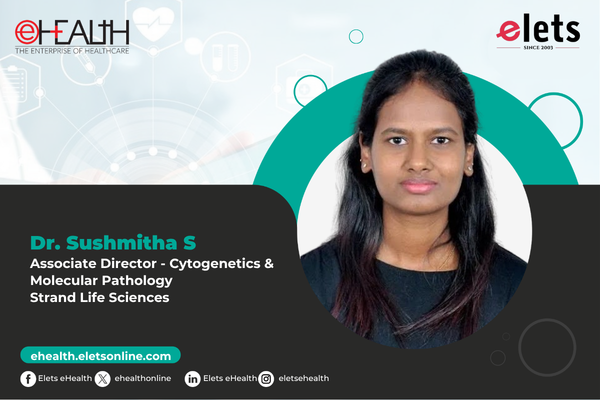
Views expressed by: Dr. Sushmitha S., Associate Director – Cytogenetics & Molecular Pathology, Strand Life Sciences

 Like
Like
 Dislike
Be a part of Elets Collaborative Initiatives. Join Us for Upcoming Events and explore business opportunities. Like us on Facebook , connect with us on LinkedIn and follow us on Twitter , Instagram.
Disclaimer: The views and opinions expressed in this article are solely those of the author and do not necessarily reflect the official policy or views of any organisation. The content is intended for informational and educational purposes only and should not be construed as medical advice.
"Exciting news! Elets technomedia is now on WhatsApp Channels Subscribe today by clicking the link and stay updated with the latest insights!" Click here!