



Article
Prevention is the New Protection: Why Preventive Healthcare Matters
Prevention is the New Protection: Why Preventive Healthcare Matters
![]() By Dr. Asawari Savant, eHealth Network - 05 June 2026
By Dr. Asawari Savant, eHealth Network - 05 June 2026


How a new generation of health-aware Indians is choosing to stay well, not just get treated.

For decades, healthcare in India has been largely reactive. People sought medical attention only when illness struck, and wellness was mostly an afterthought. That equation is slowly changing and what’s interesting to see is that people themselves are driving this.
What’s driving this shift is a deeper behavioural change. Lifestyle diseases are showing up earlier; the pandemic brought health risks into sharp focus, and urban life continues to stretch both physical and mental well-being. The result: people are no longer waiting for illness to act. They’re engaging with their health earlier and more consistently.

From Crisis Response to Everyday Wellness
The scale of this shift is hard to ignore. India’s NP-NCD programme has already seen over 39.5 crore hypertension screenings and 36.7 crore diabetes screenings. This isn’t just policy execution, it is participation. Millions of Indians are stepping into preventive healthcare before a crisis forces them to.

That behavioural change is reshaping what people expect from their healthcare experience. According to the BCG-CII Health Insurance Vision 2025 Report, nearly 74% of consumers now prefer preventive care offerings such as wellness programmes, health coaching, and routine monitoring, over reactive care alone. The Swiss Re Asia Life & Health Consumer Survey 2025 reinforces this: medical check-ups are the most sought-after wellness service, with nearly half of respondents actively prioritising them.
The Shift from Reaction to Prevention
The old model was straightforward: illness triggered action. Now, the sequence is reversing.
People are tracking fitness, booking regular screenings, managing stress, and seeking early interventions. Healthcare providers and digital platforms are beginning to align with this reality by offering preventive check-ups, wellness-linked programmes, health coaching, and integration with digital health tools.
This isn’t just a trend. It’s a structural shift in how health is understood. When prevention becomes central, the value equation changes for everyone. People stay healthier. The healthcare system sees fewer high-cost interventions. Engagement with one’s own health becomes continuous, not episodic. Prevention, in that sense, isn’t just a health strategy. It’s a smarter way to live.
But here’s the challenge: intent alone doesn’t drive adoption. Accessibility does. Preventive options hidden behind complexity or friction won’t be used, no matter how beneficial they are. The real differentiator isn’t whether prevention is available, but how seamlessly it fits into everyday life. Booking a health check-up shouldn’t feel like a task. Tracking activity shouldn’t require effort. Speaking to a doctor shouldn’t involve friction. When prevention is simple, people participate. Simplicity isn’t a cosmetic choice; it determines whether prevention happens at scale.
Building a Connected Health Ecosystem
At its most effective, preventive health doesn’t operate in isolation. It becomes a connective layer, linking individuals with wearable technology, digital health platforms, telemedicine services, and national health programmes. The impact of that goes far beyond individual well-being. Small, consistent nudges like a reminder, a check-in, a gentle prompt, build habits over time. And those habits, at scale, have the potential to influence broader public health outcomes.
Also read: AI Is Becoming India’s New Healthcare Workforce: Meet Top 10 Indian HealthTech Companies of 2026
What This Really Means
India is moving toward a more health-aware, prevention-first mindset. Preventive care is no longer a value-add. It’s becoming the baseline expectation.
Healthcare practitioners, digital health companies, and community health programmes that recognise this shift early won’t just improve outcomes. They’ll redefine their role in people’s lives, from responders to genuine partners in health.
Because in the long run, the true measure of a healthy society won’t be how well it treats illness, but how effectively it helps people avoid it in the first place. Those who embrace prevention not as an add-on but as a core commitment will build something far more durable than a service: trust.
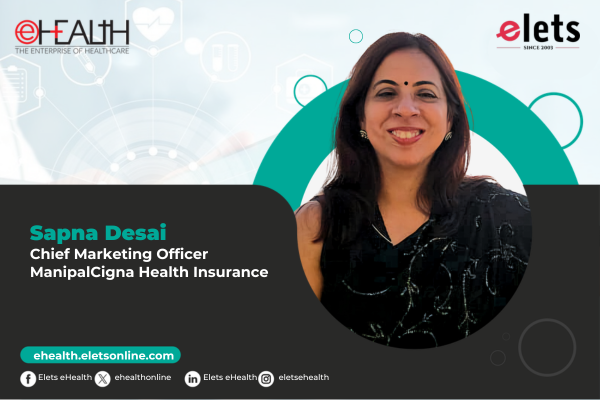
Views expressed by: Sapna Desai, Chief Marketing Officer, ManipalCigna Health Insurance

 Like
Like
 Dislike
Be a part of Elets Collaborative Initiatives. Join Us for Upcoming Events and explore business opportunities. Like us on Facebook , connect with us on LinkedIn and follow us on Twitter , Instagram.
Disclaimer: The views and opinions expressed in this article are solely those of the author and do not necessarily reflect the official policy or views of any organisation. The content is intended for informational and educational purposes only and should not be construed as medical advice.
"Exciting news! Elets technomedia is now on WhatsApp Channels Subscribe today by clicking the link and stay updated with the latest insights!" Click here!