



Article
The Hidden Cost of Poor Connectivity in Hospitals: Patient Experience, Payment Friction, and Everyday Challenges
The Hidden Cost of Poor Connectivity in Hospitals: Patient Experience, Payment Friction, and Everyday Challenges
![]() By Dr. Asawari Savant, eHealth Network - 08 April 2026
By Dr. Asawari Savant, eHealth Network - 08 April 2026


When connectivity in hospitals is discussed, the focus is often on systems and infrastructure. But for patients and their families, it comes down to simple moments like whether a payment goes through, a call connects, or an online consultation works smoothly. While hospitals have strong wired networks supporting critical operations, the wireless connectivity people rely on every day is often inconsistent. This gap may not always be obvious, but it plays a key role in shaping how smooth or stressful the overall experience feels.

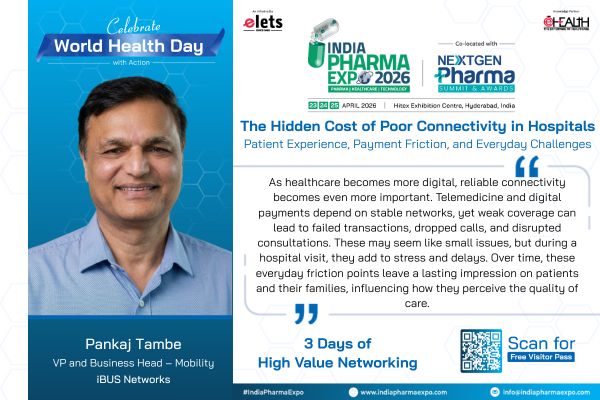
As healthcare becomes more digital, reliable connectivity becomes even more important. Telemedicine and digital payments depend on stable networks, yet weak coverage can lead to failed transactions, dropped calls, and disrupted consultations. These may seem like small issues, but during a hospital visit, they add to stress and delays. Over time, these everyday friction points leave a lasting impression on patients and their families, influencing how they perceive the quality of care.
The Growing Role of Digital Healthcare Services
Healthcare is no longer limited to in-person visits. Telemedicine and remote diagnostics are becoming a regular part of how patients access care, offering greater flexibility and saving time. Alongside this, digital payments and mobile-based interactions have become routine within hospital environments. While these services are simple to use, they depend on one critical factor: consistent and reliable connectivity.

When the network is unstable, the experience quickly breaks down. Consultations can get interrupted, payments may not go through smoothly, and even basic communication becomes difficult. In moments when patients are already dealing with stress or urgency, these disruptions feel more significant than they might otherwise. Over time, such experiences can reduce confidence in digital healthcare services.

Strong connectivity helps avoid these issues by making interactions seamless and dependable. It allows consultations to happen without interruptions, transactions to be completed without delays, and communication to remain steady. In doing so, it supports a more reliable and reassuring experience for patients who increasingly rely on digital services as part of their care journey.
When Connectivity Becomes a Patient Concern
A visit to the hospital is rarely easy. It often comes with stress, urgency, and uncertainty. In such situations, even small inconveniences can feel overwhelming. Poor connectivity adds to this burden in ways that are both subtle and frustrating.
Digital payments are one of the most common examples. With UPI now widely used, patients expect quick and seamless transactions. Yet, weak or unreliable network coverage can lead to failed payments or repeated attempts at billing counters. What should be a simple process ends up taking longer, especially during discharge when patients are eager to leave.
Communication is another challenge. Patients and their families depend on mobile phones to stay connected, share updates, and coordinate with others. When signals are weak, calls drop or messages are delayed, creating unnecessary anxiety. These are everyday situations, but they leave a lasting impression on how care is experienced.
Understanding the Role of In-Building Connectivity in Hospitals
In hospitals, not all networks serve the same purpose, and understanding this makes a difference. Wired LAN systems form the backbone of critical operations, supporting clinical data, internal workflows, and essential communication with a high level of reliability. Alongside this, wireless connectivity plays a more everyday role, making movement and interactions easier for patients, visitors, and staff. Patients rely on it for quick payments and staying in touch with family, visitors use it to remain connected, and staff depend on it to coordinate smoothly as they move between departments.
Providing consistent wireless connectivity in a hospital, however, is not always straightforward. These are complex spaces with thick walls, multiple floors, basements, and a high number of users at any given time. All of this can lead to weak signals, slow speeds, and call drops in certain areas. Improving this experience requires a thoughtful approach that strengthens the wireless layer without interfering with the strong wired systems already in place. Solutions like distributed antenna systems, small cells, and private networks help extend coverage into areas that are often difficult to reach, such as corridors, waiting zones, and lower levels. When done right, this kind of connectivity blends into the background, allowing everyday actions like making a call or completing a payment to happen smoothly, so people can focus on what really matters.
The Role of iBUS Networks in Enabling Seamless Connectivity
iBUS Networks brings a focused approach to enhancing in-building connectivity, ensuring that it is both reliable and consistent across hospital environments. The emphasis is on creating a network experience that works effortlessly for everyone inside the facility, regardless of location or usage demands.
With stronger and more uniform coverage, patients are able to complete UPI payments without repeated attempts or delays. Families can stay connected through clear and uninterrupted communication, which is especially important during critical moments. Telemedicine and remote consultation services have also become more dependable, supporting the growing shift toward accessible and flexible care.
For hospital staff, improved connectivity supports smoother coordination in non-clinical activities, particularly for teams that rely on mobility across departments. From an operational perspective, this contributes to a more efficient and responsive environment. For hospital management, it translates into improved service delivery and a more positive experience for patients and visitors.
Also read: India Pharma Is at an Inflection Point. What Happens Next Will Be Decided at HITEX Pharma Expo 2026
Where Connectivity Quietly Makes Care Better
Reliable connectivity might not always be visible, but its impact is felt in almost every moment of a hospital experience. When networks work the way they should, things simply flow better. Payments happen without hold-ups, reducing the stress of waiting at billing counters or during discharge. Families can stay in touch without dropped calls or patchy internet, and services like telemedicine become easier to access when needed. These may seem like small details, but in a hospital setting, they make a real difference by helping create an environment that feels calmer, more organized, and easier to navigate during what is often a stressful time.
At the same time, when connectivity falls short, it tends to show up in quiet but frustrating ways through delays, miscommunication, and small disruptions that add up over the course of a patient’s journey. As healthcare continues to grow more digital, fixing these gaps is no longer optional. Strengthening in-building connectivity helps hospitals support not just their core systems, but the overall experience of patients and families. It shifts connectivity from being something in the background to something that actively supports better care. With the right approach, and with partners like iBUS Networks, hospitals can create spaces that feel more connected, more responsive, and ultimately more human.
Views expressed by: Pankaj Tambe, Vice President and Business Head – Mobility, iBUS Networks
Don’t just read about pharma transformation, experience it at India Pharma Expo 2026. Connect with top pharma & life sciences leaders, innovators, and policymakers. Click here to claim your free visitor pass.

 Like
Like
 Dislike
Be a part of Elets Collaborative Initiatives. Join Us for Upcoming Events and explore business opportunities. Like us on Facebook , connect with us on LinkedIn and follow us on Twitter , Instagram.
Disclaimer: The views and opinions expressed in this article are solely those of the author and do not necessarily reflect the official policy or views of any organisation. The content is intended for informational and educational purposes only and should not be construed as medical advice.
"Exciting news! Elets technomedia is now on WhatsApp Channels Subscribe today by clicking the link and stay updated with the latest insights!" Click here!