


Press Release
Apollo Report Flags Early Onset and Hidden Health Risks in India
Apollo Report Flags Early Onset and Hidden Health Risks in India
![]() By eHealth Network - 07 April 2026
By eHealth Network - 07 April 2026


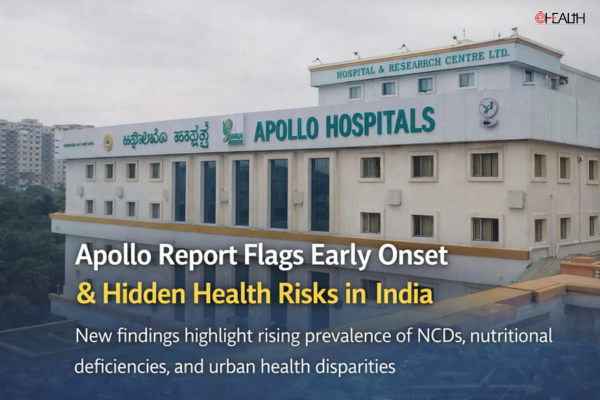
The sixth edition of Apollo Hospitals’ Health of the Nation 2026 (HoN 2026) report highlights that health risks in India are emerging earlier and often remaining undetected. The findings are based on over three million preventive health assessments conducted in 2025.
The report shows that two in three young adults are already at risk for non-communicable diseases (NCDs). In working populations, nearly half have prediabetes or diabetes, while 8 in 10 are overweight, indicating widespread metabolic risk. High prevalence of Vitamin D deficiency (nearly 7 in 10) and low Vitamin B12 levels (close to half), along with reduced physical fitness, further highlight underlying health concerns.
Among individuals under 30, 1 in 5 were prediabetic, with higher reversibility at younger ages. In working populations, 1 in 4 had high blood pressure, showing early onset of risk factors before clinical diagnosis.

“The true strength of a nation depends on the well-being of its people. For too long, health checks were viewed as routine blood tests and vitalsmerely a reactive response driven by fear. Today, we are signalling a significant change. Genuine health is personal, proactive, and highly precise. Since no two lives are the same, our approach to prevention must be as individual as the people we serve. We are pushing the boundaries of science – from gut microbiome health to advanced long-term risk patterns – because a comprehensive health check is the ultimate act of self-stewardship.”

Gender-specific trends include anaemia and increasing central obesity among women, along with earlier detection of breast cancer. Among women over 40, 1 in 359 screened cases were diagnosed with breast cancer, despite being asymptomatic.
“Every woman’s well-being is a force multiplier that strengthens families, communities, and the economy. Estimates suggest that closing the women’s health gap could add up to $1 trillion annually to the global economy by 2040. Yet, our data shows that women in India continue to carry a significant health burden that often goes undetected. At Apollo, we see women’s health as both a national priority and a shared responsibility. It begins with rethinking care through a more personalised lens, one that is aligned to a woman’s biology, life stage, and risk profile. Self-care is not a privilege; it is power and it fuels a healthier, stronger, and more prosperous India.”
The report highlights that certain conditions may not be detected through routine tests alone. Among individuals with fatty liver, 74% had normal liver enzyme levels, while coronary calcium scoring identified early atherosclerosis in asymptomatic individuals.
“Healthy longevity is not a matter of chance, it requires early, continuous action. The right health check at the right time can detect heart disease and cancer at Stage 1, when they are most treatable. The future of healthcare lies in predicting disease through population data, geographic insights, and the role of lifestyle and epigenetics. Apollo ProHealth combines predictive risk assessment, advanced diagnostics, and physician-led evaluation, personalised to age, gender, and risk profile. India must move beyond symptom-led care to a predictive, continuous, and personalised approach. Don’t postpone your health, schedule a checkup today.”
The report also highlights emerging indicators beyond traditional clinical markers. 92% of individuals scored below average on a global gut health index, while mental health screening identified depression in 1 in 15 and anxiety in 1 in 10. Nearly two-thirds of individuals under 30 showed limitations in strength, flexibility, or balance.
City-level data shows variation in disease prevalence, with diabetes rates ranging from 36% in Madurai to 16% in Mumbai, and higher anaemia levels in eastern and northeastern regions, while northern regions report higher obesity levels.
Follow-up and continued monitoring are associated with improved outcomes, with 56% showing improvement in hypertension, 34% in HbA1c levels, and 26% reduction in weight among those who returned for follow-up.
The findings are based on de-identified electronic medical records, structured clinical evaluations, AI-driven risk stratification, and follow-up data across Apollo’s healthcare network.

 Like
Like
 Dislike
Be a part of Elets Collaborative Initiatives. Join Us for Upcoming Events and explore business opportunities. Like us on Facebook , connect with us on LinkedIn and follow us on Twitter , Instagram.
"Exciting news! Elets technomedia is now on WhatsApp Channels Subscribe today by clicking the link and stay updated with the latest insights!" Click here!