


Article
Redefining Patient Journeys with AI & ML: What Healthcare Enterprises Must Know in 2026
Redefining Patient Journeys with AI & ML: What Healthcare Enterprises Must Know in 2026
![]() By eHealth Network - 06 March 2026
By eHealth Network - 06 March 2026


Artificial Intelligence (AI) and Machine Learning (ML) will redefine patient journey by shifting healthcare from a reactive to a proactive, personalized, and efficient model. Healthcare is entering a defining era where patient experience, clinical outcomes and operational efficiency are no longer treated as separate priorities. From automation and predictive analytics to generative AI, these seven innovations are setting the standards for the healthcare sector.
At its core, AI in healthcare is about harnessing the data from patient records and using algorithms to support better decisions, improve care delivery. By 2026 healthcare enterprises that integrate AI and ML holistically into their care will be the ones redefining the healthcare sector globally.
Smart Diagnostics and Precision Medicine

The use of AI and ML in diagnostics significantly enhances the speed and accuracy of diagnosis, enabling the quick detection of diseases. These benefits assist the role of radiologists, pathologists, and clinicians in minimizing any diagnostic delays and preventing misinterpretation. ML models can analyse medical images such as X-rays, CT scans, and MRIs with speed and precision that exceed traditional processes, flagging abnormalities that might get missed with human eyes.
AI enables early detection of potential conditions like heart disease, cancer, or chronic illnesses even before symptoms emerge, pushing healthcare closer to preventive care than ever before. AI analyses patients’ genetics, medical history, and lifestyle information, healthcare systems so that it can make individualised treatment plans tailored to patient needs.
The Rise of Generative AI in Healthcare
Among the various innovative technologies Gen AI is gradually becoming the most prominent one, gradually replacing the traditional ways of working in the different industries together with the new content generation, enhancing the decision-making and speeding up the automating of complex processes with accuracy. It does not replace the healthcare professionals but rather works with them to keep human expertise in the loop. It is in the form of AI chat support that is available around the clock for booking, answering questions and much more.
From the operational viewpoint, AI eliminates nagging issues of the past like billing delays, insurance claim processing, smart scheduling, and resource optimization. AI to simplify bed management, admissions, and discharge workflows is deployed by hospitals which results in a more patient-friendly and satisfied environment.
Remote Monitoring and Enhanced Patient Engagement
Telehealth facilities help in giving remote care and access to top-tier healthcare facilities to patients sitting anywhere. The integration of AI into telehealth facilities enhances their efficiency, making them more efficient. Tools with webcams help in basic diagnosis by detecting changes in breathing, skin texture, or facial expressions. These technologies help maintain patient engagement throughout the entire clinical lifecycle, from diagnosis and treatment to recovery and follow-up.
Healthcare platforms that are at the top today are already implementing artificial intelligence and machine learning across multiple levels of the patient journey. They link patients to appropriate healthcare professionals and hospitals, both locally in India and abroad. This not only facilitates patients to get quality and cost-effective treatment but also alleviates the burden and difficulty of selecting the right medical service. The platform offers tailored advice, assistance, and management for the complete patient journey thus giving a hassle-free experience from doctor’s consultation till patient’s treatment.
By 2026, AI and ML will no longer be viewed as experimental technologies but as core enablers of modern healthcare delivery. Their impact will extend beyond efficiency gains to fundamentally reshape how care is designed, delivered, and experienced. Patient journeys will become more connected, data-driven, and responsive, enabling healthcare systems to move from episodic treatment to continuous care models.
Medical and healthcare enterprises have the chance to create different ecosystems where technology will play a major role alongside medical experts, gradually earning the trust of patients, and the coordination of care will be done smoothly all through the process. This kind of scenario will require the use of advanced tools but will also need governance frameworks, workforce upskilling, and interoperable systems for long-term scalability, all of which are going to be expensive but necessary investment areas.
Healthcare enterprises that go for a strategic, patient-first AI and ML approach will be in a good position to enhance treatment results, make better use of resources, and allow more patients to have the quality of care compared to their geographical location. As healthcare gets more and more digital and interconnected, the early adopters will not only enjoy the convenience but also be able to influence the level of efficiency, accessibility, and patient experience in the coming years.
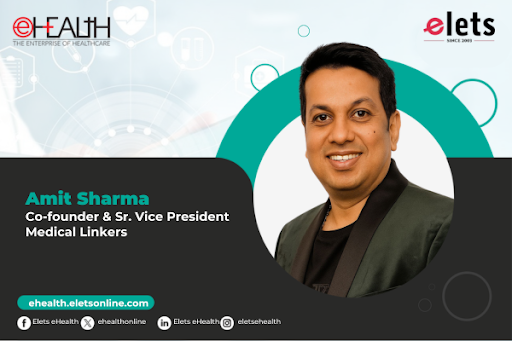
Views expressed by: Amit Sharma, Co-founder and Senior Vice President at Medical Linkers

 Like
Like
 Dislike
Be a part of Elets Collaborative Initiatives. Join Us for Upcoming Events and explore business opportunities. Like us on Facebook , connect with us on LinkedIn and follow us on Twitter , Instagram.
Disclaimer: The views and opinions expressed in this article are solely those of the author and do not necessarily reflect the official policy or views of any organisation. The content is intended for informational and educational purposes only and should not be construed as medical advice.
"Exciting news! Elets technomedia is now on WhatsApp Channels Subscribe today by clicking the link and stay updated with the latest insights!" Click here!