



Pharma
Antimicrobials May Need Centre’s Nod Under Draft NDCT Rules
Antimicrobials May Need Centre’s Nod Under Draft NDCT Rules
![]() By eHealth Network - 24 November 2026


The Union Ministry of Health and Family Welfare has proposed adding antimicrobials to the definition of “new drug” under the New Drugs and Clinical Trials (NDCT) Rules, 2019. Under draft notification G.S.R. 983(E), dated 6 November 2026, makers of antimicrobial medicines would need permission from the Central Licensing Authority before seeking a state manufacturing licence.

What the draft antimicrobials new drug rule changes
The draft inserts the word “antimicrobials” into Rule 2(1)(w)(v) of the NDCT Rules, next to products such as monoclonal antibodies that already sit in the new drug category. The ministry announced the proposal in a Press Information Bureau release on 19 November 2026.
Today, State Licensing Authorities grant manufacturing licences for antimicrobial products. If the rule is finalised, a manufacturer would first need clearance from the Central Licensing Authority, the Drugs Controller General of India at the Central Drugs Standard Control Organisation (CDSCO), and only then apply to the state regulator. It is the latest in a string of quality-focused drafts this month, after the Centre proposed instant licence suspension for not-of-standard-quality drugs.
Why the Health Ministry wants central oversight
The ministry said the move follows concerns that some manufacturing licences for antimicrobials were granted without adequate scrutiny, including bioavailability and bioequivalence (BA/BE) studies and stability studies. Without those checks, it said, the quality, safety and efficacy of the products could suffer.

Substandard or ineffective antimicrobials can speed up the spread of antimicrobial resistance (AMR), the ministry noted, calling AMR a major global public health concern. It also cited the G20 New Delhi Leaders’ Declaration, which called for tackling AMR through a One Health approach. Elets has tracked the industry side of this problem in its look at AMR as a strategic challenge for Indian pharmaceuticals.
What it means for antimicrobial manufacturers
For formulators and bulk-drug makers in the antibiotics, antifungal and antiviral space, the draft adds a central approval step before any new manufacturing licence. In practice, that is likely to mean:
- BA/BE and stability data reviewed centrally before a state licence is issued.
- A longer route to market for new antimicrobial products and fresh licence applications.
- More uniform quality standards across states, which have so far set their own pace on scrutiny.
A senior health ministry official told the Hindustan Times that the change would apply prospectively, so existing licences would stay valid and current holders would not have to reapply. Plants are already preparing for tighter sterile manufacturing norms under the Schedule M draft on zero microbial growth for sterile drugs, and states have been told to enforce batch testing of raw materials and finished drugs.
How stakeholders can respond
The draft is open for objections and suggestions for 30 days from the date the Gazette copies are made available to the public. Comments can be sent to the Under Secretary (Drugs), Ministry of Health and Family Welfare, Kartavya Bhawan-1, New Delhi, or by email to drugsdiv-mohfw@gov.in. The full text is in the Gazette of India notification.
Key takeaways
- Draft G.S.R. 983(E), dated 6 November 2026, adds antimicrobials to the new drug definition under the NDCT Rules, 2019.
- Manufacturers would need Central Licensing Authority approval before applying for a state manufacturing licence.
- The aim is to ensure BA/BE and stability scrutiny and curb the spread of antimicrobial resistance.
FAQ
Does the antimicrobials draft rule affect existing licences?
According to a senior health ministry official quoted by the Hindustan Times, the change would apply only to new licences, and existing licence holders would not need to reapply.
Is the rule final?
No. It is a draft open for public comments for 30 days, after which the Central Government will decide whether to finalise it.
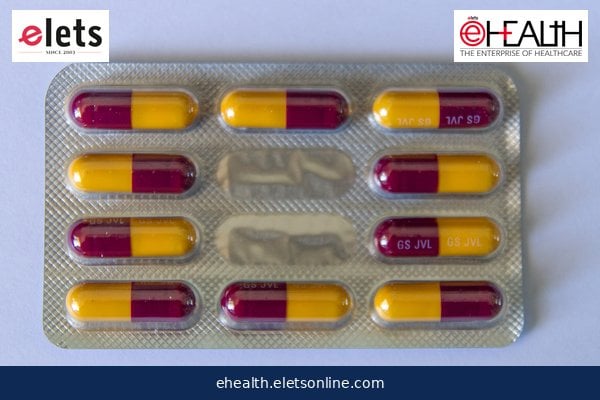
Featured image: Amoxicillin 500 mg antibiotic capsules in a blister pack. Photo: Maksym Kozlenko, Wikimedia Commons (CC BY-SA 4.0).

 Like
 Dislike
Be a part of Elets Collaborative Initiatives. Join Us for Upcoming Events and explore business opportunities. Like us on Facebook , connect with us on LinkedIn and follow us on Twitter , Instagram.
"Exciting news! Elets technomedia is now on WhatsApp Channels Subscribe today by clicking the link and stay updated with the latest insights!" Click here!