


Magazine
Energy-Efficient and Waste-Conscious Pharma Production
Energy-Efficient and Waste-Conscious Pharma Production
![]() By Dr. Asawari Savant, eHealth Network - 03 June 2026
By Dr. Asawari Savant, eHealth Network - 03 June 2026


The pharmaceutical industry is in a state of rapid evolution. For a long time, the primary focus of the pharmaceutical industry was the discovery and manufacturing of life-saving medicines, especially antibiotics, vaccines, and other treatments for deadly acute infectious diseases. Now, the ways in which these medicines are manufactured are scrutinised as much as the clinical outcomes. An energy and waste-conscious approach to production is not a mere “feel-good” initiative; it is a non-negotiable for businesses in today’s world. This change is spurred by the convergence of several factors; an increase in the ecological crisis, more stringent laws and regulations, and the recognition that, in order to sustain businesses, an adoption of these practices is necessary.

The Strategic Value of Energy Efficiency
At the core of a modernised manufacturing strategy is the optimisation of energy consumption. While protecting the environment is a positive consequence of adopting green manufacturing policies, it is the cost savings and increase in profitability that serve as the major impetus. By streamlining resource consumption, companies fulfil a broader social responsibility, contributing significantly to the overarching economic and sustainable growth of the nation. Indeed, robust sustainability metrics have become indispensable parameters for defining a successful modern enterprise in a carbon-constrained economy.
Advertisement
Achieving this requires a multifaceted approach: optimising complex HVAC systems and clean rooms, upgrading legacy equipment, embracing the digitalisation of processes, transitioning toward renewable energy sources, and implementing rigorous predictive maintenance schedules. Lowering carbon footprints directly combats global warming, allowing pharmaceutical entities to play a pivotal role in global environmental preservation. Moreover, environmentally friendly practices are becoming more popular among discerning clients both domestically and internationally, who see energy-efficient production as a key indicator of consistent and reliable operations.
Leading by Example: Strategic Energy Initiatives
Translating sustainability theory into tangible results requires decisive action and a willingness to overhaul traditional systems. Modern manufacturing frameworks are increasingly integrating pioneering modifications that distinguish advanced facilities from conventional setups. For instance, by substituting traditional electrical heaters with steam-based alternatives in production processes, forward-thinking organisations have achieved a remarkable 40% reduction in energy consumption. Similarly, replacing traditional plug fans in HVAC systems with electronically commutated (EC) fans has led to energy savings. This significantly reduces a facility’s overall electricity consumption.
Beyond hardware upgrades, manufacturing cycle times are being substantially reduced through continuous process refinements and the adoption of high-efficiency utility systems. Modern systems allow for the use of automated and controlled systems. These systems can respond to the changing needs of production in real-time, allowing systems to optimise energy use at any point in time. The same degree of efficiency applies to the administrative and support functions, exemplified by the replacement of traditional LPG with steam for the cooking of staff meals, demonstrating a comprehensive and detailed commitment to energy saving throughout the organisation.
Waste Consciousness: Beyond Basic Compliance
An essential consideration alongside energy management is the consciousness of waste. The global challenge of antimicrobial resistance (AMR) makes the thorough treatment of waste effluents from the manufacturing process an imperative. As highlighted by the World Health Organisation (WHO), AMR is a top global public health threat, with the potential to make common infections untreatable. When active pharmaceutical ingredients (APIs) are discharged into the environment, they promote the emergence of drug-resistant “superbugs”. By ensuring APIs do not seep into local ecosystems, companies safeguard public health and demonstrate profound ethical governance.
Prioritising human life and environmental integrity represents more than a strategic choice; it is a fundamental moral imperative. When we shift the focus from the bottom line to the preservation of humanity, the objective becomes the inherent protection of our shared existence. This philosophy ensures that the pursuit of health and safety remains untainted by the fluctuating motives of profitability, positioning the well-being of people as the primary measure of success.
This commitment to public health is part of a growing global movement spearheaded by international health authorities and global health bodies. Regardless of whether a market is strictly regulated, there is a burgeoning international consensus that the preservation of life must transcend economic borders. These governing bodies are increasingly advocating for higher standards that protect the global citizenry, recognising that the health of one community is inextricably linked to the health of all.
Central to this effort is the mitigation of severe environmental threats, such as Antimicrobial Resistance (AMR). Ineffective waste management can lead to the poisoning of vital water resources and the accidental introduction of lethal medicines or toxins into the ecosystem. By actively incorporating cutting-edge wastewater treatment and eco-friendly biofuels, companies can avert the devastating “silent pandemic” of AMR and the use of tainted resources. Ultimately, this caring approach helps create a safer and healthier future for everyone by dealing with these dangerous threats before they become serious.
Also read: Why Personalised Nutrition Is Becoming Central to Preventive Wellness Journeys
Establishing a Benchmark in Waste Management
A successful waste management plan hinges on a comprehensive, data-focused approach that aligns with the most stringent global benchmarks. Forward-looking companies are increasingly aligning themselves with the Science Based Targets initiative (SBTi). They’re establishing greenhouse gas (GHG) emissions reduction targets that are informed by the most recent climate science. Following SBTi-validated practices allows the industry to play a significant role in global climate action. This commitment also helps the industry remain relevant and robust in a world where environmental concerns are front and center.
This transition is championed by organisations such as the PSCI, which provide the leadership necessary to foster an ethical and resilient supply chain. This alignment demonstrates the deep integration of environmental responsibility within the five PSCI principles: Ethics, Labour, Health and Safety, Environment, and Management Systems. These principles foster a more mindful engagement within international markets, particularly in regions characterised by rigorous regulatory environments. Moreover, companies that embrace this sense of duty implement the Eco-Pharmaco-Stewardship (EPS) framework, which includes tracking Predicted No Effect Concentration (PNEC) values to ensure the safety of pharmaceutical residues in aquatic environments. These systems, when integrated with advanced pollution control and automation, are designed to eliminate all forms of contamination from our air, soil, and water.
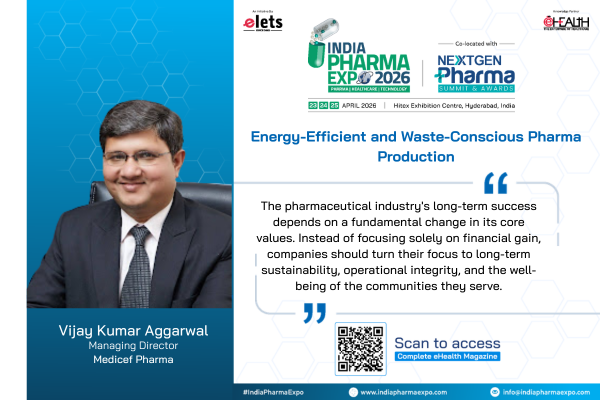
The pharmaceutical industry’s long-term success depends on a fundamental change in its core values. Instead of focusing solely on financial gain, companies should turn their focus to long-term sustainability, operational integrity, and the well-being of the communities they serve.
This requires a holistic integration of energy recovery technologies and wastewater management systems. By moving beyond a narrow focus on profit and embracing these broader principles, the industry can fulfil its true purpose: producing goods that promote human health without compromising the health of the planet.
Views expressed by: Vijay Kumar Aggarwal, Managing Director, Medicef Pharma

 Like
Like
 Dislike
Be a part of Elets Collaborative Initiatives. Join Us for Upcoming Events and explore business opportunities. Like us on Facebook , connect with us on LinkedIn and follow us on Twitter , Instagram.
"Exciting news! Elets technomedia is now on WhatsApp Channels Subscribe today by clicking the link and stay updated with the latest insights!" Click here!