


Article
Beyond Survival: What NFHS-6 Reveals About India’s Next Health Challenge
Beyond Survival: What NFHS-6 Reveals About India’s Next Health Challenge
![]() By Dr. Asawari Savant, eHealth Network - 30 May 2026
By Dr. Asawari Savant, eHealth Network - 30 May 2026


India Has Moved Beyond the Basics
India’s latest National Family Health Survey (NFHS-6) does more than present numbers. It tells a story of a nation in transition, one that has made undeniable gains in public health access and social development, yet now confronts a more complex and evolving healthcare reality.

For decades, India’s public health priorities revolved around survival: reducing maternal deaths, increasing institutional deliveries, expanding immunisation and ensuring that children lived through their earliest years. NFHS-6 suggests that the country has made meaningful progress on many of these fronts.
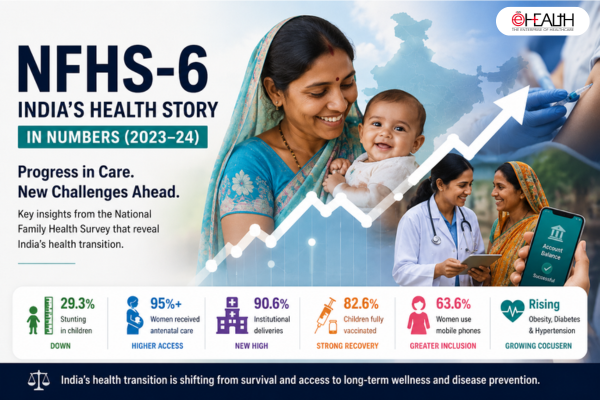
Institutional deliveries now exceed 90 per cent. Antenatal care coverage has expanded significantly. Childhood vaccination has strengthened, and early marriage among young women continues to decline. Financial and digital inclusion among women has widened at a pace few would have predicted a decade ago.
These are not minor achievements. They reflect years of policy interventions, frontline healthcare work and public investment. Programmes ranging from immunisation drives and maternal health initiatives to financial inclusion and nutrition missions have contributed to measurable change.

Yet NFHS-6 is not a story of uncomplicated success.
Progress Worth Celebrating, But Not Without Context
Beneath these encouraging indicators lies a more challenging reality, India is now navigating what public health experts describe as a “double burden” of disease.
Child malnutrition has declined, but it has not disappeared. Nearly one in three children remains stunted. Severe wasting has improved, yet adequate diet among young children remains alarmingly low. These figures remind us that nutrition is not merely about food availability. It is shaped by maternal health, sanitation, dietary diversity, awareness and household economics.
At the same time, India is witnessing the rise of a very different health crisis.
The New Epidemic of Lifestyle Diseases
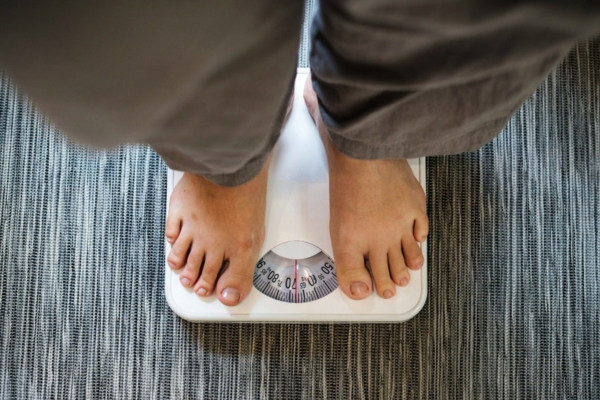
Adult obesity is increasing steadily. Diabetes and hypertension are emerging as widespread threats across both urban and rural populations. The data reveals an uncomfortable paradox: a country still struggling with undernutrition is simultaneously confronting overnutrition and lifestyle-related disease.
This transition is neither unique nor unexpected. Many developing economies experience a similar epidemiological shift as incomes rise, urbanisation accelerates and lifestyles change. But India’s challenge is unusually complex because the older burden of malnutrition and infectious disease has not fully receded.
The result is a healthcare system being asked to solve two very different problems at once.
Two Health Battles, One System
The first is unfinished business, maternal nutrition, child feeding practices, sanitation and equitable access to quality healthcare.
The second is the future challenge, preventing and managing chronic diseases that require long-term monitoring, behavioural change and sustained healthcare engagement.
NFHS-6 also raises important questions about the nature of healthcare delivery itself.
Healthcare Access Is Rising, But Is Quality Care Keeping Pace?
The continuing rise in caesarean deliveries deserves careful scrutiny. While C-sections are lifesaving when medically required, the wide disparity between public and private facilities invites debate about clinical decision-making and financial incentives. Rising intervention rates must be examined through the lens of quality and appropriateness of care, not merely service utilisation.
Similarly, improvements in healthcare access should not automatically be mistaken for healthcare equity.
National averages often conceal deep regional, economic and social disparities. The lived experience of healthcare continues to differ sharply across states, districts and income groups. The challenge for policymakers is not merely to celebrate progress but to understand who remains excluded from it.
Health Is Bigger Than Hospitals
Perhaps the most important lesson from NFHS-6 is that India’s health conversation must evolve.
Public discourse frequently treats healthcare as a matter of hospitals and treatment. But the survey reinforces a broader truth—health outcomes are deeply connected to education, women’s empowerment, nutrition, sanitation, digital access and financial security.
The rise in women’s banking access, mobile phone use and internet connectivity is therefore not peripheral to healthcare policy; it is central to it. Empowered and informed households tend to make healthier choices, seek timely care and engage more effectively with health systems.
This integrated understanding of health may prove critical in the years ahead.
Prevention May Define India’s Next Health Success Story
India’s next public health victory will not come solely from building more hospitals or increasing treatment capacity. It will depend equally on preventing illness before it begins, through healthier diets, stronger primary care, early screening and sustained behavioural change.
The message of NFHS-6 is therefore both encouraging and cautionary.
India has made substantial progress in expanding healthcare access and improving key social indicators. But success has altered the nature of the challenge.
The country is no longer fighting only for survival. It is increasingly fighting for healthier, longer and more productive lives.
NFHS-6 as a Policy Compass
That transition demands not just better healthcare delivery, but a reimagining of health itself, as a lifelong continuum rather than a crisis response.
NFHS-6 should therefore be read not merely as a statistical report, but as a policy compass. Its real value lies not in confirming how far India has come, but in showing where the country must go next.

 Like
Like
 Dislike
Be a part of Elets Collaborative Initiatives. Join Us for Upcoming Events and explore business opportunities. Like us on Facebook , connect with us on LinkedIn and follow us on Twitter , Instagram.
Disclaimer: The views and opinions expressed in this article are solely those of the author and do not necessarily reflect the official policy or views of any organisation. The content is intended for informational and educational purposes only and should not be construed as medical advice.
"Exciting news! Elets technomedia is now on WhatsApp Channels Subscribe today by clicking the link and stay updated with the latest insights!" Click here!