


Article
Realistic pathways for making simulation the “Standard of Care” in India’s healthcare journey
Realistic pathways for making simulation the “Standard of Care” in India’s healthcare journey
![]() By Dr. Asawari Savant, eHealth Network - 16 January 2026
By Dr. Asawari Savant, eHealth Network - 16 January 2026


Imagine a young doctor performing a rare cardiac procedure for the first time, in a bustling ICU, with lives on the line, and no prior hands-on rehearsal. This isn’t a hypothetical training exercise; it’s the reality for too many healthcare professionals in India today, even as the nation doubles down on expanding medical infrastructure.

India’s healthcare landscape is undergoing rapid expansion. As stated by Hob’ble Union Health Minister, J.P. Nadda, over the past decade, the number of medical colleges in the country has surged, more than doubling from 387 in 2014 to approximately 819 in 2025. At the same time, undergraduate medical seats have climbed from around 51,000 to nearly 129,000, and postgraduate seats from roughly 31,000 to 78,000, reflecting historic growth in training capacity. Yet despite this massive scaling of educational infrastructure, preparedness at the point of care continues to lag, especially in critical, high-acuity environments where clinical competence is measured in seconds, not semesters.
The Training Paradox
India’s doctor-to-population ratio has improved in recent years, but the broader challenge isn’t just numerics; it’s readying clinicians for the complexity of modern care delivery. Traditional bedside apprenticeship models remain central to medical education, yet they are inherently constrained: heavy patient loads, limited supervised exposure to rare emergencies, and the ethical imperative to “do no harm” restrict opportunities for trial-and-error learning in real clinical settings.
This is where simulation-based medical education (SBME) has matured into a global standard. Simulation goes beyond rote learning by creating safe, repeatable, and measurable environments where clinical teams encounter lifelike scenarios ranging from trauma management to multi-organ failure responses, without risk to actual patients. Research consistently shows that simulation improves clinical performance, sharpens decision-making, and reduces errors when translated into practice.

Simulation isn’t simply technology for technology’s sake; it is foundational for patient safety and system reliability. In India, where healthcare delivery faces challenges such as gaps in clinical training and a high volume of patients, preventable medical errors remain a significant concern, with millions of adverse incidents estimated annually in clinical settings without adequate practical preparation. Structured competency development through simulation‑based education enables clinicians to practice and refine critical skills, improve teamwork, and enhance decision‑making in a safe, controlled environment before they act on real patients, thereby strengthening patient safety and the reliability of health systems across the country.
Beyond Skills: Teamwork, Communication, and Safety Culture
Simulation does more than teach individual skills. It fosters team-based competency, bringing together doctors, nurses, paramedics, and anesthesiologists in realistic crisis scenarios. This enhances communication and coordination, factors that are shown to influence up to 80% of serious adverse clinical events globally.
Simulation also accelerates learning curves in areas where traditional clinical exposure might be rare. Critical care scenarios, pediatric emergencies, and cross-disciplinary crisis responses, all high-stakes events with limited real-time training opportunities, become practicable without compromising patient safety.
From Pilot Projects to System-wide Standard
Despite growing recognition, simulation adoption in India remains uneven. Some premier institutions have established advanced centres, but large segments of the sector, especially in tier 2 and rural settings, lack access to structured simulation curricula. To transition simulation from a localised initiative to a standard of care, India must pursue three interconnected pathways:
- Embed Simulation Across the Education Continuum: Simulation should be integrated systematically into medical and nursing curricula, starting from undergraduate years and continuing through postgraduate and continuing professional development. Embedding competency milestones into assessments will ensure that students encounter hands-on practice long before licensure.
- Expand Access Through Scalable Models: While state-of-the-art simulation labs are valuable, modular, mobile, hybrid, and virtual simulation solutions can bridge gaps across institutions with limited resources. This democratises high-quality training and expands reach beyond metropolitan hubs.
- Evidence-based Validation for Institutional Buy-in: Collecting and publishing data on skill acquisition, patient safety outcomes, error mitigation, and workflow impact strengthens the case for sustained investment. Evidence builds trust among educators, clinicians, policymakers, and payers, anchoring simulation in performance improvement frameworks.
Aligning Policy with Practice
For simulation to become a recognised standard of care, policy frameworks and accreditation bodies must lead with clear expectations. Mandating structured simulation exposure as part of accreditation norms, competency assessments, and quality benchmarks will drive adoption. Public-private collaborations can further support infrastructure, faculty development, and curriculum design.
Concurrently, data-driven reporting should inform continuous refinement. When institutions measure improvements in clinical readiness, teamwork, and patient outcomes after simulation training, the value proposition becomes undeniable, both from a quality and cost perspective.
Also read: Building a caregiver workforce for India and the World: Bharat’s next big opportunity!
Towards a Safer, More Prepared Healthcare System
India stands at a critical inflexion point. The dramatic expansion of medical education infrastructure, now reaching hundreds of medical colleges and over 100,000 training seats, is a testament to national commitment. Yet quantity alone will not elevate care quality. Simulation offers the bridge between knowledge and safe clinical action, turning theoretical competence into performance under pressure.
By making simulation the standard of care, from classrooms to wards, from urban centres to rural clinics, India can build a healthcare workforce that is not only large but exceptionally prepared, safe, and resilient. The path forward requires partnerships, thoughtful policy, and unwavering focus on outcomes. But the destination, a healthcare system where every clinician is ready the moment they step into care delivery, is well worth the effort.
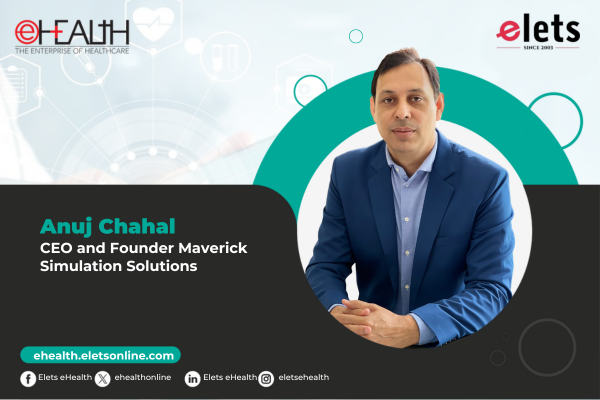
Views expressed by: Anuj Chahal, CEO and Founder, Maverick Simulation Solutions

 Like
Like
 Dislike
Be a part of Elets Collaborative Initiatives. Join Us for Upcoming Events and explore business opportunities. Like us on Facebook , connect with us on LinkedIn and follow us on Twitter , Instagram.
Disclaimer: The views and opinions expressed in this article are solely those of the author and do not necessarily reflect the official policy or views of any organisation. The content is intended for informational and educational purposes only and should not be construed as medical advice.
"Exciting news! Elets technomedia is now on WhatsApp Channels Subscribe today by clicking the link and stay updated with the latest insights!" Click here!