



Article
A New Framework for Measuring Digital ROI in Healthcare Beyond Leads and CPL
A New Framework for Measuring Digital ROI in Healthcare Beyond Leads and CPL
![]() By Dr. Asawari Savant, eHealth Network - 10 December 2025
By Dr. Asawari Savant, eHealth Network - 10 December 2025


For nearly two decades, healthcare leaders have measured digital success with a narrow lens. Leads and cost per lead became the default scorecard. That approach made sense when digital was mainly a performance channel and when attribution was simpler. It no longer fits the way patients discover care or the way hospital brands compete today.

In the early 2000s, digital in healthcare looked like a brochure that happened to be online. Websites carried basic service information. Search ads were a new experiment. Display banners aimed to create awareness, but measurement stayed basic. Teams focused on visits and early enquiry forms.
The next phase brought search maturity and social discovery. Between 2010 and 2015, patients began researching symptoms and doctors online at scale. Content marketing started influencing trust. Reviews began shaping preferences. Hospitals saw that digital could influence choice well before a patient raised a hand.
From 2016 to 2020, the smartphone became the primary entry point. Video surged. Lead generation became a strong growth lever. Dashboards got sharper and more accessible. Many leadership teams became comfortable with CPL and lead volume because the numbers were easy to compare across months and across hospitals. The problem was not the metric. The problem was treating it as the only metric.

The last few years have changed the rules again. Digital is now a blended system of marketing and service. Patients expect quick answers and smooth bookings. Caregivers often drive decision-making. A family might follow a hospital brand for years before a major health event. In this reality, lead reports alone can mislead even experienced teams.
A new approach is needed because healthcare demand is not only triggered by marketing. It is triggered by life moments. A patient may act in panic. A preventive care audience may act slowly. A poor booking journey can erase the value of a great campaign. A weak reputation on social platforms can reduce conversion even when leads are strong.
This is why digital ROI in healthcare must move beyond a last step view of demand. The metrics can be categorised into 3 broad segments
-
Business metrics
A practical top-down funnel can look something like – Impressions > Interactions > Engagement > Leads > Bookings > Conversions
This sequence forces a healthier conversation. It helps you see where growth is building and where it is leaking. Visibility and impressions show whether you are present in the right categories and geographies. Interactions and engagement show whether your story is resonating with the right audience. Leads still matter, but now they sit inside a broader view. Bookings and conversions complete the loop where clean data allows it.
This framework also creates room for leading indicators. Most people interacting with your brand today are healthy. They might not need a hospital visit this month. Yet their behaviour still tells you if your brand is building future preference. If your health education videos draw the right age groups. If your speciality pages get repeat visits. If preventive program content drives saves and follows. These signals often predict demand before forms fill up. They also help you validate whether your campaign strategy matches larger business goals.
-
Service or Experience Metrics
The second shift is to treat digital as a service channel. This means measuring the buying and care access journey with the same seriousness as you measure media spend. You should track drop-off rates across booking steps. You should track the time to complete an appointment transaction. You should review UI and UX issues that create friction. You should measure the discoverability of key services. You should track chat and call outcomes that reduce confusion and guide the user to the right next step.
A simple improvement here can deliver a stronger ROI than a higher ad budget. If you reduce booking drop-offs, you unlock growth with the same traffic. If you shorten the path from search to confirmation, you improve both experience and revenue.
-
Share of Voice and Brand Metrics
The third shift is to look beyond owned platforms. Patients are not only on hospital websites. They are on social networks, forums, review platforms, and search engines. These spaces hold strong signals about brand recall and consideration. Search volume trends for your brand and specialities can show rising interest. Social chatter themes can reveal what people value or fear. Review velocity and rating shifts can warn you early when experience gaps appear. Share of voice comparisons can show whether your brand is growing its mental availability in a competitive market.
This outside-in data gives a near real-time pulse that dashboards cannot provide.
The final driver of change is AI. Consumers are already using conversational tools for health questions. They will increasingly use AI to shortlist hospitals and doctors. Enterprises will use AI to personalise content, improve triage for queries, and test experience changes faster. This will reshape discovery patterns and attribution paths.
An AI-ready digital roadmap becomes essential. You will need structured and accurate service data. You will need content governance that protects clinical credibility. You will need conversational journeys that connect directly to real booking systems. You will need a measurement that captures new discovery paths that do not look like traditional clicks.
Also read: Digital Health, Tele-medicine and Wearable CGMs: India’s Quiet Healthcare Revolution
A fuller ROI model does not reject leads. It puts them in context. It connects marketing outcomes with experience outcomes. It values early engagement and long-term trust. It also helps leadership teams invest with confidence because they can see both demand capture and brand health moving together.
Healthcare brands that adopt this framework will stop debating whether digital is working. They will start seeing where it is working, why it is working, and which levers will matter most for the next decade.
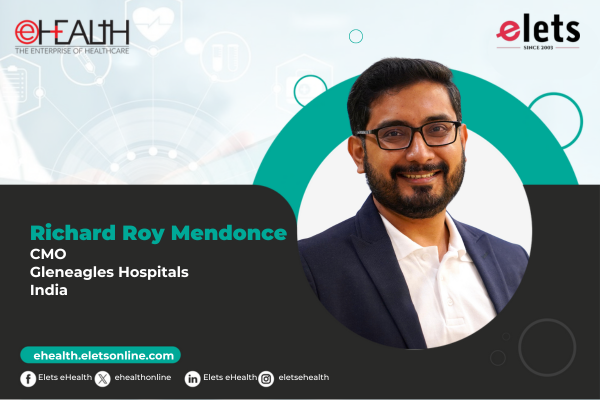
Views expressed by: Richard Roy Mendonce, CMO, Gleneagles Hospitals India

 Like
Like
 Dislike
Be a part of Elets Collaborative Initiatives. Join Us for Upcoming Events and explore business opportunities. Like us on Facebook , connect with us on LinkedIn and follow us on Twitter , Instagram.
Disclaimer: The views and opinions expressed in this article are solely those of the author and do not necessarily reflect the official policy or views of any organisation. The content is intended for informational and educational purposes only and should not be construed as medical advice.
"Exciting news! Elets technomedia is now on WhatsApp Channels Subscribe today by clicking the link and stay updated with the latest insights!" Click here!