



Article
How LLMs Are Shaping the Future of Healthcare Workflows
How LLMs Are Shaping the Future of Healthcare Workflows
![]() By Dr. Asawari Savant, eHealth Network - 03 October 2025
By Dr. Asawari Savant, eHealth Network - 03 October 2025


Healthcare systems are under more strain than ever before due to challenges including overcrowded hospitals, growing expenses and shortage of staff. The World Health Organization (WHO) estimates a global shortfall of 10 million health workers by 2030, a gap too large to be filled by human resources alone. The solution may not lie in increasing the human resource, but in re-evaluating the approach that delivers work timely and effectively. This is where Large Language Models (LLMs) are beginning to make a measurable difference. By integrating advanced natural language understanding with contextual intelligence, LLMs are streamlining tasks that traditionally consumed enormous time and effort, from medical documentation and patient interactions to research and diagnostics.
A study published in the Journal of General Internal Medicine in 2024, recorded that clinicians invest about 40% of their time in paperwork. It is an intrinsic part of their daily tasks. However, LLM powered assistants are changing this dynamic. LLMs can now hear doctor-patient conversations, auto generate consultation and discharge documents as well as prescriptions. Hospitals in US and UK piloting AI medical scribes have reported large time savings, allowing doctors and healthcare professionals to improve patient care. In India, early age LLM pilots are seeming to be promising with clinicians able to reduce turnaround time for records while ensuring greater accuracy.
From Data Overload to Clarity
A key contribution of LLMs lies in improving how information is shared and coordinated across hospitals and care teams. Patient histories, lab reports and scans can be automatically summarised, flagged for anomalies or translated into simple language for patient communication.

A succinct AI-generated synopsis of a patient’s medical history, current course of treatment and test results enables doctors to make quicker and better decisions; for patients, it eases uncertainty. Research conducted in clinical settings has also shown that patients who receive simplified summaries ask fewer follow-up questions. This also holds true for innovation and research. LLMs can uncover pertinent information in hours rather than weeks by searching through thousands of journal articles and clinical trial data. In addition to accelerating discovery, this keeps physicians up to date in the evolving space of infectious diseases and oncology.

Personalising Care Without Adding Strain
Personalising care has long been a goal in healthcare, however scaling it without overburdening clinicians has remained a challenge. Recent clinical evidence suggests that conversational AI can help bridge this gap. A 2024 study published in JAMA Network Open revealed a total of nearly 9,500 cardiovascular patients and found that those receiving chatbot-based reminders and behavioral nudges were more likely aligned with their medications than those under usual care. Similar results have been observed in India, where a BMC Public Health review covering over 10,000 patients with chronic conditions concluded that simple interventions such as SMS reminders and patient education significantly improved treatment adherence. Even in areas like chronic pain management, a pilot trial reported that patients sustained high engagement with a chatbot that guided self-management strategies.
LLM-enabled tools can improve patient adherence while easing communication burden for providers, whether through plain-language after-visit summaries, timely reminders, or local-language. By translating complex medical guidance into clear, personalised interactions, they free clinicians from repetitive explanations and help patients stay more engaged with their care plans.
Reducing Burnout and Balancing innovation with Trust
The most under-discussed crisis in healthcare today is burnout. According to a recent survey by the American Medical Association, nearly half of physicians reported symptoms of burnout in 2023, with administrative overload being the top force. When LLMs take on repetitive tasks like transcription, discharge summaries, or coding, it is not only saving time but also restoring energy and focus.
Retention and morale are directly tied to these improvements. When clinicians spend less time battling paperwork and more time practicing medicine, both staff stability and patient outcomes eventually improve. A system which already experiences a shortage of millions of workers, reducing burnout becomes as critical as improving efficiency.
The Compliance and Governance Imperative
The successful integration of Large Language Models (LLMs) into healthcare is contingent upon robust foundations in compliance and governance. Patient privacy and data protection are paramount. In the United States, HIPAA ensures secure handling of all protected health information (PHI) and restricts its sharing only on a need-to-know basis. In Europe, GDPR extends these protections by allowing explicit rights to patients over their personal data. It includes the right to withdraw consent and request erasure. As a result, AI-driven workflows must not only anonymize and secure data but also adhere to data residency laws, ensuring patient information not crossing borders where regulatory frameworks diverge.
LLM powered applications which generate clinical insights and influence treatment decisions may be subject to regulatory oversight. Therefore, it becomes for them to be aligned with FDA guidance on Software as a Medical Device (SaMD). Developers must integrate explainability, validation, and audit trails into AI systems to demonstrate safety and efficacy. Furthermore, governance frameworks should ensure that AI functions as an assistant to clinicians, who retain final decision-making authority, rather than acting as a substitute.
Responsible AI fosters trust through transparency, accountability, and adherence to regulatory standards. Systems incorporating these safeguards are more likely to achieve acceptance among clinicians, approval from regulatory bodies, and assurance for patients.
The Way Forward
From the invention of stethoscopes to adoption of electronic health records, healthcare has advanced. LLM is the representation of the next leap forward. By reducing administrative overload, surfacing insights faster and enabling clearer communication with patients, LLM ensures freedom to clinicians to focus on the parts of medicine that require judgment, empathy and expertise.
However, the success of these tools relies on thoughtful implementation, upholding privacy, ensuring accuracy and maintaining transparency so that trust is never compromised. LLMs won’t replace the human touch in healthcare; instead, they will protect and strengthen it; if adopted responsibly.
The future of healthcare lies in systems where technology and people work hand in hand: clinicians supported, patients more engaged and care made not only more efficient but also more humane.
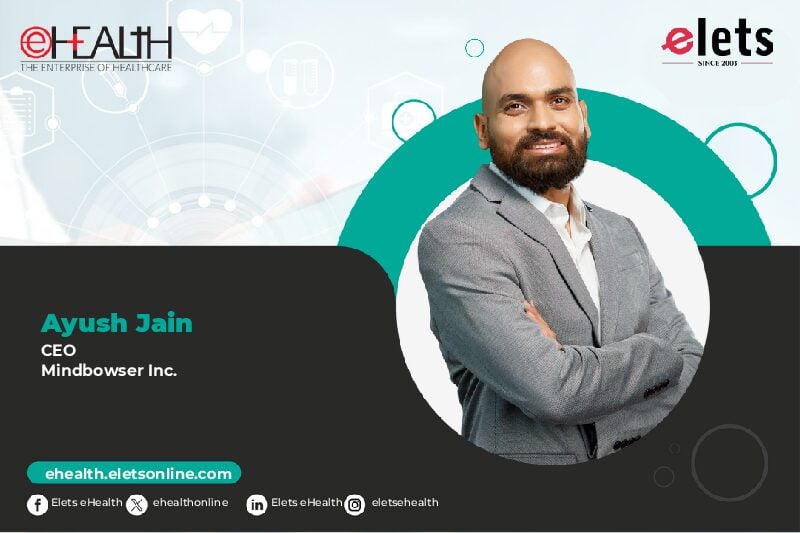
Views expressed by: Ayush Jain, CEO, Mindbowser Inc.

 Like
Like
 Dislike
Be a part of Elets Collaborative Initiatives. Join Us for Upcoming Events and explore business opportunities. Like us on Facebook , connect with us on LinkedIn and follow us on Twitter , Instagram.
Disclaimer: The views and opinions expressed in this article are solely those of the author and do not necessarily reflect the official policy or views of any organisation. The content is intended for informational and educational purposes only and should not be construed as medical advice.
"Exciting news! Elets technomedia is now on WhatsApp Channels Subscribe today by clicking the link and stay updated with the latest insights!" Click here!