


Article
From Diagnosis to Outcomes: Why Follow-Through Is Healthcare’s Next Priority
From Diagnosis to Outcomes: Why Follow-Through Is Healthcare’s Next Priority
![]() By Dr. Asawari Savant, eHealth Network - 16 June 2026
By Dr. Asawari Savant, eHealth Network - 16 June 2026


India’s healthcare ecosystem has made significant progress in expanding access to diagnostics and early detection. Yet, outcomes continue to fall short. The gap is not in identifying disease, but in ensuring that patients move from diagnosis to treatment and remain on therapy. Delayed diagnosis combined with poor follow-through does not just reduce efficiency, it leads to disease progression, avoidable hospitalisation, and in many cases, irreversible harm.

Healthcare does not fail at identifying risk. It fails when patients drop off between awareness, screening, diagnosis confirmation, treatment initiation, and long-term adherence. Diagnosis is a milestone, not an outcome. The real measure of success is whether patients start treatment and continue it.
The Drop-Off Problem Is Systemic, Not Incidental
The scale of attrition across patient journeys is significant and measurable. In a tuberculosis pathway study in rural Bihar, 11,146 presumptive cases were identified, but only 4,912 individuals underwent diagnostic evaluation. Nearly 44.1 percent were lost before diagnosis was even confirmed.
The extent of this drop-off is best understood as a funnel, where large volumes entering the system progressively reduce at each stage of care. This represents a structural failure in continuity of care, where patients are identified but not converted into treated cases.

Screening Must Lead to Action, Not Just Detection
Screening programmes are often positioned as endpoints, when in reality they are only the beginning of the care pathway. A rural tele-diabetology programme that screened 23,380 individuals identified 1,138 diabetes cases, with a significant proportion already showing complications such as retinopathy and neuropathy.
However, screening without structured follow-through risks becoming a diagnostic exercise rather than a clinical intervention. Screening programmes must be designed with built-in pathways for treatment conversion. The value of screening lies not in the number of cases identified, but in how many are treated and managed over time.
The Real Barriers: Cost, Access, and Fragmentation
Patient drop-off is often attributed to logistical challenges, but the underlying barriers are more fundamental.
Cost remains a primary reason for discontinuation, especially in chronic therapies. Patients disengage due to out-of-pocket expenses, lack of clarity on insurance coverage, or inconsistent access to medication. Access constraints in underserved regions further limit continuity of care.
The digital divide adds another layer of complexity. Limited connectivity, low digital literacy, and restricted access to smartphones mean that purely digital solutions cannot ensure continuity. Patient drop-off, therefore, is not behavioural alone, it is structural.
Patient Service Programmes as Outcome Drivers
Patient service programmes are no longer support functions. They are outcome drivers that determine whether healthcare interventions translate into real-world impact.
Their role is to actively manage the transition from diagnosis to treatment and sustain adherence. This includes patient education, financial navigation, therapy counselling, and continuous follow-up. By combining digital tools with on-ground engagement, these programmes ensure reach across both connected and underserved populations, while creating accountability for patient progression.
Operationalising Follow-Through: A Structured Approach
At QMS Medical Allied Services, the focus has been on building structured pathways that ensure patients do not drop off after diagnosis.
In a hepatitis C initiative in rural Punjab, outreach to more than 29,000 individuals and over 23,000 risk assessments contributed to an approximate 35 percent increase in testing among high-risk populations.
Beyond diagnosis, continuity is driven through structured patient engagement. Tele counselling supported by CRM systems, combined with on-ground interventions and coordinated stakeholder engagement, helps patients navigate therapy initiation and ongoing treatment requirements. This hybrid approach ensures continuity across both digitally connected and underserved populations.
From Intent to Implementation: What Needs to Change
Bridging the follow-through gap requires systemic action from healthcare stakeholders.
There is a need to formalise patient navigation within care delivery, including embedding patient navigators within district hospitals and high-burden therapy areas. Integrating patient service programmes with public health frameworks and national health schemes can improve treatment conversion and adherence.
Affordability must be addressed through structured financial support mechanisms, including wider access to drug assistance and clearer reimbursement pathways. Technology adoption must remain inclusive, ensuring continuity even in low-connectivity environments.
Redefining Healthcare Success
Healthcare does not fail at diagnosis. It fails at follow-through. The next phase of healthcare delivery will be defined by the ability to move beyond episodic interventions and build systems that ensure continuity, accountability, and measurable outcomes.
Structured follow-through does not replace patient choice; it strengthens it by ensuring patients are informed and supported in acting on clinical decisions. The focus must shift from identifying patients to staying with them through every stage of their treatment journey, enabling healthcare systems to translate access into impact at scale.
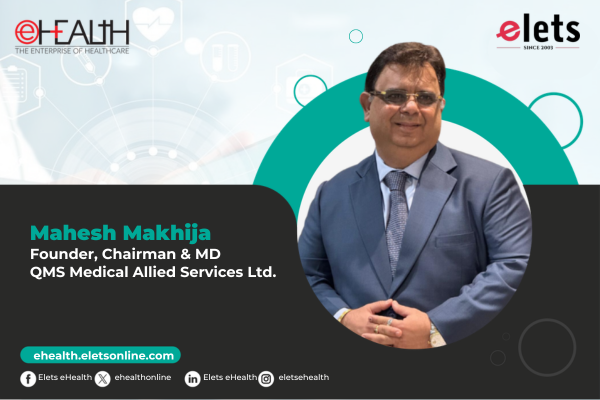
Views expressed by: Mahesh Makhija, Founder, Chairman & Managing Director of QMS Medical Allied Services Ltd.

 Like
Like
 Dislike
Be a part of Elets Collaborative Initiatives. Join Us for Upcoming Events and explore business opportunities. Like us on Facebook , connect with us on LinkedIn and follow us on Twitter , Instagram.
Disclaimer: The views and opinions expressed in this article are solely those of the author and do not necessarily reflect the official policy or views of any organisation. The content is intended for informational and educational purposes only and should not be construed as medical advice.
"Exciting news! Elets technomedia is now on WhatsApp Channels Subscribe today by clicking the link and stay updated with the latest insights!" Click here!