

Article
The Satisfaction Paradox: What Rectal Cancer Surgery Data Reveals About the Mind-Body Gap
The Satisfaction Paradox: What Rectal Cancer Surgery Data Reveals About the Mind-Body Gap
![]() By Dr. Asawari Savant, eHealth Network - 16 June 2026
By Dr. Asawari Savant, eHealth Network - 16 June 2026


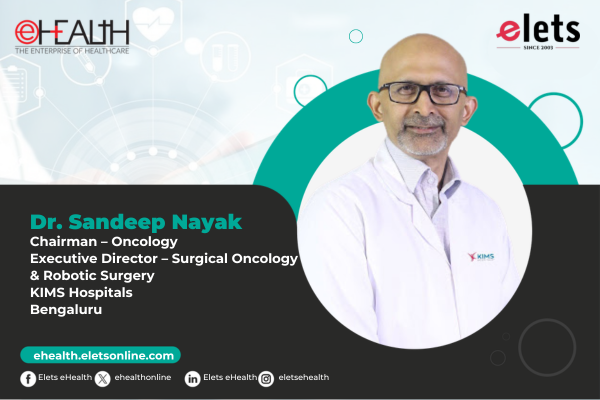
For decades, the success of cancer surgery was measured by one metric: did the patient survive? If the tumour was removed and the patient lived, the job was done. But a new five-year study published in Discover Oncology is asking a harder question: what is the quality of that survival?

The research, led by Dr Sandeep Nayak and his team at KIMS-MACS, Bengaluru, followed 42 patients with rectal adenocarcinoma who underwent Sphincter-Preserving Surgery (SPS). What emerged was a finding that challenges how medicine defines a “good outcome.”
The fear behind the diagnosis
For many rectal cancer patients, the diagnosis itself is only half the dread. The other half is the prospect of a permanent stoma, a colostomy bag that replaces natural bowel function. For patients, this is not just a clinical concern; it carries deep emotional and social weight.

Globally, studies suggest that in over 80% of patients who end up with a permanent stoma, the procedure could have been avoided with access to specialised surgical expertise. While some centres report permanent stoma rates between 30% and 50%, the KIMS-MACS data tells a different story; fewer than 5% of their patients required one.
“By using robotic technology, we can navigate the tight corridors of the pelvis with millimetre precision,” said Dr Nayak. “We are preserving natural anatomy even in the most challenging cases.”
What The Study Found
Here is where the study’s most striking finding emerges. Clinically, 52.38% of patients experienced Major LARS, Low Anterior Resection Syndrome, a cluster of bowel symptoms including urgency and frequency that standard Western scoring systems label as a “poor outcome.”
And yet, 73.81% of those same patients reported high functional satisfaction.
This is what the researchers call the Satisfaction Paradox: patients who, by clinical checklists, should feel poorly, overwhelmingly report feeling well. The reason, the study argues, lies in what patients actually prioritise; remaining cancer-free and avoiding a permanent stoma outweighs the inconvenience of adjusted bowel habits.
Why Western metrics may not fit Indian patients
The study raises an important cultural question. Standard LARS scoring tools were largely developed in European and North American populations. The KIMS-MACS data suggests that Indian patients, possibly due to a fibre-rich diet, lifestyle adaptations, or cultural resilience, adjust to post-surgical functional changes differently.
“We are essentially using a Western ruler to measure an Indian heart,” noted Dr. Nayak.
The study calls for culturally adapted, patient-centred outcome measures that better reflect what recovery means for Indian patients, staying whole and staying dignified.
Key Takeaways
A new Indian study has found that over half of rectal cancer patients who undergo sphincter-preserving surgery experience major functional symptoms, yet nearly three in four report high satisfaction with their outcomes. Experts say this “Satisfaction Paradox” reveals a gap between clinical scoring tools and the lived human experience of recovery. With fewer than 5% of patients requiring a permanent stoma at this centre, the findings highlight both the power of advanced robotic surgery and the urgent need for culturally sensitive ways of measuring surgical success.
Views expressed by: Dr. Sandeep Nayak, Chairman – Oncology & Executive Director – Surgical Oncology & Robotic Surgery, Krishna Institute of Medical Sciences (KIMS) Hospitals, Bengaluru

 Like
Like
 Dislike
Be a part of Elets Collaborative Initiatives. Join Us for Upcoming Events and explore business opportunities. Like us on Facebook , connect with us on LinkedIn and follow us on Twitter , Instagram.
Disclaimer: The views and opinions expressed in this article are solely those of the author and do not necessarily reflect the official policy or views of any organisation. The content is intended for informational and educational purposes only and should not be construed as medical advice.
"Exciting news! Elets technomedia is now on WhatsApp Channels Subscribe today by clicking the link and stay updated with the latest insights!" Click here!