


Article
From Diagnostics to Policy: How AI is Transforming Indian Healthcare
From Diagnostics to Policy: How AI is Transforming Indian Healthcare
![]() By Dr. Asawari Savant, eHealth Network - 17 March 2026
By Dr. Asawari Savant, eHealth Network - 17 March 2026


Artificial Intelligence is rapidly moving from experimentation to real world deployment in Indian healthcare. What began as pilot projects in diagnostics has now expanded into hospital operations, patient engagement, and public health strategy. For healthcare providers, AI is no longer just a clinical tool. It is becoming a strategic asset that influences efficiency, scale, and brand positioning.
India’s healthcare system faces a structural imbalance. Specialist availability remains concentrated in major cities, while demand continues to grow across smaller towns. AI is helping bridge this gap by extending clinical expertise beyond physical boundaries. Instead of replacing doctors, it is enabling them to work faster, more consistently, and at greater scale.
Diagnostics has been the first major area of adoption
AI platforms such as Qure.ai can analyse chest X rays within seconds and flag suspected tuberculosis or lung abnormalities. This allows faster screening in large scale public health programs and reduces diagnostic delays. Similarly, Niramai has introduced AI driven breast cancer screening using thermal imaging, enabling early detection in primary care settings without dependence on radiology infrastructure.

For hospitals, the impact goes beyond accuracy. Faster reporting improves patient throughput, reduces waiting time, and allows institutions to handle higher volumes without proportionally increasing specialist staffing. This improves both operational efficiency and revenue productivity.

Cardiac care presents another example. Tricog combines AI based ECG interpretation with remote cardiologist validation. Smaller hospitals and clinics can now offer advanced cardiac diagnostics without employing full time cardiologists. This expands service capabilities while improving access.
Telemedicine has accelerated this shift
India’s national telemedicine platform, eSanjeevani, has enabled millions of consultations across urban and rural regions. AI is increasingly being integrated into these workflows to assist in triage, identify risk factors, and support clinical decision making. This improves consistency of care while reducing consultation time.
Hospital networks are also using AI to improve operational performance. Apollo Hospitals has deployed AI systems to monitor patient deterioration risk and enable early clinical intervention. These tools help reduce emergency escalations, optimize bed utilization, and improve outcomes.
From a business perspective, AI is reshaping healthcare delivery models
Radiology and pathology services are shifting toward centralized interpretation supported by AI. Platforms such as SigTuple and 5C Network allow hospitals to access specialist expertise remotely. This reduces the need for full time specialists at every location and enables healthcare providers to expand into new markets with lower infrastructure investment.
AI is also becoming a differentiator in healthcare branding
Hospitals are positioning AI enabled diagnostics and clinical systems as indicators of advanced care. Patients increasingly associate AI adoption with precision, speed, and modern infrastructure. This perception strengthens brand trust and influences decision making, particularly in competitive urban markets.
At the policy level, India is creating the digital foundation required to support AI driven healthcare
The Ayushman Bharat Digital Mission is building a nationwide digital health infrastructure, enabling interoperability across providers. With standardized digital records, AI systems can support predictive analytics, population health management, and personalized treatment planning.
Regulatory clarity is also improving. The Central Drugs Standard Control Organisation now recognizes software as a medical device, creating formal pathways for approval of AI based clinical tools. Data protection regulations are addressing privacy concerns, increasing confidence among healthcare providers and patients.
Public health programs are beginning to benefit as well. Pilot initiatives supported by NITI Aayog have demonstrated how AI can assist frontline healthcare workers in screening and early diagnosis, particularly in resource constrained environments.
Investment trends reflect growing confidence in AI driven healthcare.
Indian startups focused on diagnostics, workflow automation, and clinical decision support continue to attract capital. Investors increasingly view AI as core healthcare infrastructure rather than experimental technology.
Also read: Transforming Clinical Trials with Advanced Analytics
The strategic implications for healthcare providers are significant
Hospitals are shifting from traditional expansion models based on physical infrastructure to technology led scale. AI allows providers to increase capacity, improve productivity, and expand reach without proportional capital expenditure.
Marketing strategies are evolving alongside these changes. Healthcare brands are highlighting AI adoption as part of their value proposition. Messaging around faster diagnosis, improved accuracy, and personalized care is influencing patient perception and strengthening competitive positioning.
AI is also enabling a shift toward preventive healthcare. Predictive models can identify high risk patients earlier, enabling timely intervention and reducing long term treatment costs.
India’s combination of large patient volumes, expanding digital infrastructure, and strong technology talent creates a unique opportunity. The country is positioned not just as a user of healthcare AI, but as a global innovation hub.
The next phase of transformation will be defined by integration. AI will become embedded across diagnostics, hospital operations, insurance workflows, and public health systems.
For healthcare leaders, the question is no longer whether AI will transform healthcare. It already is. The real question is how quickly organizations can integrate it into strategy and translate technological capability into clinical, operational, and brand advantage.
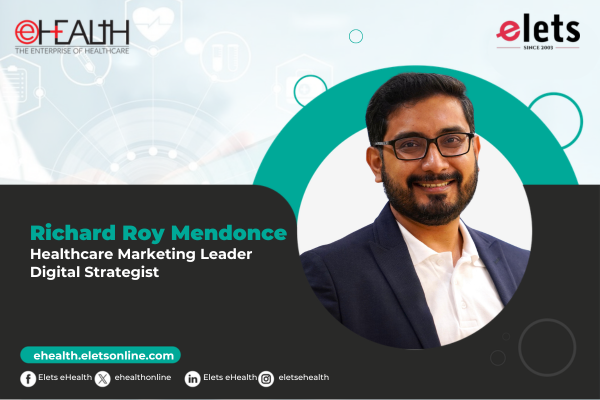
Views expressed by: Richard Roy Mendonce, Healthcare Brand and Marketing Consultant

 Like
Like
 Dislike
Be a part of Elets Collaborative Initiatives. Join Us for Upcoming Events and explore business opportunities. Like us on Facebook , connect with us on LinkedIn and follow us on Twitter , Instagram.
Disclaimer: The views and opinions expressed in this article are solely those of the author and do not necessarily reflect the official policy or views of any organisation. The content is intended for informational and educational purposes only and should not be construed as medical advice.
"Exciting news! Elets technomedia is now on WhatsApp Channels Subscribe today by clicking the link and stay updated with the latest insights!" Click here!