


Article
From Innovation to Implementation: Digital Public Health Transformation in India
From Innovation to Implementation: Digital Public Health Transformation in India
![]() By Dr. Asawari Savant, eHealth Network - 27 December 2025
By Dr. Asawari Savant, eHealth Network - 27 December 2025


India stands on the threshold of a historic digital leap in public health. The convergence of innovation, data, and technology offers an opportunity to build a proactive, integrated, citizen-centric system. Vision 2035: Public Health Surveillance in India, prepared during my tenure at NITI Aayog, envisaged such a predictive, integrated, and equity-driven ecosystem. As we approach 2026, the elements of that vision are coming together, strengthened by the country’s COVID-19 experience, accelerated digital adoption, and maturing governance frameworks.

From IDSP to IHIP: The Journey of India’s Digital Surveillance
When the Integrated Disease Surveillance Programme (IDSP) was launched in 2004, it marked India’s first major step toward systematic disease monitoring. I witnessed its evolution from a manual, paper-based system to one capable of near-real-time district-level data flow.
The next generation of that journey, the Integrated Health Information Platform (IHIP), represents a paradigm shift. It operationalises the Vision 2035 principles,individual-based surveillance, interoperability, geotagging, and real-time analytics. IHIP now integrates laboratory, health-facility, and field-level data, enabling quicker outbreak detection, pattern recognition, and response coordination. The system that began with a few pilot states has now matured into a national digital backbone for public-health intelligence. With analytics, dashboards, and AI-driven risk identification, IHIP is not merely a data repository; it is a decision-support engine for India’s public-health managers.
COVID-19: Catalyst for a Digital Leap
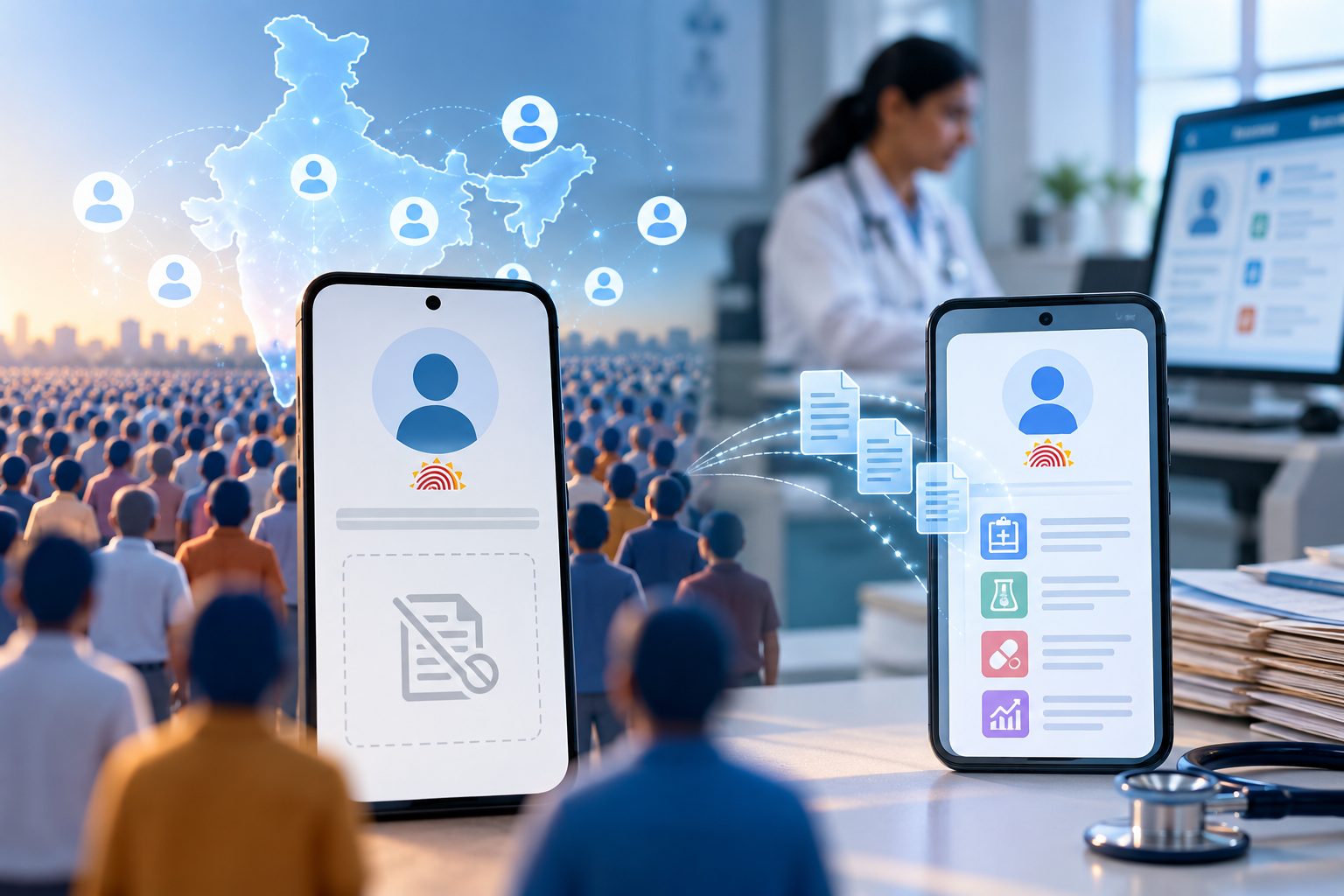
COVID-19 tested health-system resilience but also fast-tracked digital transformation. India’s response, real-time dashboards, geo-tracking, citizen reporting, and CoWIN-based vaccination monitoring, proved the power of integrated digital ecosystems. The pandemic validated the Vision 2035 idea that public-health surveillance must be both predictive and participatory. Digital tools enabled quick risk mapping, inter-sectoral coordination, and evidence-based decision-making at all levels of government. It also reinforced the importance of federated data systems, linking IHIP with the National Digital Health Mission (NDHM), Ayushman Bharat Digital Health ID, and other platforms to create a seamless digital health architecture. The COVID experience has, therefore, become a proof-of-concept for how technology, policy, and practice can align to deliver public-health outcomes in real time.

Data-Driven Infrastructure: Building on the Momentum
The core idea of Vision 2035 remains unchanged: surveillance must evolve into a public-health intelligence system. With IHIP, NDHM, and state-level Health Management Information Systems (HMIS) now interoperable, India can move from episodic data collection to continuous population-health monitoring. The next leap is embedding analytics and AI to flag early warnings for infectious, non-communicable, occupational, and environmental health risks.
Governance, Interoperability, and Collaborative Federalism
Technology is an enabler, but governance defines success. The federated model outlined in Vision 2035 calls for shared responsibility between the Centre and States, each layer generating, validating, and acting on data.
States must lead digital transformation through district analytics units, ensuring data translates into policy action. Privacy, consent, and ethical data use remain critical. The post-COVID environment has shown that trust-based data sharing, across ministries, sectors, and private players, can accelerate innovation without compromising security. Public-private convergence is another pillar of this transformation. Start-ups, med-tech innovators, and ICT firms are now key partners in diagnostics, logistics, and analytics. This synergy reflects the Vision 2035 belief that surveillance and innovation must evolve together.
Front-Line Transformation: Turning Data into Action
Digital transformation must ultimately empower the front line. Predictive models derived from IHIP and NDHM data can help ASHAs and CHOs identify high-risk households, trigger early interventions, and optimise outreach. During COVID-19, digital tools enabled triaging, home monitoring, and vaccination tracking. These learnings must now extend to NCD screening, mental-health tracking, vector-borne disease control, and One-Health monitoring.
Training a new cadre of public-health informaticians at district and block levels is essential to sustain this transformation. Data must no longer end at reporting; it must drive micro-planning, supervision, and service improvement.
Looking Ahead: From Innovation to Implementation
The foundations have been laid, and the leap forward now lies in scaling and institutionalising. By 2035, India’s goal should be a fully integrated, AI-enabled, citizen-centric public-health intelligence system that unifies human, animal, and environmental data under the One-Health umbrella. The journey from IDSP to IHIP, and from pandemic response to digital health governance, demonstrates that India can indeed leapfrog conventional models. The architecture is in place; the challenge now is to maintain momentum through capacity, interoperability, and public trust.
India’s digital public-health story is one of resilience and innovation. From early surveillance systems to nationwide digital integration, we have witnessed a generational shift in how information informs action. The Vision 2035 framework, strengthened by the COVID-19 experience, provides both the direction and the confidence to move from data to decisions and from innovation to implementation. Sustaining this trajectory will make India’s health system resilient, intelligent, and globally exemplary in using digital transformation for equity and well-being.
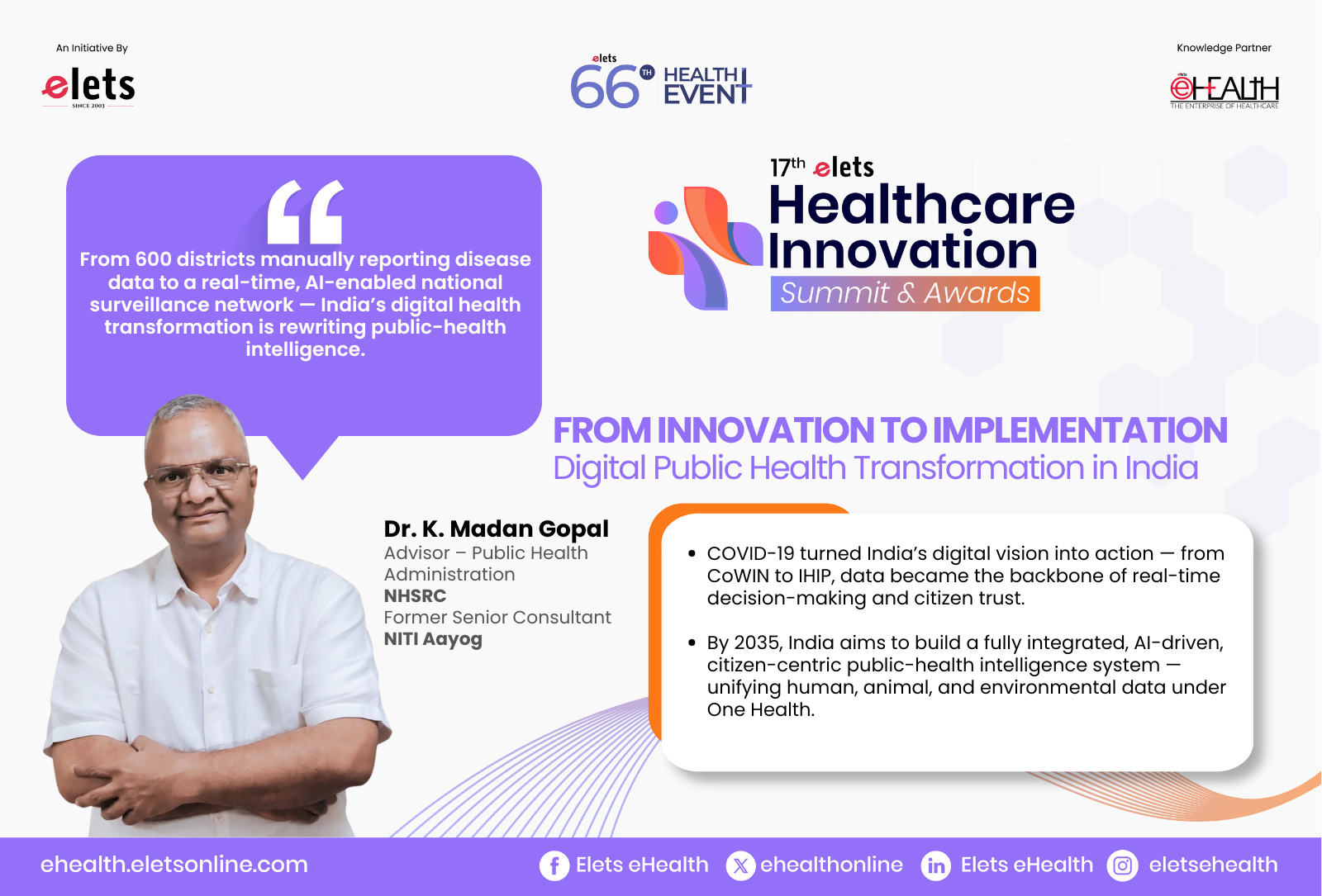
Views expressed by: Dr. K. Madan Gopal, Advisor – Public Health Administration, NHSRC and Former Senior Consultant, NITI Aayog

 Like
Like
 Dislike
Be a part of Elets Collaborative Initiatives. Join Us for Upcoming Events and explore business opportunities. Like us on Facebook , connect with us on LinkedIn and follow us on Twitter , Instagram.
Disclaimer: The views and opinions expressed in this article are solely those of the author and do not necessarily reflect the official policy or views of any organisation. The content is intended for informational and educational purposes only and should not be construed as medical advice.
"Exciting news! Elets technomedia is now on WhatsApp Channels Subscribe today by clicking the link and stay updated with the latest insights!" Click here!