


News
Early-Stage Nipah Virus Vaccine Trials Signal Progress in Pandemic Preparedness
Early-Stage Nipah Virus Vaccine Trials Signal Progress in Pandemic Preparedness
![]() By Dr. Asawari Savant, eHealth Network - 23 December 2025
By Dr. Asawari Savant, eHealth Network - 23 December 2025


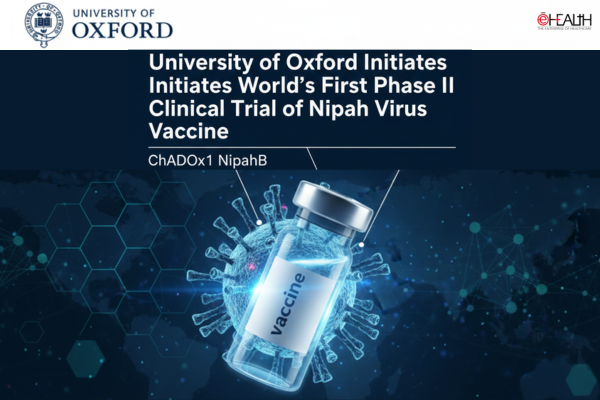
Phase I results and launch of world’s first Phase II trial strengthen global efforts against a high-fatality zoonotic threat

Early clinical evidence from a novel Nipah virus vaccine has generated renewed optimism for preventing one of the world’s most lethal emerging infectious diseases. Results from a Phase I randomised clinical trial indicate that the experimental vaccine is safe and capable of triggering a robust immune response, marking a significant step forward in global vaccine development efforts.
The findings, published in The Lancet, demonstrate that two doses of the candidate vaccine induced strong antibody responses in healthy adults, while maintaining a favourable safety profile. The trial involved 192 participants aged 18 to 49, with the most commonly reported side effect being mild injection-site pain. No serious adverse events, hospitalisations, or deaths were reported.
Nipah virus, which has a case fatality rate ranging between 40% and 82%, is classified by the World Health Organisation as a priority pathogen due to its epidemic and pandemic potential. The virus has no approved treatments or licensed vaccines and continues to cause recurrent outbreaks in South and Southeast Asia.

From Early Safety to Real-World Relevance
Building on the encouraging Phase I data, the University of Oxford has initiated the world’s first Phase II clinical trial of a Nipah virus vaccine candidate, ChAdOx1 NipahB. The trial is being conducted in Bangladesh, which is a region with recurring Nipah outbreaks, in collaboration with the International Centre for Diarrhoeal Disease Research, Bangladesh (icddr,b) and with funding support from the Coalition for Epidemic Preparedness Innovations (CEPI).
The Phase II study will enrol 306 healthy adults aged 18 to 55 to further assess safety and immune response in a population at higher risk of exposure. Conducting trials in outbreak-prone regions is expected to generate critical data on real-world effectiveness and relevance.
Leveraging Proven Vaccine Platforms
The ChAdOx1 NipahB vaccine uses the same adenoviral vector platform as the Oxford–AstraZeneca COVID-19 vaccine, a technology credited with saving millions of lives globally during the pandemic. First-in-human trials for the Nipah vaccine began in Oxford in January 2024, with 51 participants completing one year of follow-up safely. Detailed results from this cohort are expected in the coming months.
Recognising the urgent unmet need, the European Medicines Agency (EMA) granted the vaccine PRIME (PRIority MEdicines) designation in June 2025. This regulatory status is designed to accelerate development and review timelines for therapies addressing serious public health threats.
Strategic Importance for Global Health Systems
Nipah virus is a zoonotic disease primarily transmitted from fruit bats, often through contaminated date palm sap, with additional risk from animal intermediaries and person-to-person spread, including among healthcare workers. Since its identification in 1998, over 750 cases have been reported globally, resulting in more than 400 deaths.
For healthcare systems, insurers, and policymakers, the advancement of a Nipah vaccine represents more than a scientific breakthrough—it highlights the growing importance of pandemic preparedness, regional manufacturing partnerships, and global clinical collaboration.
The vaccine used in the Phase II trial is being manufactured by Serum Institute of India Pvt. Ltd. (SIIPL), part of the Cyrus Poonawalla Group, underscoring India’s expanding role in global vaccine supply chains.
Also read: Zydus Unveils ‘Zyrifa’: A Strategic Biosimilar that Targets Bone Health in Oncology Patients
A Blueprint for Future Outbreak Readiness
Experts involved in the programme have emphasised that advancing vaccines for high-risk but sporadic diseases like Nipah requires long-term investment, cross-border collaboration, and alignment between academia, industry, regulators, and global health organisations.
As emerging infectious diseases continue to challenge healthcare systems worldwide, the progress of the Nipah vaccine offers a compelling example of how proactive R&D and coordinated global action can help close critical preparedness gaps—well before the next outbreak escalates into a broader crisis.

 Like
Like
 Dislike
Be a part of Elets Collaborative Initiatives. Join Us for Upcoming Events and explore business opportunities. Like us on Facebook , connect with us on LinkedIn and follow us on Twitter , Instagram.
"Exciting news! Elets technomedia is now on WhatsApp Channels Subscribe today by clicking the link and stay updated with the latest insights!" Click here!