



News
Supreme Court Raps Centre, DCGI Over Antifungal Drug Sold for Five Years on Expired Covid-Era Approvals
Supreme Court Raps Centre, DCGI Over Antifungal Drug Sold for Five Years on Expired Covid-Era Approvals
![]() By eHealth Network - 27 October 2026


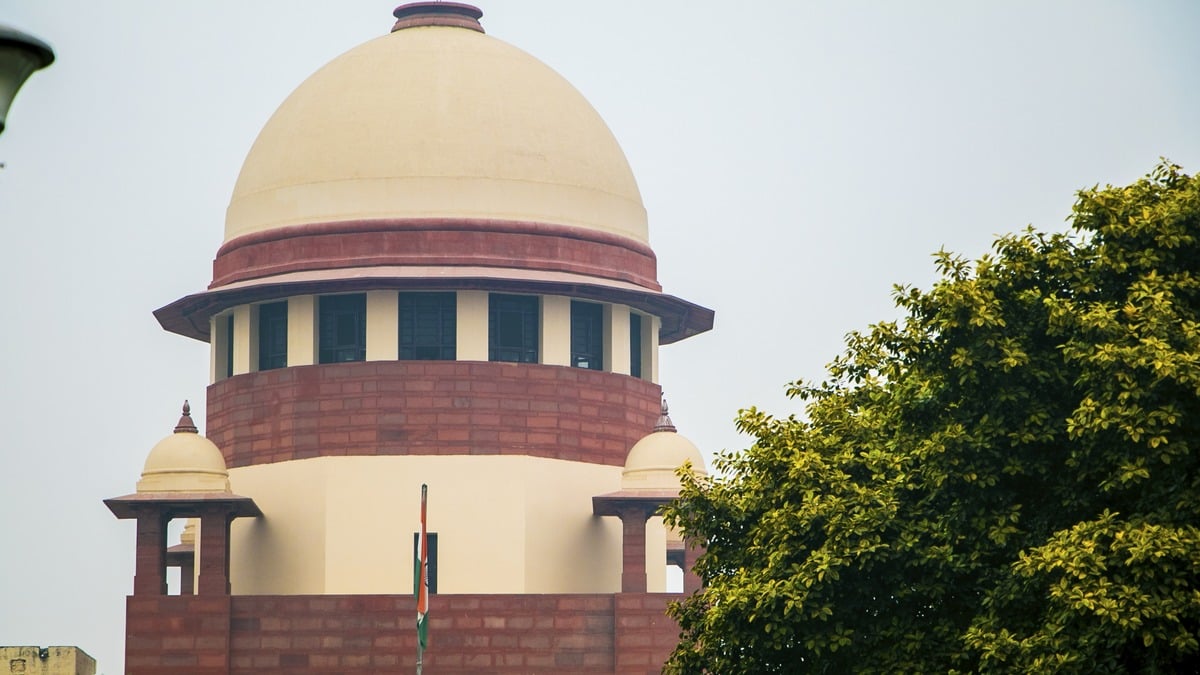
The Supreme Court on Tuesday sharply criticised the Union government and the Drug Controller General of India (DCGI) for failing, for nearly five years, to act against pharmaceutical companies that allegedly kept manufacturing and selling the antifungal drug Liposomal Amphotericin B on the strength of emergency authorisations granted during the Covid-19 pandemic.

“What were your officers doing for five years when these drugs were being sold without clinical trials and other regulatory requirements? Were they sleeping or were their hands greased?” a bench of Justices Vikram Nath, Sandeep Mehta and Aparesh Kumar Singh asked the government, according to a Hindustan Times report of the hearing.
The bench noted that regulatory action began only in February 2026, after the court itself had stepped in. “You woke up only in February 2026 and started issuing notices after this court gave you a nudge,” it observed, before reserving its order.
A pandemic-era relaxation that outlived the emergency
Liposomal Amphotericin B was in acute short supply during the second Covid-19 wave in 2021, when cases of mucormycosis, or “black fungus”, surged among Covid patients. To ramp up availability, the government invoked Section 26B of the Drugs and Cosmetics Act, 1940, which allows the Centre to regulate or permit the manufacture and sale of a drug in the public interest during an emergency.

The public interest litigation, filed by Rajendra Prasad, argues that these permissions were meant to be temporary and could not serve as the basis for continued commercial production once they lapsed, without manufacturers securing the regular approvals and clinical data normally required. The petition seeks the records of the emergency permissions, the quashing of such licences, a halt to manufacture and sale by the companies concerned, and the recall and safe disposal of stocks already in the market.
Senior Advocate S. Muralidhar, appearing for the petitioner, pointed to the government’s latest affidavit to argue that while emergency approvals had been granted to several firms, regulators had not followed up effectively.
Directions to apply “across the board”
The bench made it clear that its eventual directions would not be limited to individual manufacturers. “Whatever directions we issue will apply across the board for every company that were granted emergency licenses without proper trials during the Covid,” it said.
In an earlier order passed in April, the court had recorded that show-cause notices were issued in February 2026 to companies that had not complied with their licence conditions, and had directed authorities to decide those notices within two months. It also drew a distinction between companies that held regular manufacturing licences before the pandemic and those whose permissions stemmed solely from the emergency arrangements.
On that basis, Cipla, Bharat Serums and Vaccines, BDR Pharmaceuticals International and Lifecare Innovations were removed from the list of parties, as they held pre-pandemic licences and had not received show-cause notices. Sun Pharmaceutical Industries, which told the court through Senior Advocate Amit Anand Tiwari that it had not been granted emergency approvals, saw its plea to be dropped from the case rejected because a show-cause notice had been issued to it. Other companies named in the proceedings include Emcure Pharmaceuticals, Gufic Biosciences, Alembic Pharmaceuticals, Lyka Labs, Natco Pharma and Intas Pharmaceuticals.
Why it matters for the pharma industry
The hearing is the second time on the same day that the apex court turned a critical eye on India’s drug regulators, after a separate bench hearing on medicine pricing questioned the role of the National Pharmaceutical Pricing Authority. For manufacturers, the Amphotericin B case raises a pointed compliance question: how emergency-use pathways are closed out once a crisis passes, and how quickly products must move onto regular licences backed by full regulatory data.
An across-the-board order could set a precedent for how the CDSCO handles other approvals granted under emergency provisions, and it adds to the growing scrutiny of quality and regulatory oversight in the Indian pharmaceutical sector. Industry watchers will be looking closely at whether the court orders recalls, licence cancellations or a fixed timeline for regularisation.
Source: Hindustan Times report on the Supreme Court hearing, 27 October 2026.

 Like
 Dislike
Be a part of Elets Collaborative Initiatives. Join Us for Upcoming Events and explore business opportunities. Like us on Facebook , connect with us on LinkedIn and follow us on Twitter , Instagram.
"Exciting news! Elets technomedia is now on WhatsApp Channels Subscribe today by clicking the link and stay updated with the latest insights!" Click here!