



Pharma
Supreme Court Questions Centre Over MRP Gap in Medicines, Says NPPA Seems “Totally Defunct”
Supreme Court Questions Centre Over MRP Gap in Medicines, Says NPPA Seems “Totally Defunct”
![]() By eHealth Network - 27 October 2026


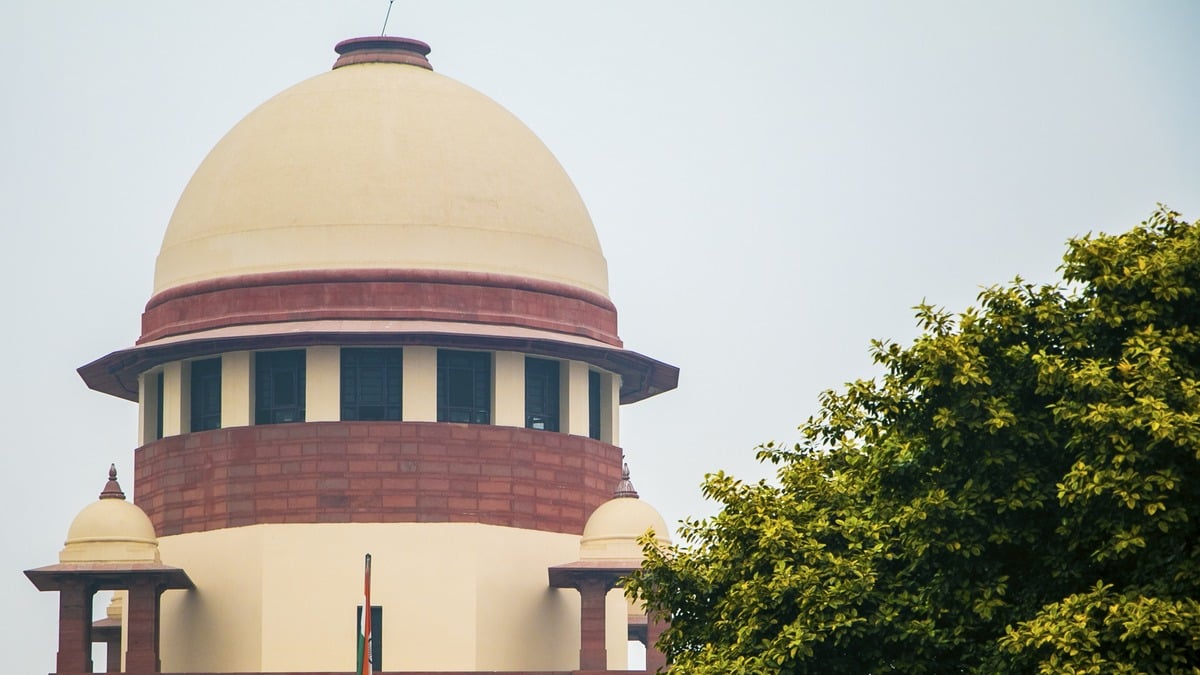
The Supreme Court on Tuesday sharply questioned the Centre over the wide gap between the maximum retail price (MRP) of medicines and the price at which they reach retailers, asking why the country’s drug pricing system appears to be working in favour of pharmaceutical manufacturers rather than patients.

“Why is the entire system working to help these people?” a bench of Justices Vikram Nath and Sandeep Mehta asked while hearing two petitions on the pricing of medicines in India. The bench also remarked that the National Pharmaceutical Pricing Authority (NPPA) seemed to be a “totally defunct” body. After hearing the parties, the court reserved its order.
A cancer injection at more than ten times the dealer price
The bench cited the case of a medical distributor whose wife was undergoing chemotherapy at a well-known hospital. He told the hospital he dealt in the very injection being used, which cost him Rs 11,000 at the dealer price. The hospital declined to use his supply and billed Rs 1.3 lakh for the injection.
The bench asked the government to explain the difference and where the money goes, noting that cancer patients are rarely in a position to negotiate. Hospitals could charge for their services, it said, but must sustain themselves “not through this dacoity”, and could not justify medicines priced at 100 or 200 times their cost.

Pointing more broadly to MRP-versus-retailer pricing, the court asked why a medicine with an MRP of Rs 100 could be supplied to retailers for Rs 10 to Rs 20, and why such practices were permitted for non-scheduled drugs. “It is under the government’s own eyes that it is happening,” the bench said, asking whether the system should be “allowed to run amok”. It also questioned the effectiveness of the Drugs (Prices Control) Order (DPCO), 2013.
Centre defends its approach
Appearing for the Centre, Additional Solicitor General Aishwarya Bhati told the court that medicine prices in India are among the lowest in the world, and that government policy is not to control the entire pharmaceutical ecosystem.
The Centre has said it decided to cap the trade margin on anti-cancer drugs at 30 per cent of MRP, a step it expects to save patients about Rs 2,500 crore a year. At the previous hearing on 12 October, the court described the response as “hardly anything to be happy about” and asked why trade margins on other medicines could not also be capped. On Tuesday, the Centre clarified that the 30 per cent cap applies to MRP and not to the price at which retailers buy the drugs.
For the hospitals, Senior Advocate Mukul Rohatgi argued that private providers are essential given an overstretched public system, and that they cannot rely on medicines bought outside because of the risk of spurious drugs.
Why this matters for the pharma value chain
Trade margin rationalisation is not new. In February 2019, NPPA invoked Paragraph 19 of DPCO 2013 to cap trade margins at 30 per cent on 42 non-scheduled anti-cancer drugs as a pilot. According to the government, 390 brands then showed price reductions of up to 87 per cent.
If the court’s final order pushes the government to extend margin caps beyond oncology, or to tighten oversight of hospital pharmacy pricing, the effects would be felt across the value chain. Manufacturers could have to reset MRPs on non-scheduled portfolios, distributors and retailers could see margins compressed, and hospitals may need to rethink reliance on in-house pharmacy markups.
For industry, the signal is clear: pricing across the chain, from price-to-stockist to the patient’s bill, faces much closer scrutiny, and companies would do well to review their channel pricing data ahead of the order.

 Like
 Dislike
Be a part of Elets Collaborative Initiatives. Join Us for Upcoming Events and explore business opportunities. Like us on Facebook , connect with us on LinkedIn and follow us on Twitter , Instagram.
"Exciting news! Elets technomedia is now on WhatsApp Channels Subscribe today by clicking the link and stay updated with the latest insights!" Click here!