



News
Mulk Technology Teams Up With OnClarity USA on ABDM-Ready AI Digital Hospital Platform With 22 Modules
Mulk Technology Teams Up With OnClarity USA on ABDM-Ready AI Digital Hospital Platform With 22 Modules
![]() By eHealth Network - 30 October 2026


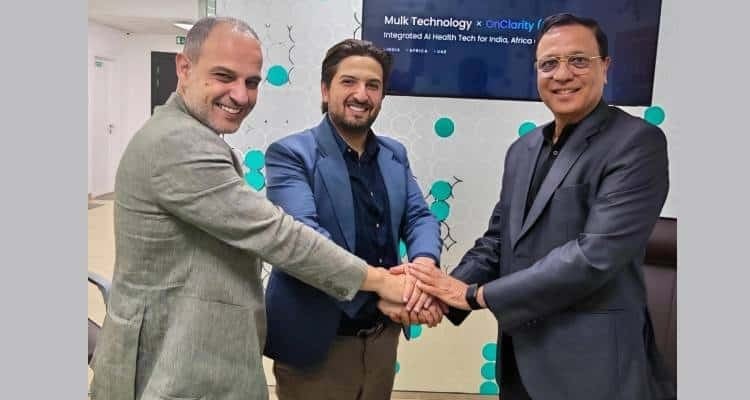
Hospitals in India rarely lack software. What they often lack is software that talks to itself. Mulk Technology is pitching a fix for that fragmentation with an AI-enabled digital hospital platform for India and overseas markets, built on a strategic partnership with US-based OnClarity USA that was signed in Dubai on 23 October 2026.

The platform layers OnClarity’s AI-driven patient-experience tools on top of Mulk Technology’s Hospital Management System (HMS), so that clinical, financial and patient-facing work runs as one system rather than a set of disconnected applications. The companies describe it as one integrated hospital system with 22 AI-enabled modules that is compliant with the Ayushman Bharat Digital Mission (ABDM).
Advertisement
One database, from registration to claim
In many hospitals, clinical documentation, billing, insurance claims and patient communication sit in separate systems. That gap shows up as missed billing entries, rejected claims, appointment delays and complaints that fall through the cracks.
On the Mulk–OnClarity platform, registration, electronic medical records (EMR), laboratory, radiology, pharmacy, billing, insurance claims, telehealth and the patient app all run on a single database. Orders, bed-days and consumables can be tied directly to billing, which removes the need for separate interfaces between departments and lets clinical notes feed straight into the claims process.

AI in the revenue cycle, with humans signing off
Much of the AI is aimed at the claims desk, one of the most error-prone parts of hospital operations in India. According to the companies, the system can:
- reconcile procedures, tests, bed-days and consumables against the bill before discharge;
- suggest medical codes with supporting documentation and flag missing details;
- validate claims against payer rules and pre-authorisation requirements, and spot likely duplicates;
- prioritise work queues by claim value, approval likelihood and deadlines, and help staff review and resubmit rejected claims.
Hospital staff remain responsible for checking and approving every claim.
A 24×7 patient front door in 40+ languages
OnClarity’s tools handle patient communication across WhatsApp, voice, SMS, web chat and mobile apps. The patient-support assistant is designed to run round the clock in more than 40 languages, covering appointment booking, reminders and query routing. An agent-assist tool surfaces patient history and policy information to staff during conversations, while a “Voice of the Patient” module analyses calls, chats, reviews and surveys to pick out recurring problems.
The platform also offers hospital-branded telehealth kiosks that can be placed in offices, pharmacies and malls for video consultations with the hospital’s doctors and on-site medicine dispensing, plus an “AI Longevity” module that turns one-off lab tests into a recurring, physician-led preventive home-care programme.
Built for ABDM
For Indian providers, the platform supports ABHA creation and linking at registration and consent-based sharing of health records across ABDM-linked facilities. It is cloud-based and sold on subscription, with configurations for hospitals, clinics, diagnostic laboratories and imaging centres. Facilities can adopt the full stack or add only the AI layer to their existing systems.
“We are excited to bring AI health technology to the UAE, Africa and India as digital transformation reshapes healthcare delivery worldwide,” said Dr Nawab Shafi Ul Mulk, Founder, Mulk Technology. He said the company has delivered telehealth to more than 1.5 million insurance members in the UAE and in Africa through the DR Congo, is in the final stages of implementation in India, and has signed an MoU with the Maldives.
“Hospitals don’t have a technology shortage. They have a fragmentation problem, and patients are caught in the middle,” said Abed Kasaji, Co-Founder and CEO, OnClarity USA. “With Dr Mulk and his team, we are giving hospitals one platform that follows the patient from the first call to the final claim, with results they can measure.”
Why it matters
As ABDM adoption deepens and insurance-led payments grow under PM-JAY and private cover, Indian hospitals are under pressure to cut claim rejections and digitise patient journeys end to end. Integrated, ABDM-ready platforms that link the clinical record to the bill could help mid-sized hospitals and clinics close revenue leakage. The real test will be implementation: how quickly the platform goes live in Indian facilities, and whether the promised gains in claim approvals and patient experience show up in measurable numbers.

 Like
 Dislike
Be a part of Elets Collaborative Initiatives. Join Us for Upcoming Events and explore business opportunities. Like us on Facebook , connect with us on LinkedIn and follow us on Twitter , Instagram.
"Exciting news! Elets technomedia is now on WhatsApp Channels Subscribe today by clicking the link and stay updated with the latest insights!" Click here!