



News
Concord Biotech Q2 FY27 Revenue Rises 25% to ₹309 Crore on Broad API Growth; Two US ANDA Nods, Inspira Dermatology Launch
Concord Biotech Q2 FY27 Revenue Rises 25% to ₹309 Crore on Broad API Growth; Two US ANDA Nods, Inspira Dermatology Launch
![]() By eHealth Network - 29 October 2026


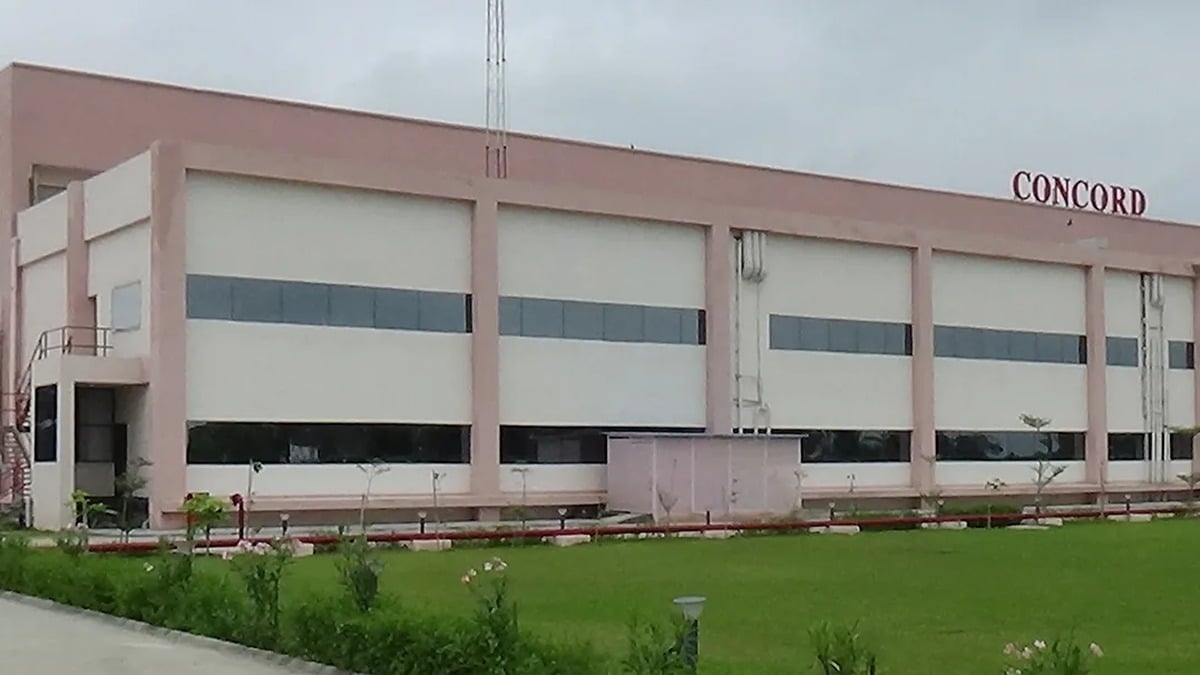
Ahmedabad-based Concord Biotech, one of India’s largest makers of fermentation-based active pharmaceutical ingredients (APIs), reported a 25% year-on-year rise in consolidated revenue from operations to ₹309.1 crore for the second quarter of FY27, up from ₹247.1 crore a year earlier. Profit after tax rose 10.3% to ₹69.6 crore, as higher raw material and energy costs held back margins even as sales grew across every product category and geography.

API business does the heavy lifting
API revenue for the quarter rose 30% to ₹250.1 crore, while formulation revenue grew 6% to ₹58.9 crore. Domestic API sales jumped 42%, which management linked to global customers increasingly buying through their Indian subsidiaries before exporting finished products to regulated markets. Direct export revenue grew 8%.
Speaking on the earnings call on 28 October, Joint Managing Director and CEO Ankur Vaid said immunosuppressants, the company’s core franchise, delivered high double-digit growth, while anti-infectives, antifungals and oncology grew faster on the back of recently commercialised molecules. The oncology business nearly doubled year-on-year, helped by products such as romidepsin and everolimus, and anti-infectives such as nystatin, mupirocin and fusidic acid are gaining traction. Concord has more than 30 fermentation-based APIs on the market and another 10 to 15 in its pipeline.
For the first half of FY27, revenue grew 26% to ₹566.6 crore, EBITDA rose 25% to ₹187 crore and profit after tax increased 19% to ₹127.3 crore.

Input costs squeeze gross margin
Gross margin slipped to 76.2% from 80.2% a year ago, which the company attributed mainly to costlier solvents amid geopolitical and supply chain disruption, along with a less favourable product mix and higher power and fuel bills. EBITDA rose 18% to ₹104.4 crore, but the EBITDA margin narrowed to 33.8% from 35.8%.
Concord said that excluding the costs of its new injectables facility and its US front-end subsidiary Stellon Biotech, where revenues are still ramping up, the Q2 EBITDA margin would have been 37.1%. Management said it would rather absorb what it sees as a short-term cost spike through R&D and productivity gains than pass it on to customers, and expects margins to move back towards the 38% to 40% range as the newer units scale.
Regulatory wins and a new dermatology division
During the half, Concord received US FDA approvals for Abbreviated New Drug Applications (ANDAs) for tofacitinib and mycophenolate mofetil oral suspension, and filed a US Drug Master File for the antibiotic fidaxomicin. It also completed a US FDA inspection at its Unit II formulation facility at Valthera, Ahmedabad, with one minor procedural observation that the company said was unrelated to good manufacturing practice, and secured Brazilian regulator ANVISA’s approval for its Unit III site at Limbasi.
The company has also launched Inspira, a dermatology division covering eczema, skin infections and acne, built around molecules such as tacrolimus, pimecrolimus, fusidic acid and mupirocin. Vaid said Concord is the only Indian player integrated from API to finished product in this space, put the addressable domestic market at close to ₹5,000 crore, and said reaching ₹400 to ₹500 crore in revenue from the division could take four to five years.
Injectables and capacity outlook
Capacity utilisation stood at 75% at Unit I, 55% at Unit III, 21% at the Unit II oral solids plant and about 5% at the new Unit IV injectables facility. Concord said several large domestic and global customers have audited the injectables plant and it expects some contracts to materialise in the second half of the year, targeting about ₹300 crore in injectables revenue over three to four years. It is also exploring CDMO work in fermentation-based APIs, where it currently has one commercial project.
The board has fixed 4 November 2026 as the record date for a 1:1 bonus issue, with 5 November as the deemed date of allotment. Concord remains debt-free, with cash and equivalents of about ₹445 crore as of 30 September, and said it expects FY27 growth to be slightly better than its historical 18% to 19%.
For India’s API and fermentation manufacturing ecosystem, the quarter highlights a familiar balance: strong demand for specialised, high-barrier molecules from regulated markets, set against volatile input and energy costs that reward scale, backward integration and process efficiency.

 Like
 Dislike
Be a part of Elets Collaborative Initiatives. Join Us for Upcoming Events and explore business opportunities. Like us on Facebook , connect with us on LinkedIn and follow us on Twitter , Instagram.
"Exciting news! Elets technomedia is now on WhatsApp Channels Subscribe today by clicking the link and stay updated with the latest insights!" Click here!