



Article
Data is Your New Doctor: How Clinical Insights Are Reinventing Healthcare
Data is Your New Doctor: How Clinical Insights Are Reinventing Healthcare
![]() By Dr. Asawari Savant, eHealth Network - 01 June 2026
By Dr. Asawari Savant, eHealth Network - 01 June 2026


Data analytics-driven revolution is quietly transforming healthcare. It is shifting healthcare from reactive to proactive and personalised care.
Healthcare is in the middle of one of the most significant shifts it has ever seen. Hospitals generate vast amounts of information every day: electronic health records, imaging, lab data, genomic sequences, and inputs from wearables. For years, most of this material sat idle, scattered across siloed systems and rarely revisited. That is changing. Advanced analytics and artificial intelligence are generating meaningful insights from this accumulated digital residue, allowing physicians in some cases to anticipate diseases even before symptoms surface. Thus, providing them with the scope to tailor precisely what was previously out of reach.
The Data Explosion in Healthcare
The scale of data involved is hard to ignore. Healthcare was expected to contribute nearly 36% of all data generated globally. The size of the global clinical data analytics market is estimated to reach USD 103.11 billion by 2033, growing at a CAGR of 22.39%. Yet despite this volume, more than 80% of healthcare data remains unused. Privacy constraints, outdated governance models, and legacy infrastructure still block access. Organisations that manage to work through these barriers are finding that the payoff is substantial—better outcomes for patients, alongside measurable cost reductions.

Predicting Illness Before It Strikes
The impact becomes most evident when analytics is applied to prediction. Machine learning models can now process electronic health records, wearable-derived vital signs, and laboratory trends to flag patients at risk of deterioration, often days before conventional warning signs appear. Hospitals using such systems report reductions in readmission rates of 10 to 20%. In heart failure, remote monitoring programmes have cut 30-day readmissions by as much as 50%. Among cancer patients, hospitalisation rates have dropped from 13% to 2.8%.

What makes these tools effective is their ability to recognise patterns clinicians cannot easily see. A minor temperature change, when combined with specific lab values, may point to early sepsis. The result is a shift from reactive, emergency care to preventive intervention.
Genomics and the Rise of Personalised Treatment
Genomics is pushing this shift even further. With the convergence of genome sequencing technology with AI, treatment has become more tailored to individual biology. Adverse drug reactions affecting nearly two million Americans every year contribute to 100,000 deaths and cause a financial burden of more than $130 billion to the healthcare system. Pharmacogenomic testing helps reduce this burden by identifying how genetic variation influences drug metabolism, allowing clinicians to select medications that are more likely to work and less likely to cause harm.
Oncology provides a clear example. Tumour profiling now routinely informs treatment decisions. Detecting mutations such as EGFR in lung cancer allows the use of more effective and better-tolerated targeted therapies. Clinical trials show that genomics-based strategies can improve outcomes by up to 85% compared with conventional protocols.
Beyond the Bedside: Operational Intelligence
The influence of analytics extends well beyond direct patient care. Hospital operations are being reshaped in parallel. Emergency departments using demand forecasting have reduced the number of patients leaving without being seen by 70%, without increasing budgets. AI-driven scheduling aligns nursing skills with real-time patient needs, easing staff burnout while maintaining care quality. Predictive maintenance systems monitor equipment performance in real time to identify issues before they lead to equipment failure.
Navigating the Challenges
These advances are challenge-free. Patient privacy remains a major non-negotiable concern. It can be dealt with robust security frameworks and strict regulatory compliance. Algorithmic bias is another concern. Models trained on unrepresentative datasets risk supporting prevailing discrepancies. Data reveal that while 61% of the hospitals evaluated their predictive models for accuracy, only 44% evaluated them for bias. Access is also uneven, letting smaller or resource-limited settings benefit less from these tools.
The Future is Data-Informed
Healthcare is no longer only about treating disease, but it is also about prediction, prevention, and personalisation. With the advancements of analytics platforms and AI capabilities, the gap between data collection and clinical action still prevails. Organisations investing now are laying the groundwork for systems that are more efficient, more responsive, and better aligned with individual patient needs.
Two centuries ago, the stethoscope transformed medicine. Today, this role is being played by data analytics. It does this by identifying patterns hidden within biological noise. Thus, data has become a new kind of doctor: always on, tireless, and proficient in seeing connections across populations. If the clinicians and health systems are able to work alongside this digital counterpart, then the next generation of healthcare will be more informed and personalised.
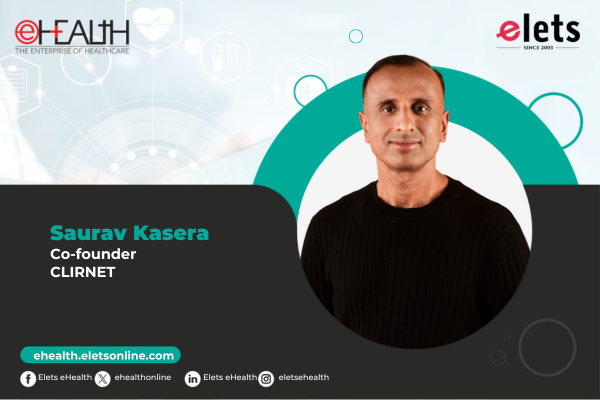
Views expressed by: Saurav Kasera, Founder, Clirnet

 Like
Like
 Dislike
Be a part of Elets Collaborative Initiatives. Join Us for Upcoming Events and explore business opportunities. Like us on Facebook , connect with us on LinkedIn and follow us on Twitter , Instagram.
Disclaimer: The views and opinions expressed in this article are solely those of the author and do not necessarily reflect the official policy or views of any organisation. The content is intended for informational and educational purposes only and should not be construed as medical advice.
"Exciting news! Elets technomedia is now on WhatsApp Channels Subscribe today by clicking the link and stay updated with the latest insights!" Click here!